Site Tenacity

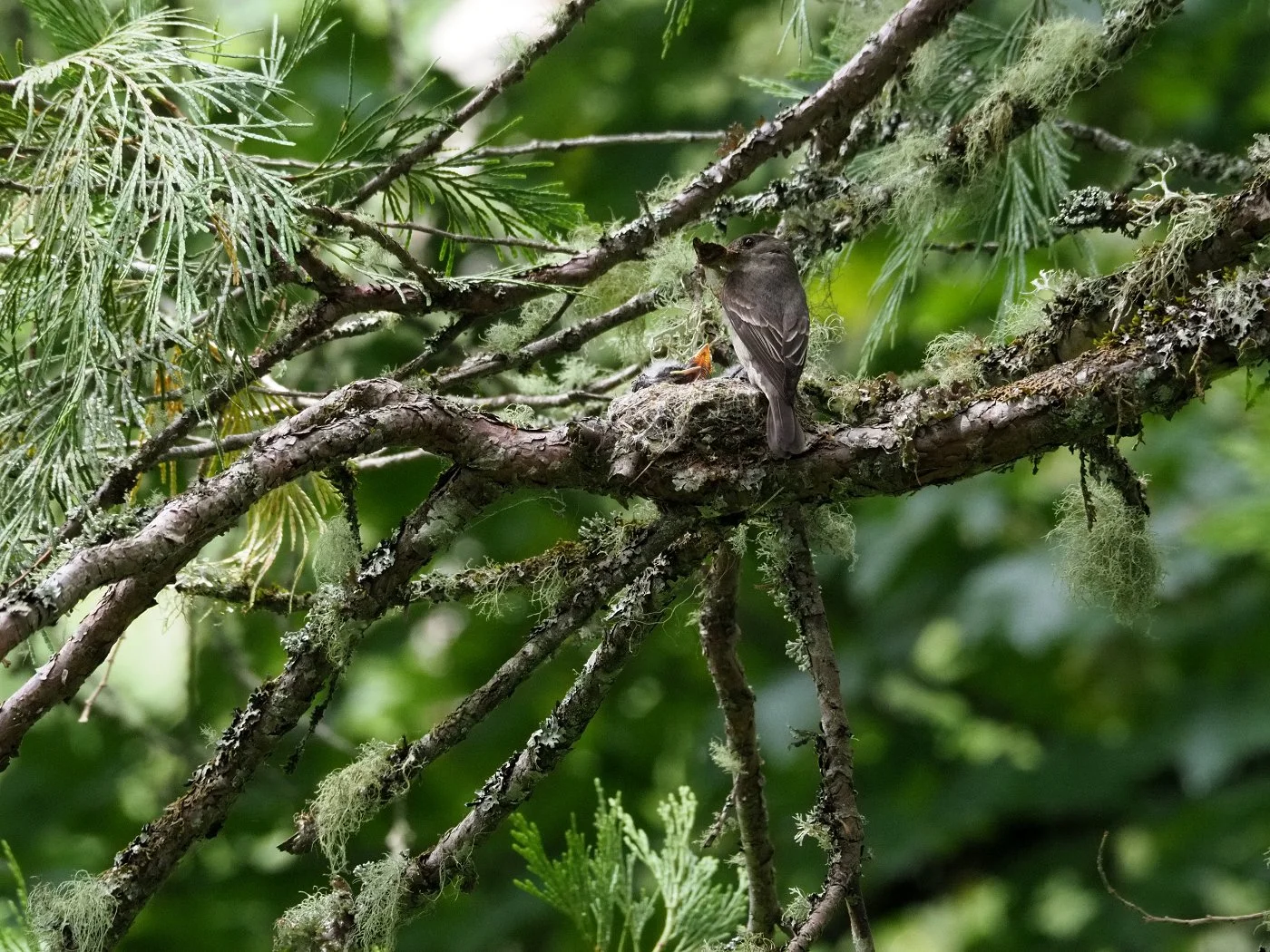
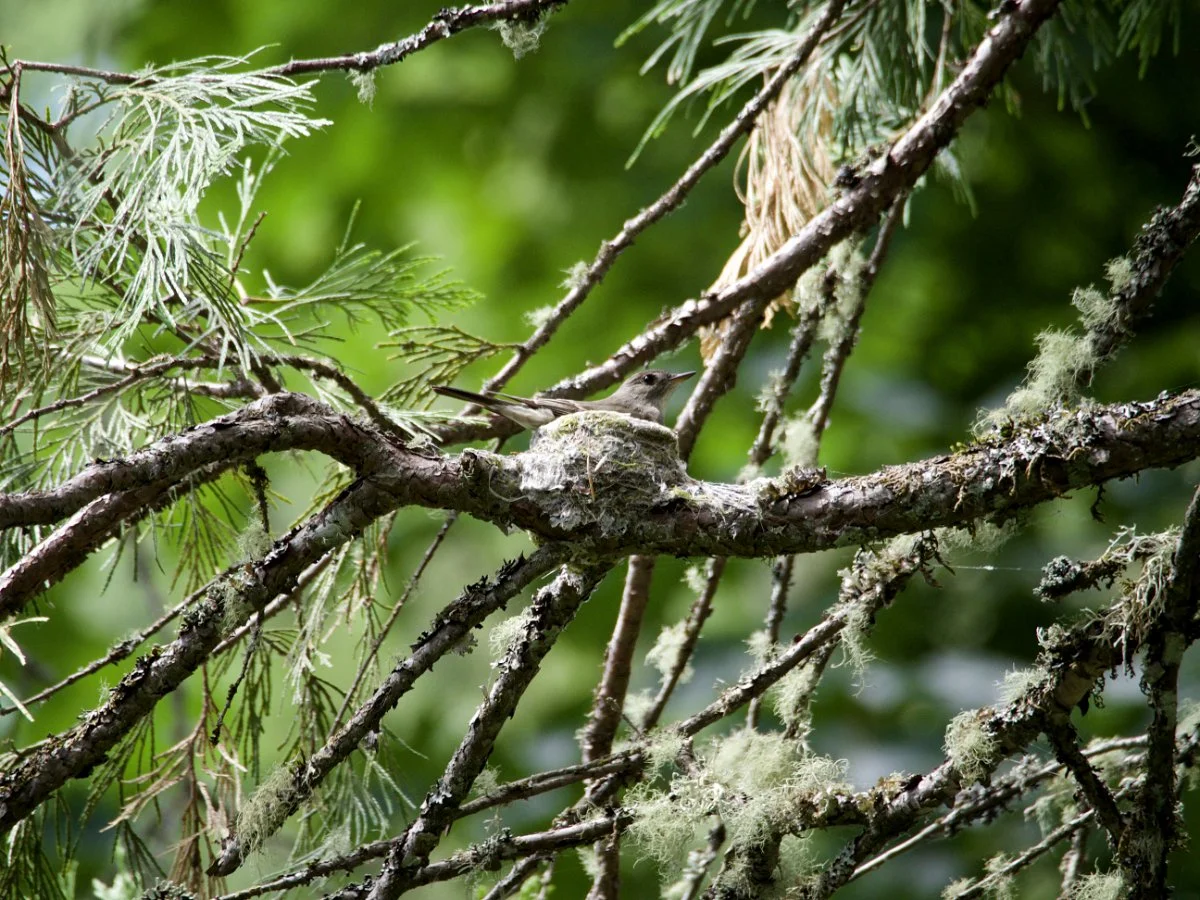
Check this out! I posted the nest of a Western Wood Pewee last year (06/24/25 Western Wood-Pewee Nest). This year I walked by the same area and found another Western Wood-Pewee nest. As I stood there watching it and taking a couple of photos, my memories came forward and I started feeling like the nest was on that same limb last year. When I got home and compared the photos, the two nests are in the exact same spot! The first photo is this year and second photo is last year. Incredible!

This phenomenon is known as site fidelity or site tenacity. Cornell’s All About Birds gives this definition: “Loyalty shown by birds or other organisms to places they previously occupied; the places may be breeding locations, nonbreeding locations, or stopover points between the two.”

The general belief is that if birds are successful at breeding they are likely to return to that area again. This bird spends our winter in South America which is considered to be a medium to long range migration. Check out the range map on All About Birds.

I just have to write this out because I find this whole phenomenon quite miraculous and mysterious. This little bird migrated here last year from South America, nested at the arboretum, flew back to South America for their summer, migrated back here to the arboretum for our summer the following year, and built its nest on the same limb, in the same spot! I know I just said this but I want to say it again. It’s in the same spot! How is that possible!? The world we live in is so unbelievable!!!!

Nature is an inexhaustible source of wonder. I hope to see you out there!

Resources
Birder, Jeff. “Bird Academy’s A-to-Z Glossary of Bird Terms | Bird Academy • the Cornell Lab.” CornellBirds, 9 Sept. 2016, https://academy.allaboutbirds.org/bird-academys-a-to-z-glossary-of-bird-terms/#s. Accessed 6 July 2026.

Western Wood-Pewee Range Map, All about Birds, Cornell Lab of Ornithology, www.allaboutbirds.org/guide/Western_Wood-Pewee/maps-range. Accessed 6 July 2026.
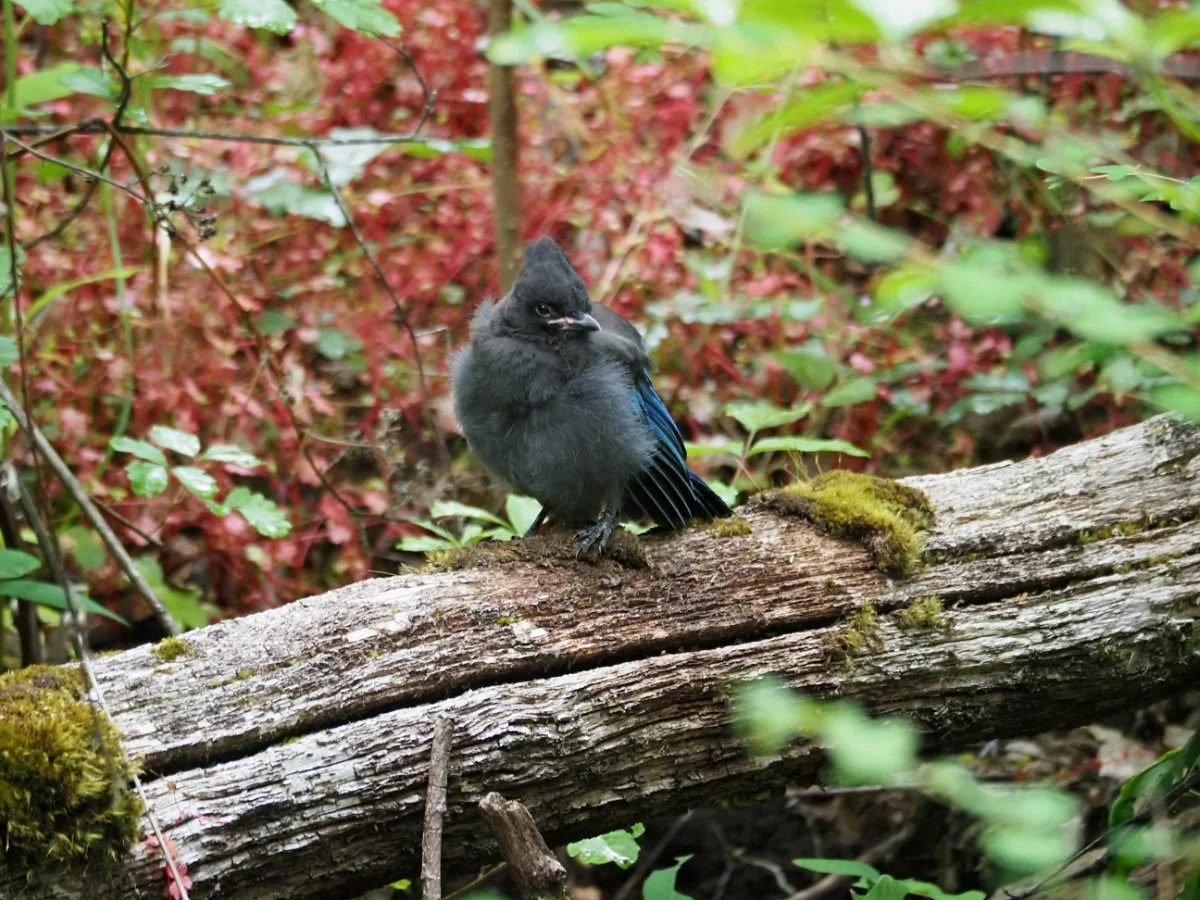
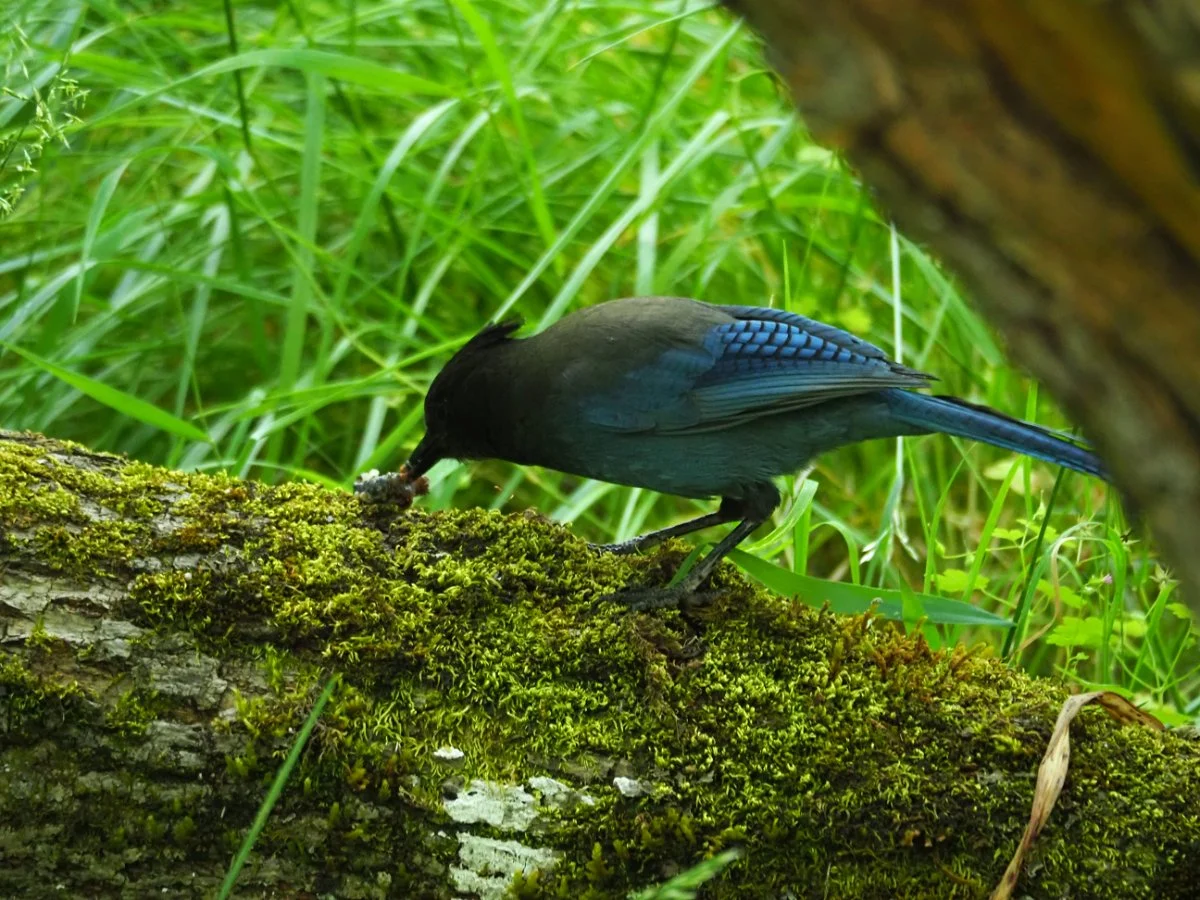
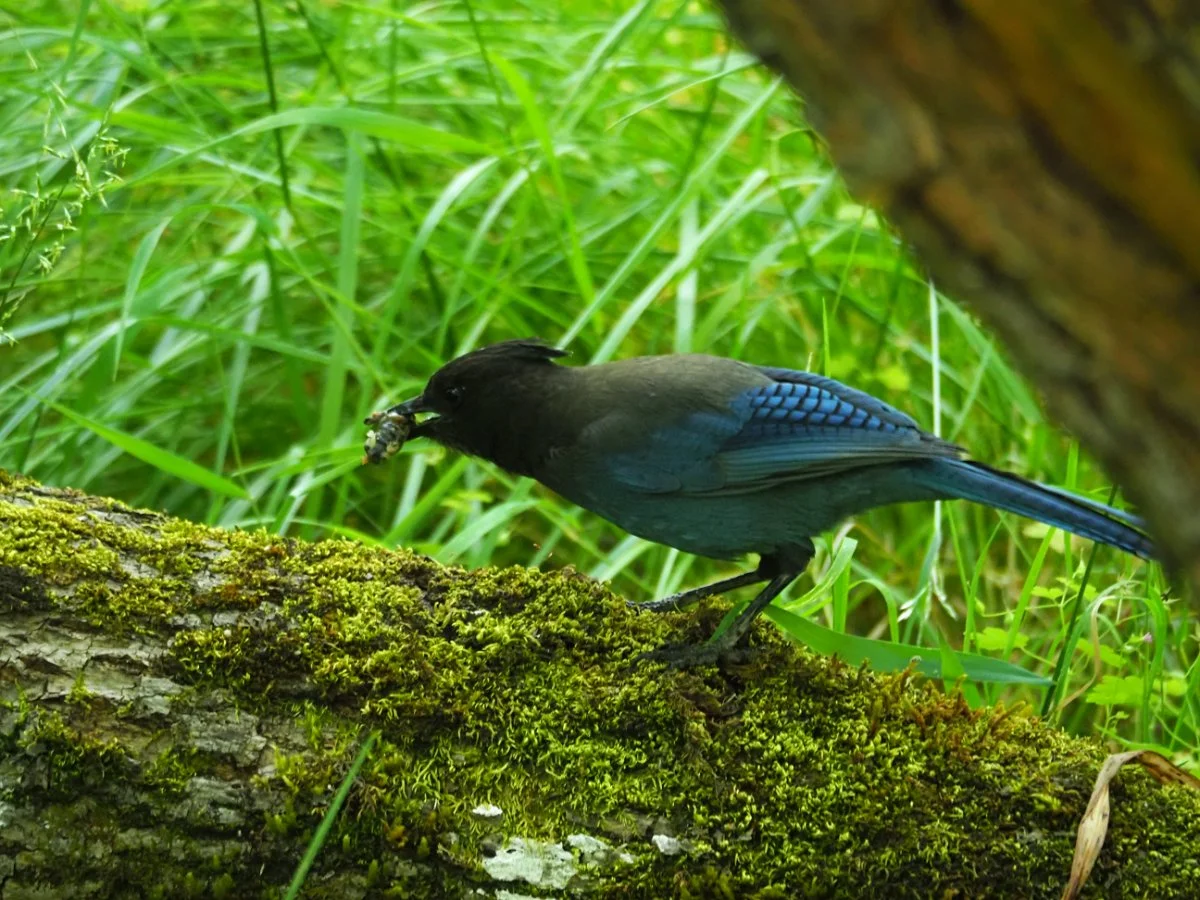
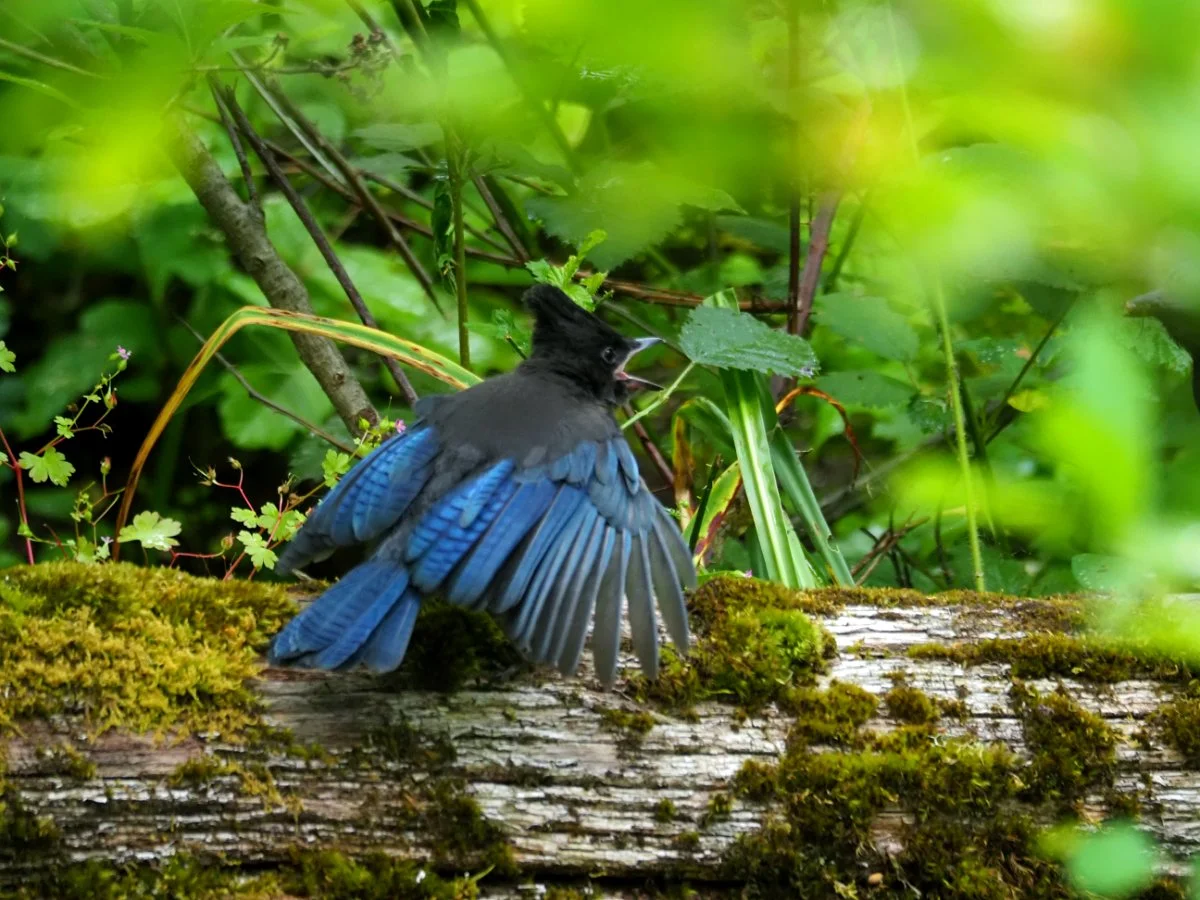
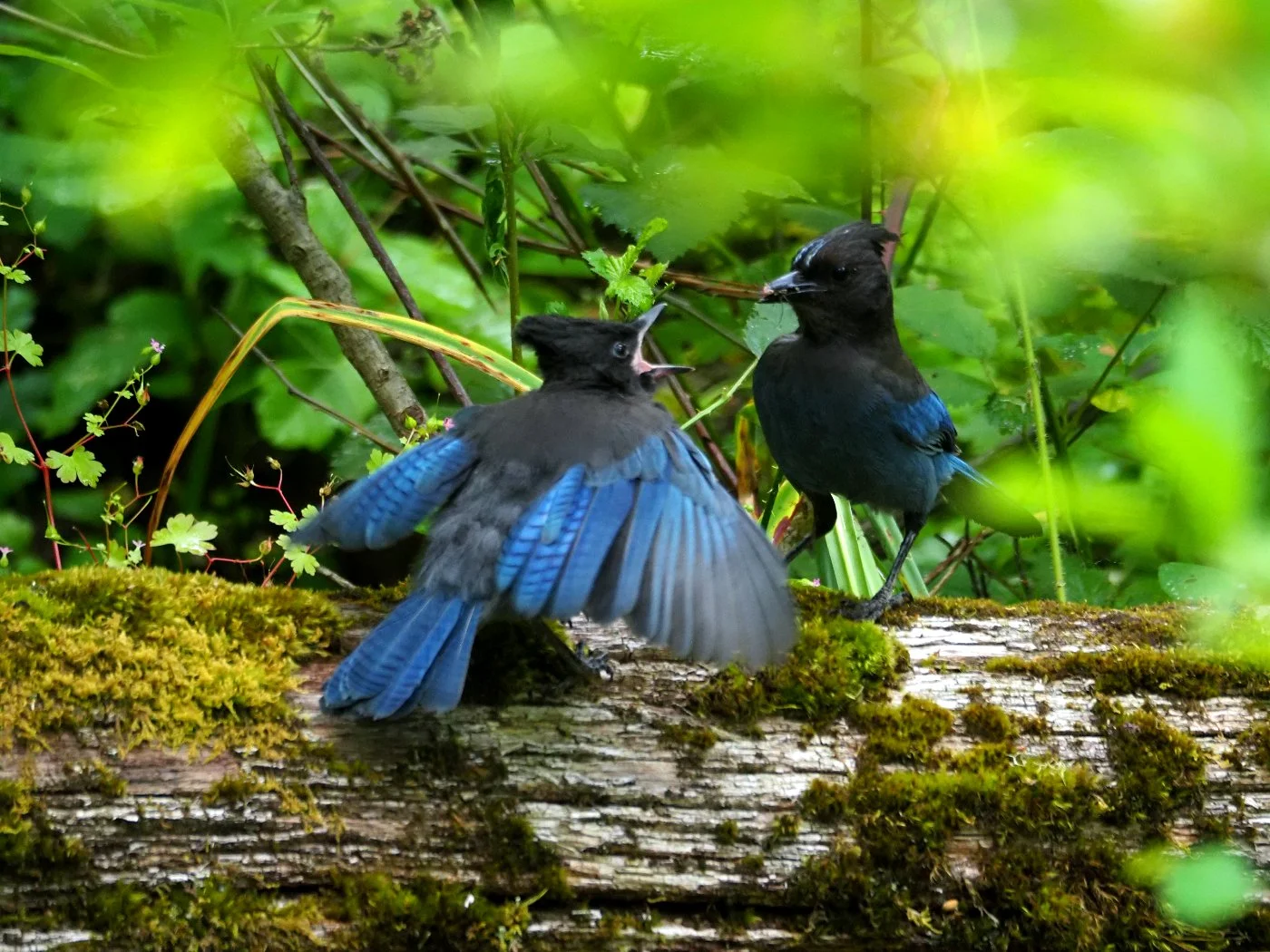
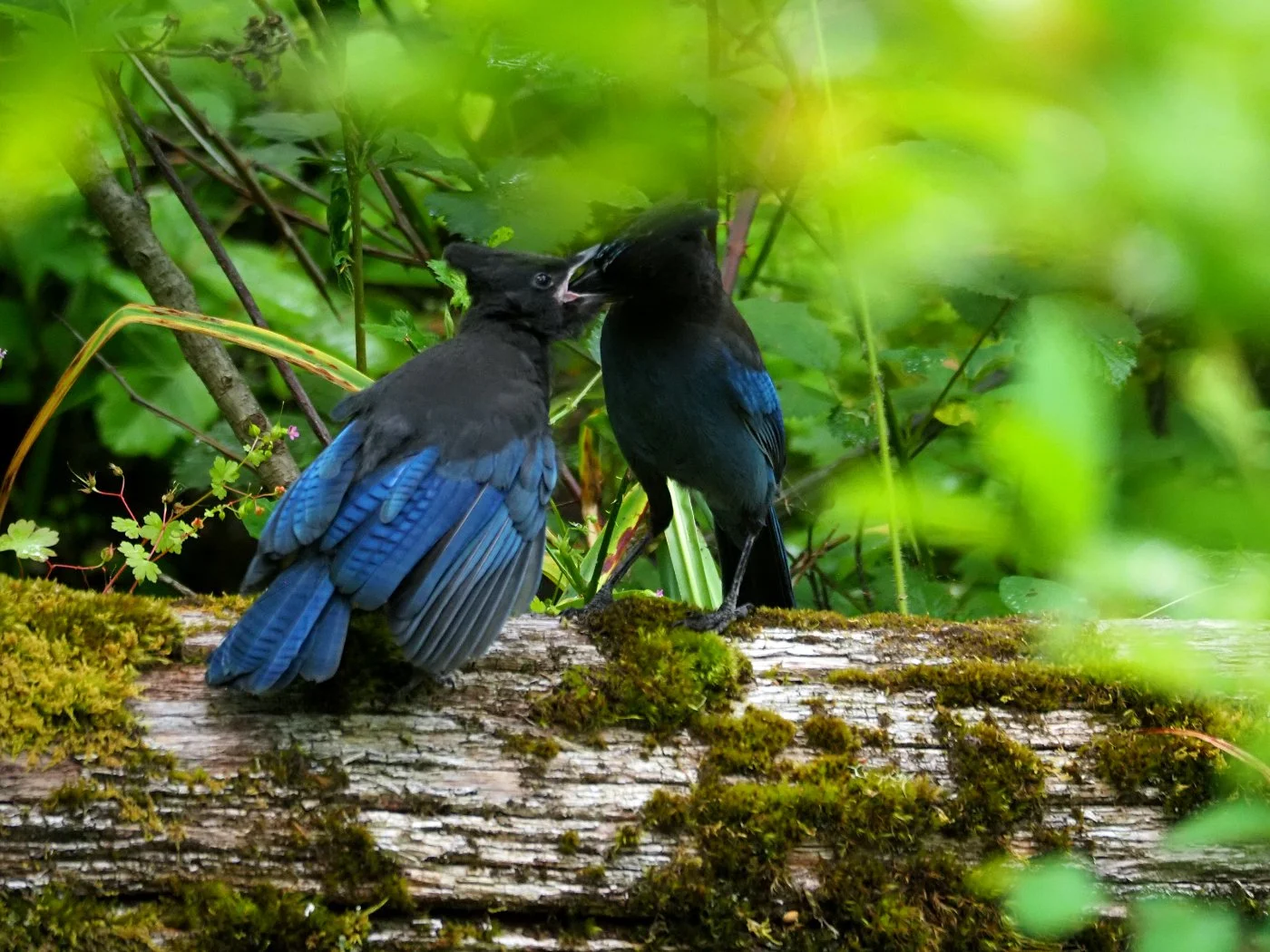
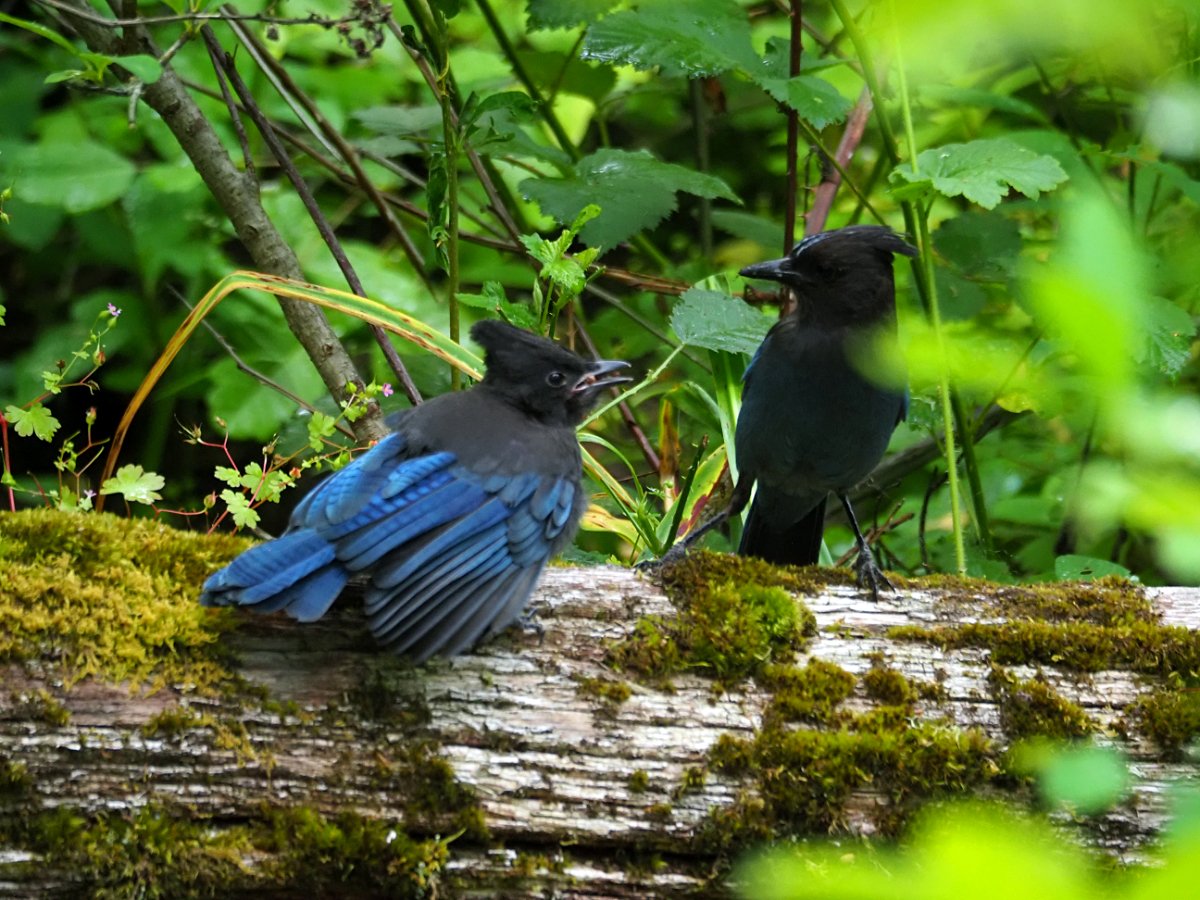
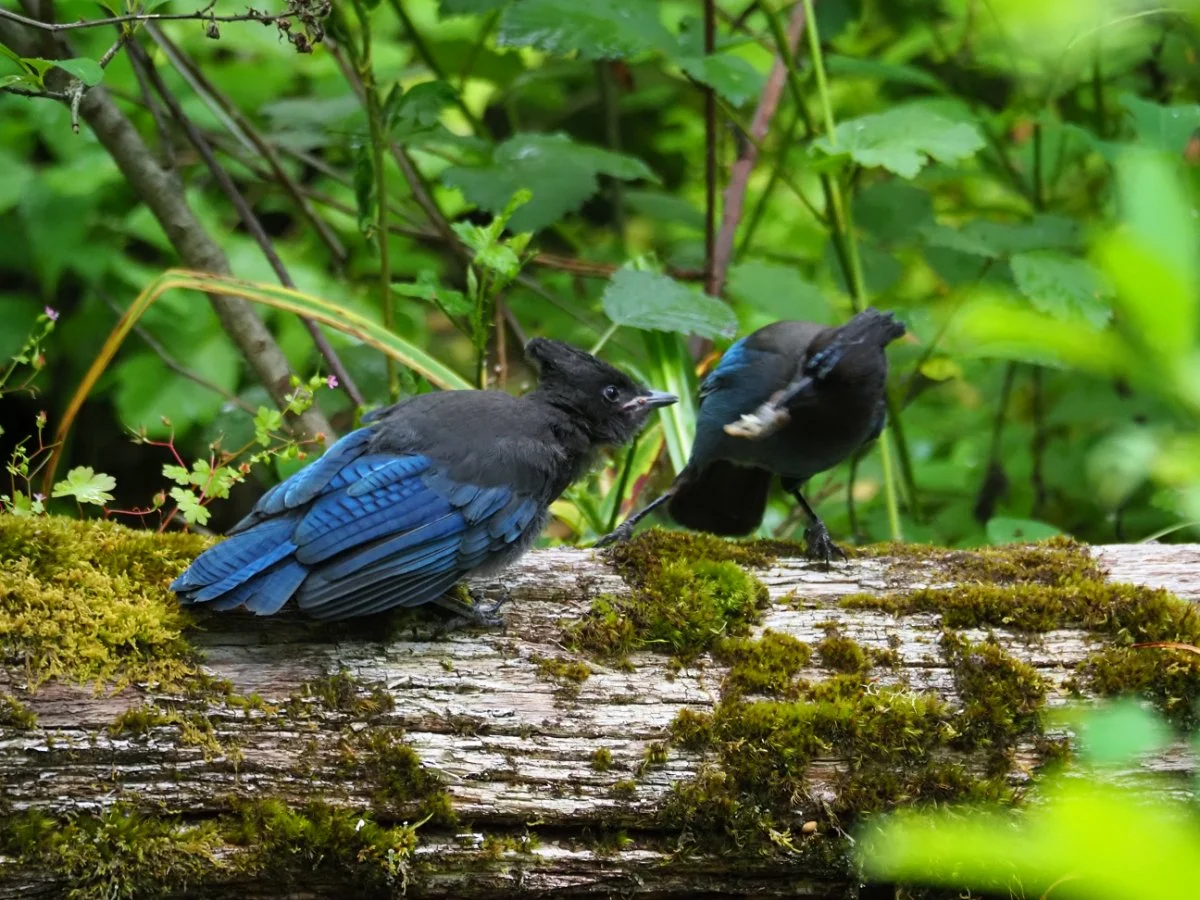
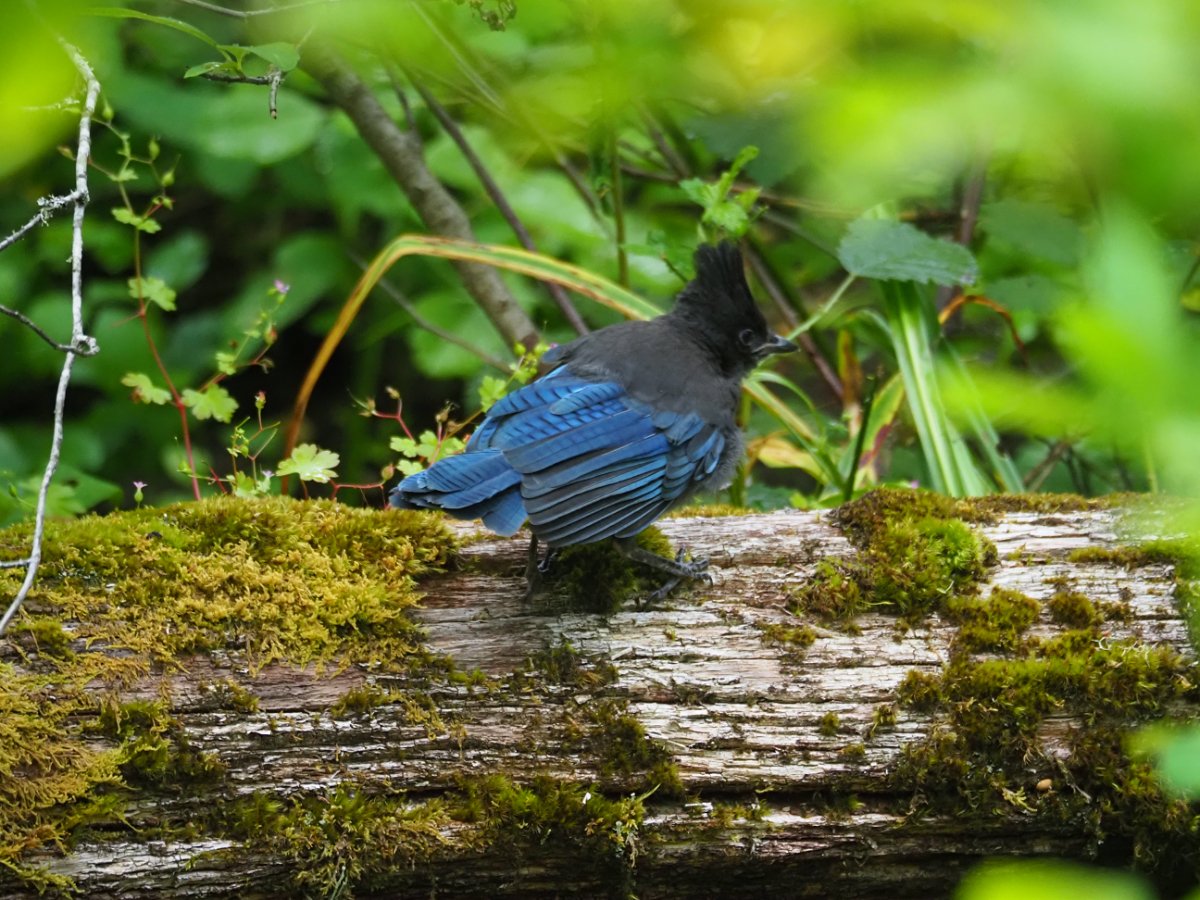
Juvenile Steller's Jay

I saw this earlier in the spring, and I am a little behind in posting it. I heard this juvenile Steller’s jay begging as I walked up the creek trail and found it perched on a fallen tree. I watched it for a bit as it sat quietly observing its new world outside the nest. Nearby I saw the parent swoop in with a bill full of unidentifiable food. It was a sizable chunk of what appeared to be animal guts of some kind. It rearranged them and tried mashing them up a little, presumably to form an appropriate sized bite. It flew over to a now begging juvenile that was calling and fluttering its wings with its mouth fully agape. The parent stuck its bill down into the juvenile’s mouth and deposited the food. Afterwards the juvenile just sat there with the food in its mouth, not swallowing. The parent stood there and curiously turned its head and watched. The juvenile continued to just sit there with a mouthful of food. I am not sure if the juvenile was feeling that the bite was too big to swallow or just savoring this new cuisine. Either way, it was swallowing it. The parent could see that this food wasn’t working, so it stuck its bill back into the juvenile’s mouth and took the food back out. The juvenile didn’t protest and sat there seemingly a little relieved. The parent stood there for a moment with the food in its mouth contemplating whether or not to try again. The juvenile sat there looking slightly dazed, definitely not enthusiastically begging like before. The parent then flew off to a nearby tree branch and decided to consume the food itself. Afterwards it flew off in search of more food. It returned to find that the baby bird had recovered from the previous attempt and was happily begging for more food. It was amusing to see that even juvenile birds, like young people, can be picky eaters sometimes especially when a parent brings home something new to try.

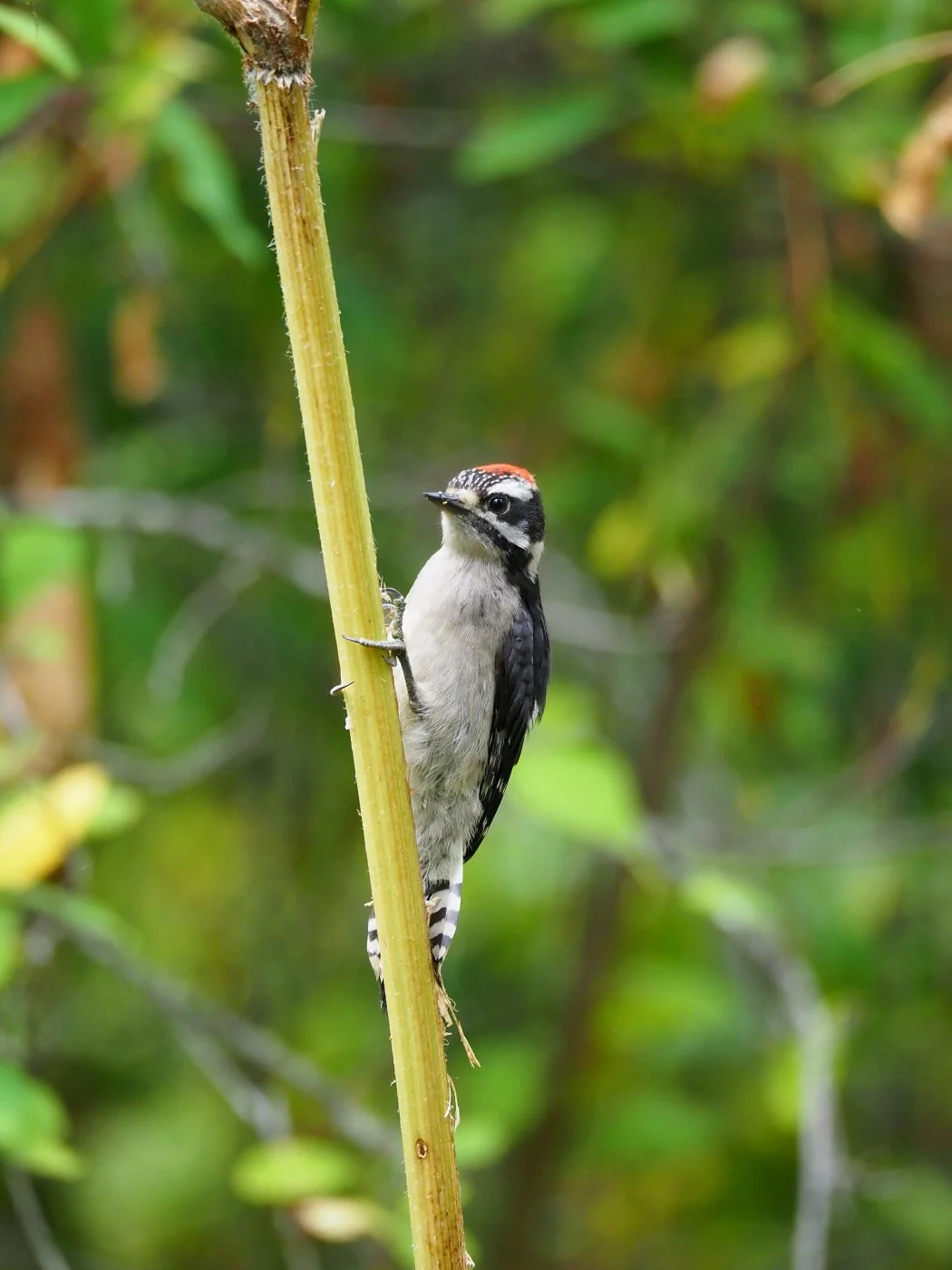
Downy Woodpecker

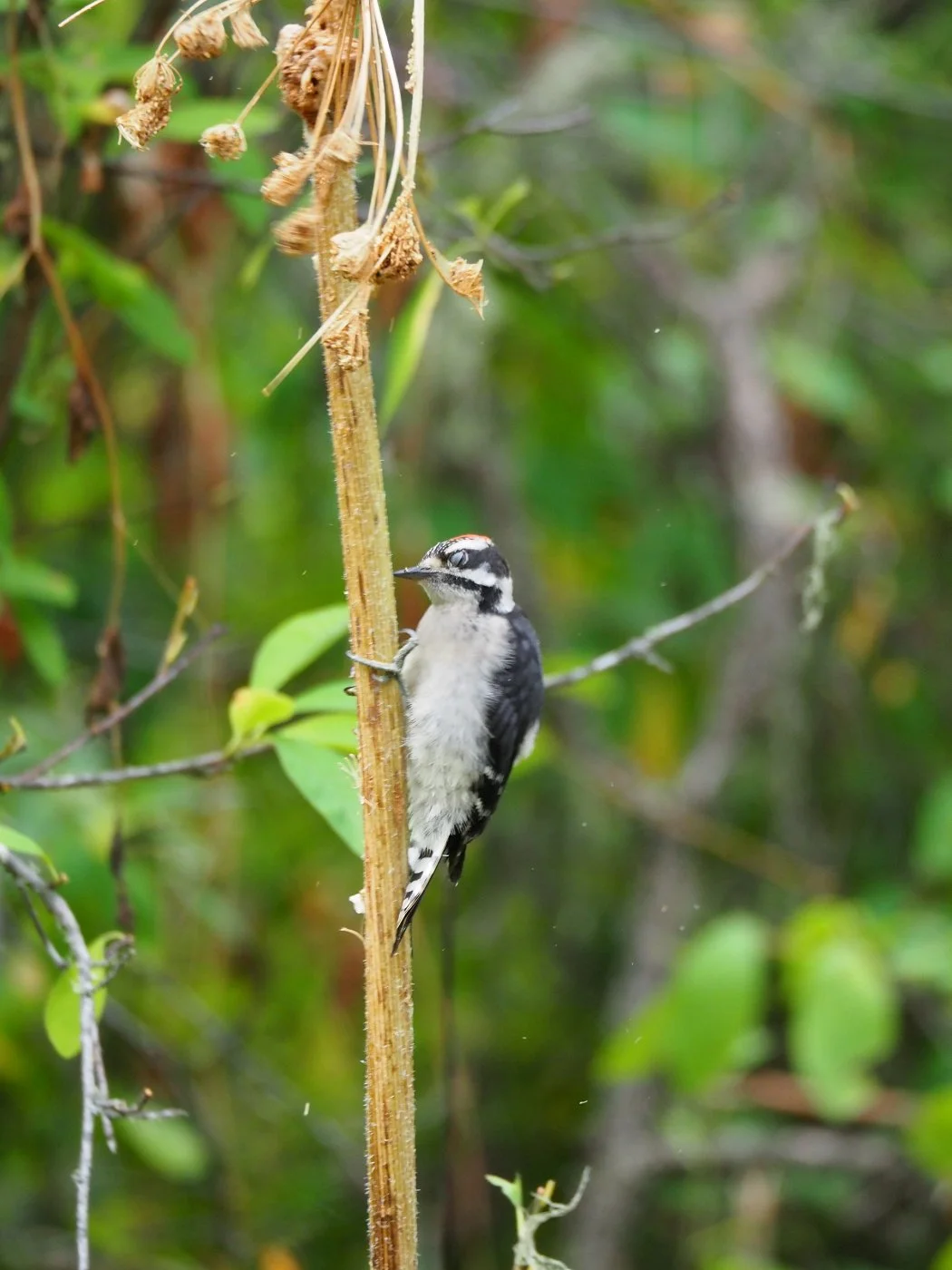
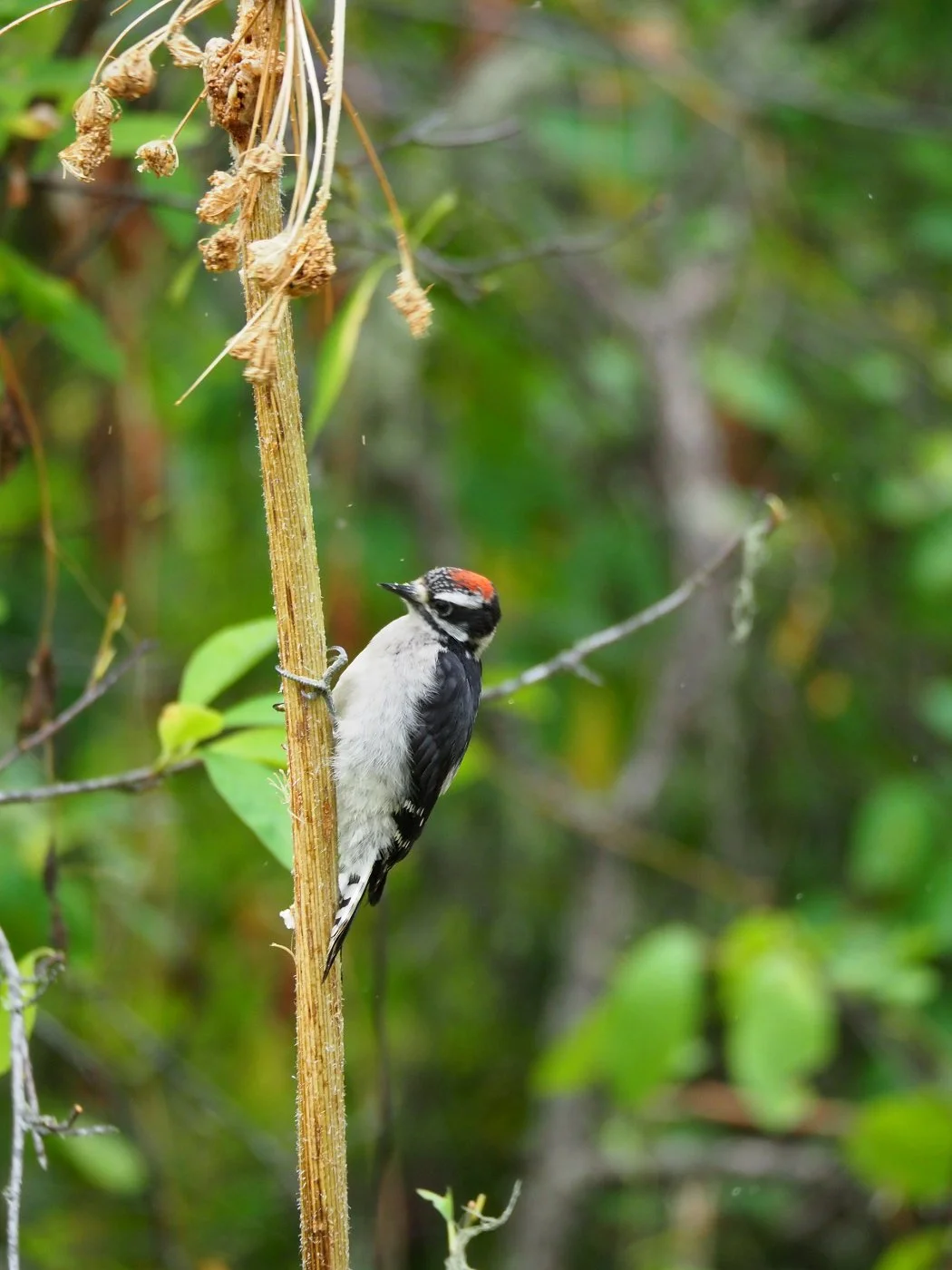
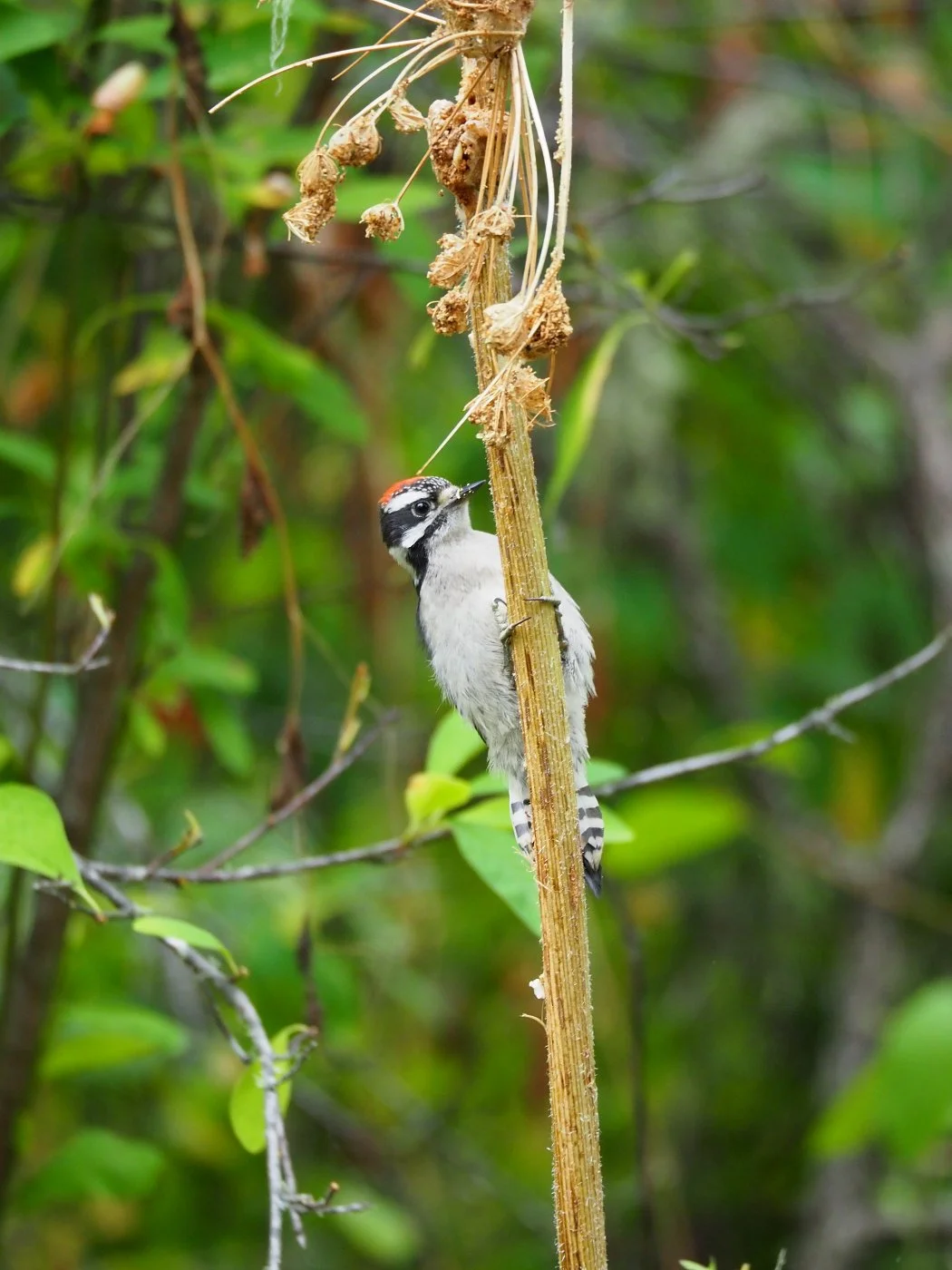
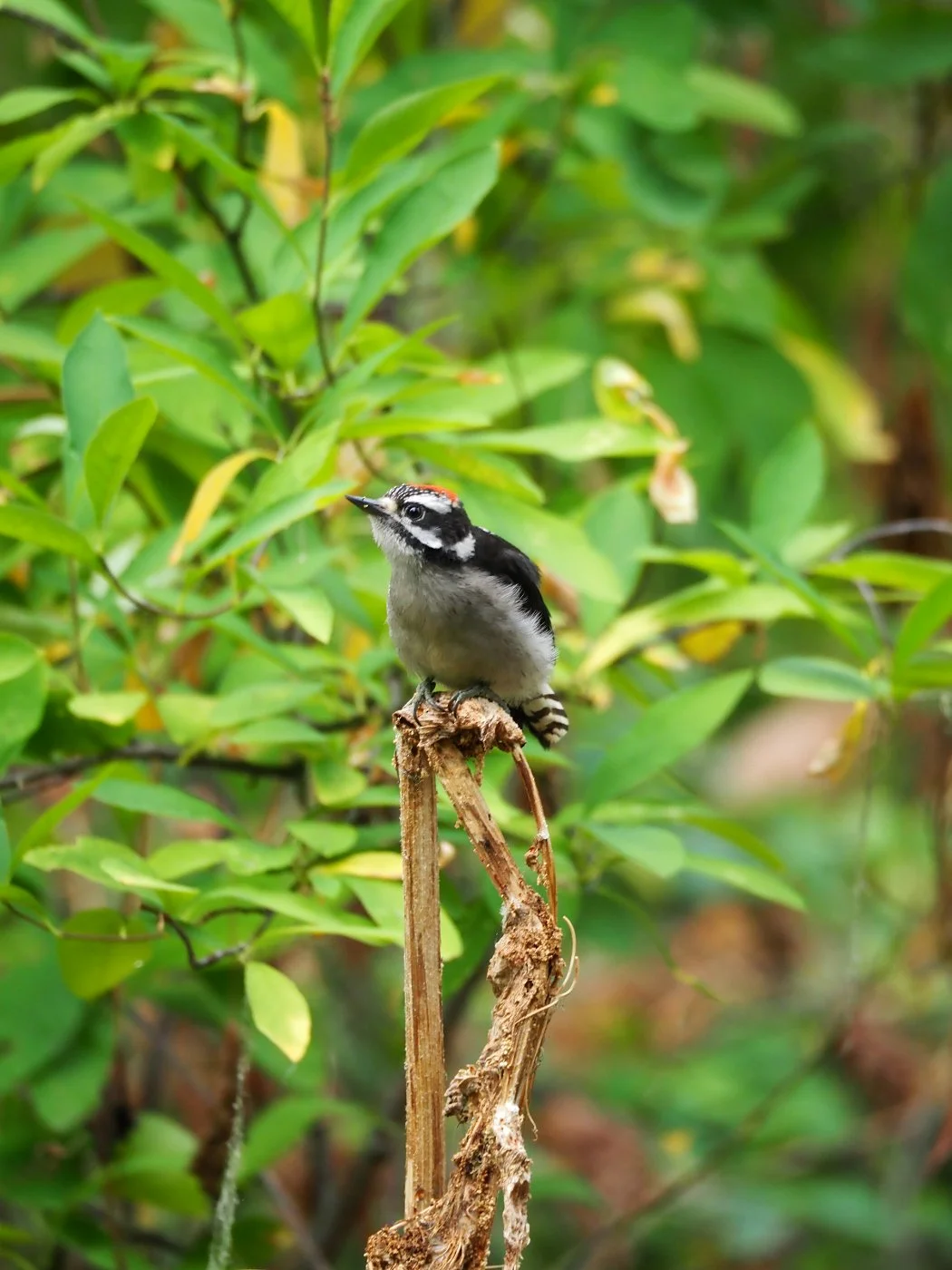
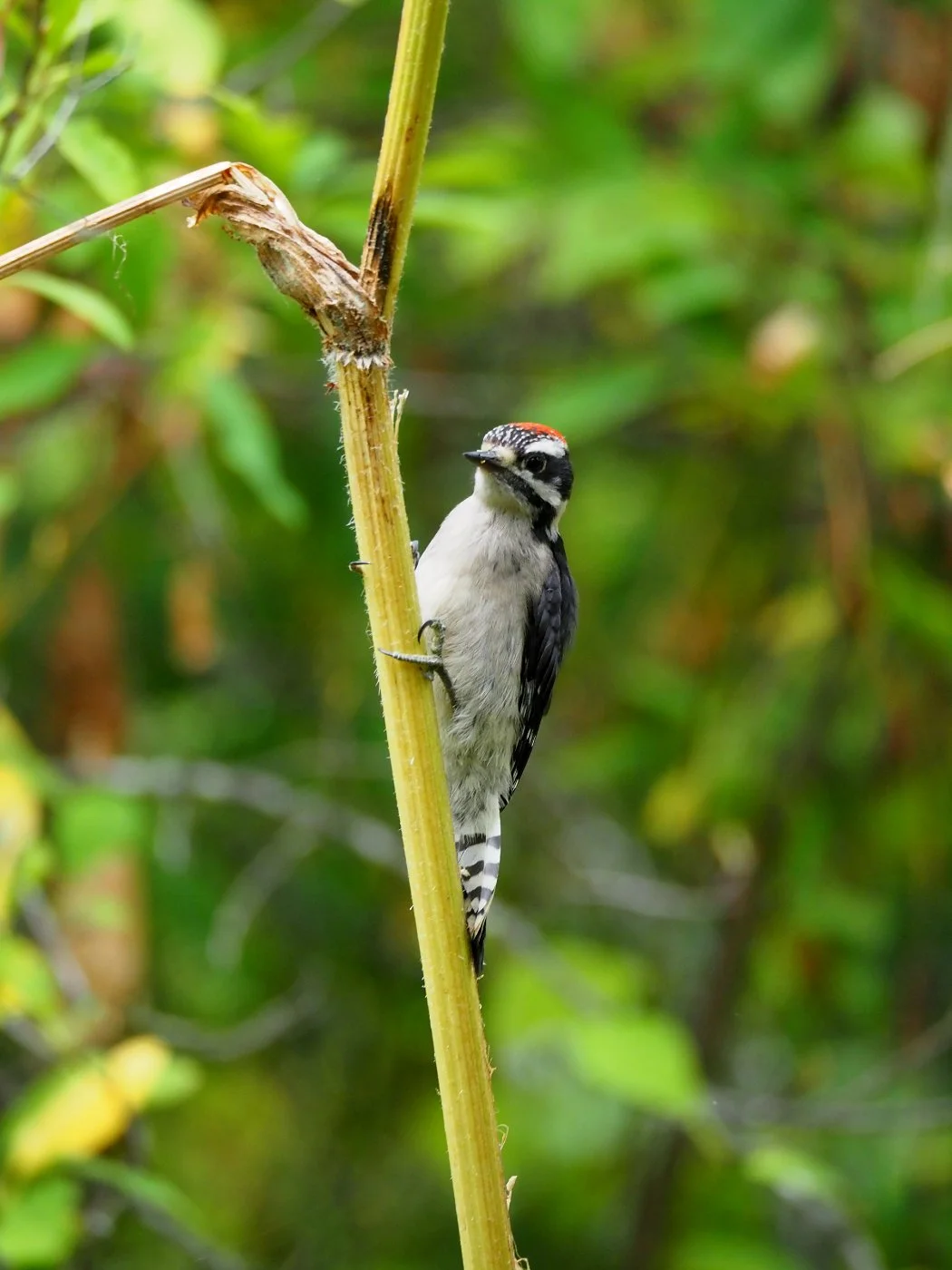
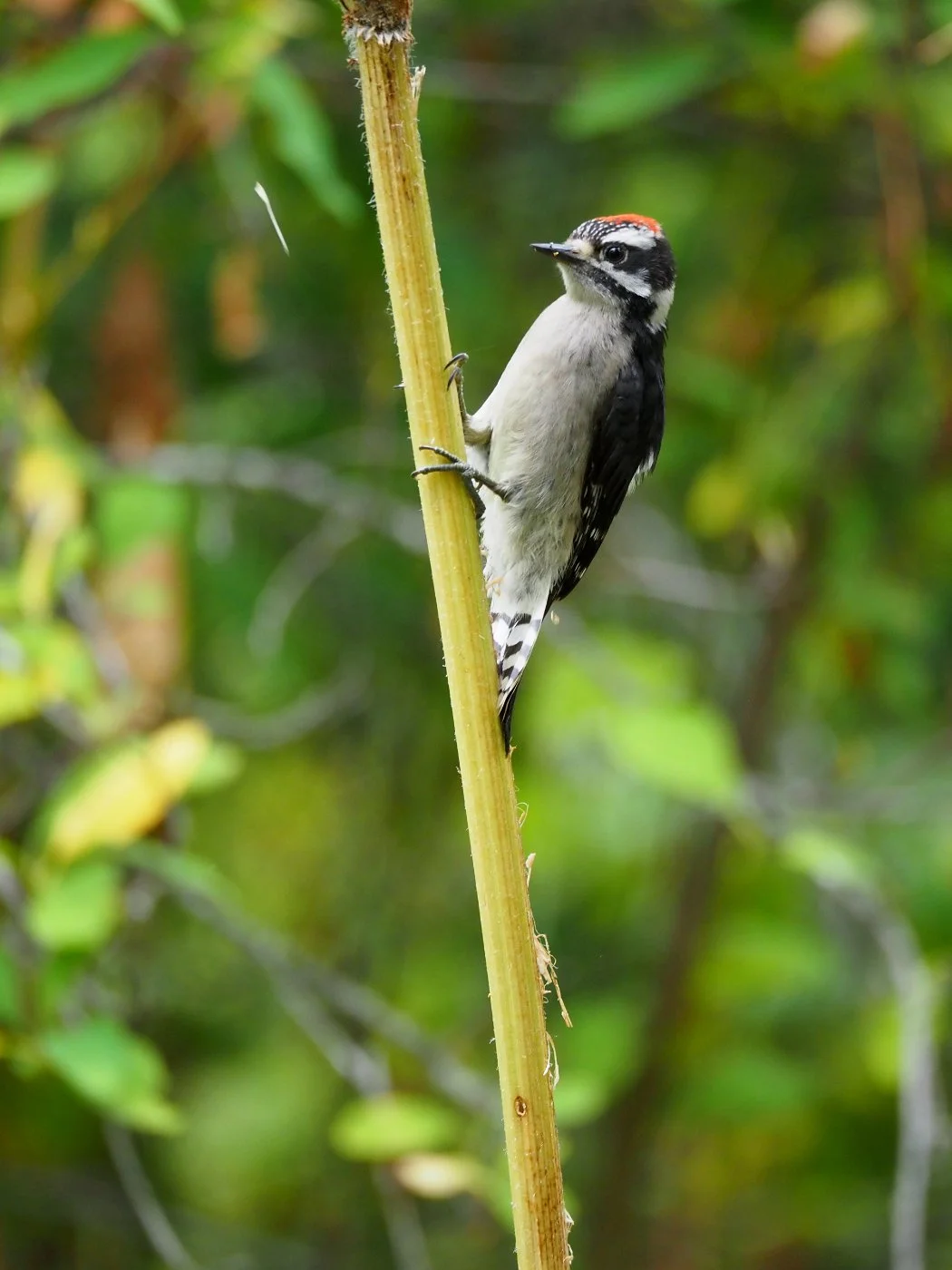
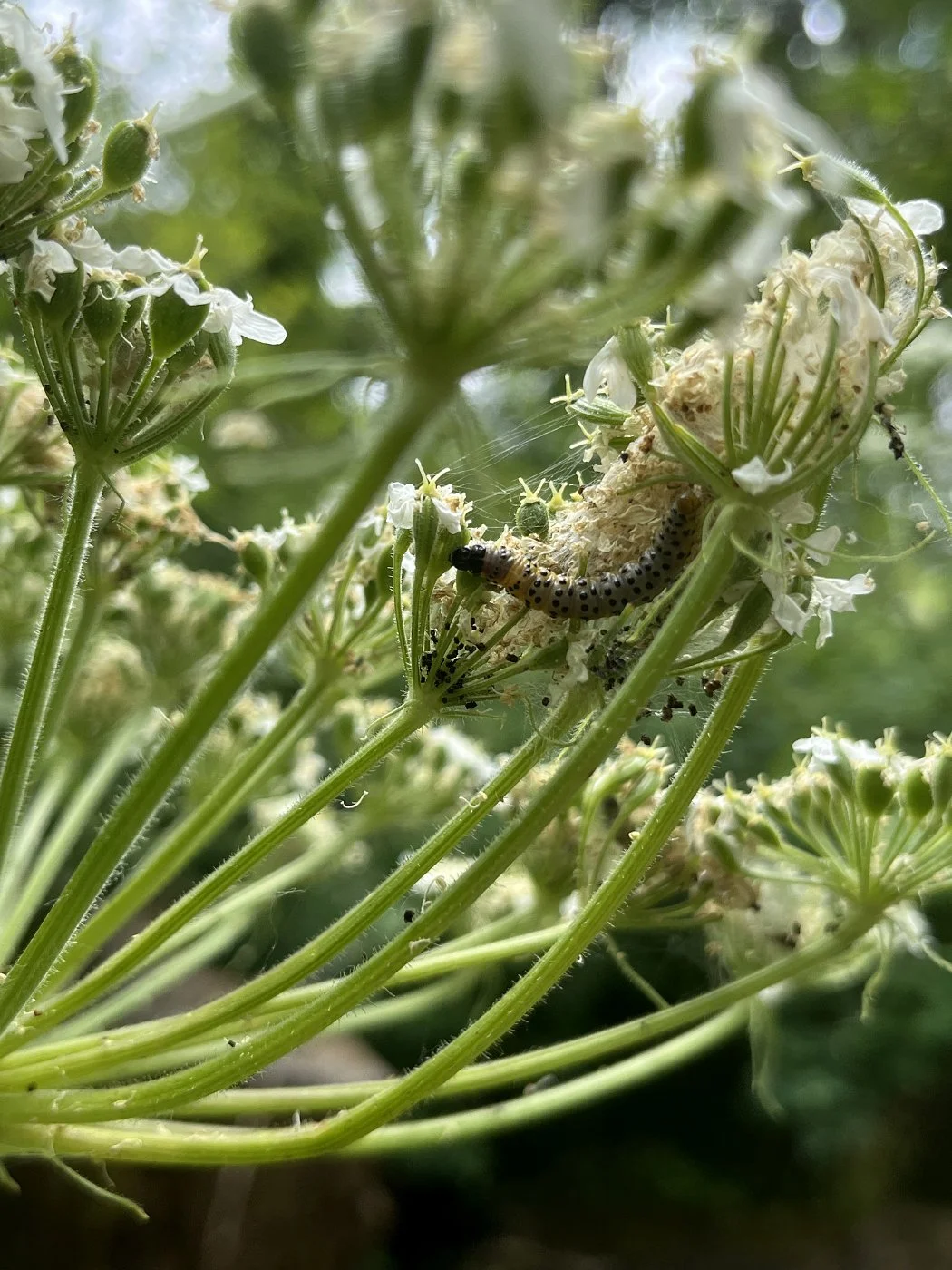
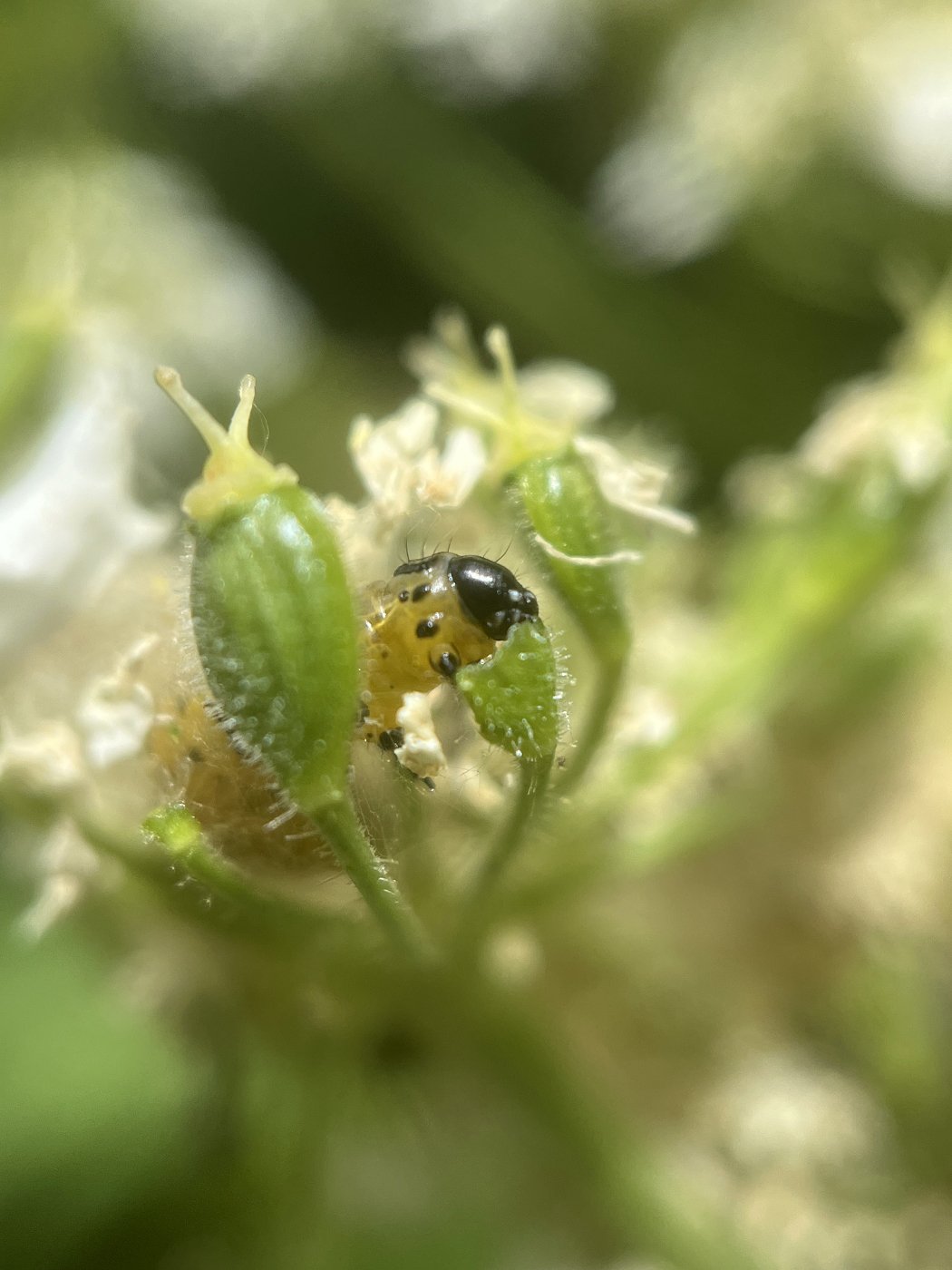
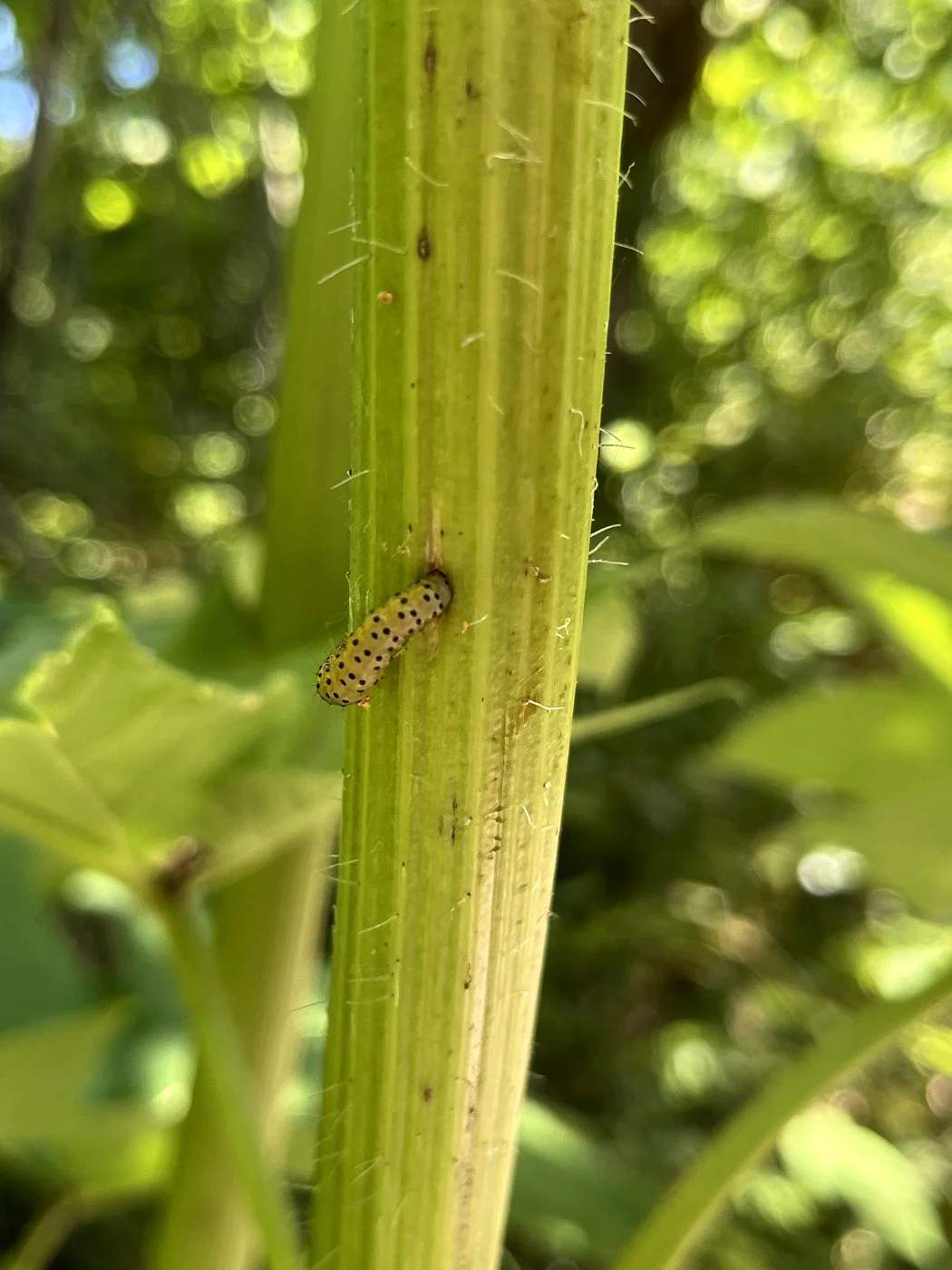
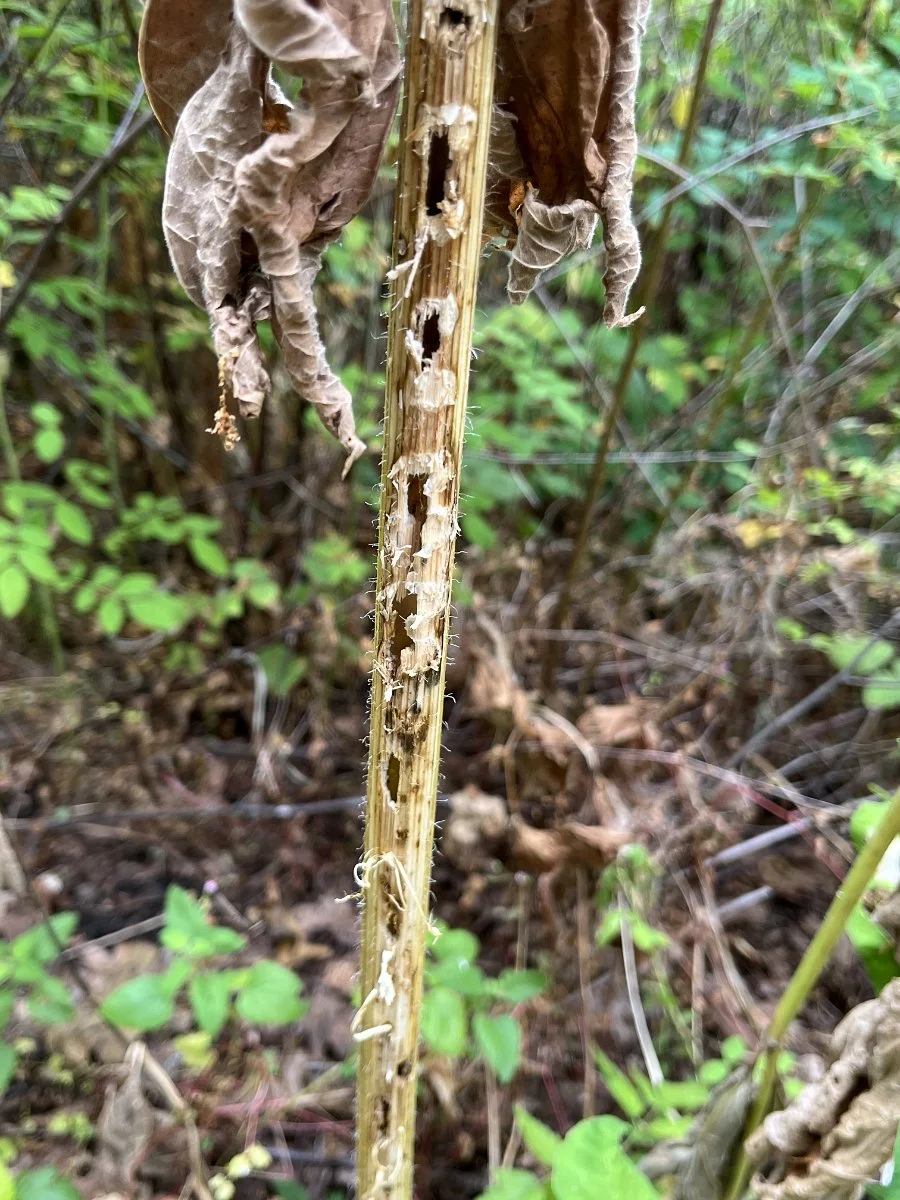
I have posted about this before (Cow Parsnip Cache, 07/28/21). I felt like it was worth reposting because Downy woodpeckers are beautiful birds and I am seeing them everyday. There are heaps of cow parsnip plants down the river path and out in the wetlands where you can observe them foraging. Walk quietly and listen and you will likely hear the pounding of Downy woodpeckers opening the stems of cow parsnip to extract the caterpillars or the cocoons of a carrot seed moth that are inside. Downies are usually quite tolerant of your presence and will allow to observe at a fairly close distance. There is a nice patch right next to the bathroom that I have seen them frequently foraging on as I have waited for the bathroom. It’s fun to watch them hop along the cow parsnip stems exuberantly opening them and a few times I have seen a juvenile Downy following a parent from stem to stem impatiently begging for food too. I saw tons of the caterpillars this year eating the seeds and burrowing into the stems which are hollow and provide an excellent home. That probably explains why I am seeing Downies on them so frequently. You can see one of the cow parsnip stems below and it has been absolutely shredded by Downies.

It’s a beautiful world. I hope you are enjoying your summer. See you out there.