
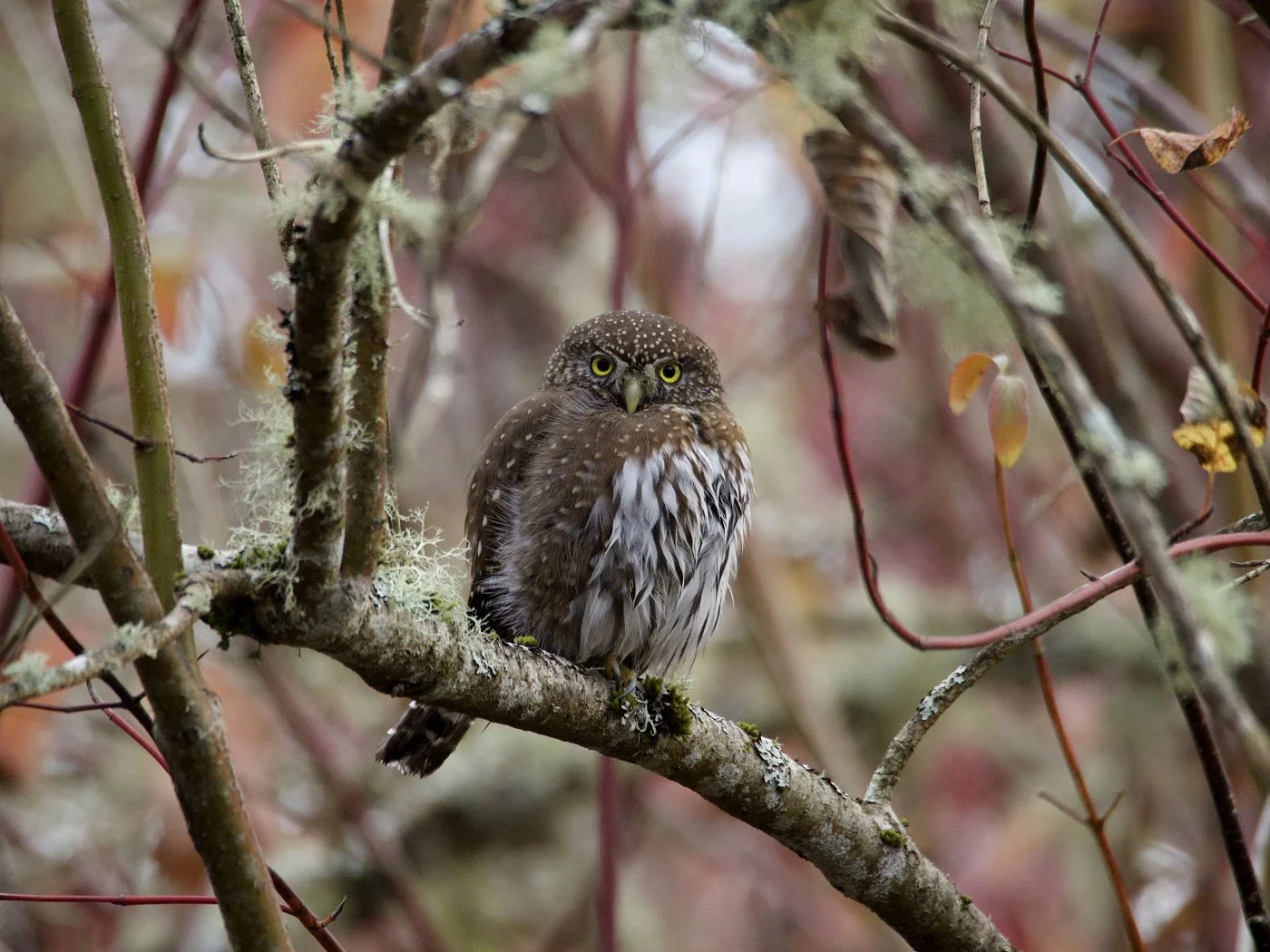
I was watching a mixed flock of songbirds in the wetlands when I noticed a bunch of them vocalizing alarm calls just off to my left. I slowly made my way over there carefully watching. I arrived to find black-capped and chestnut-backed chickadees, white-breasted nuthatches, Bewick's wrens, ruby and golden-crowned kinglets, bushtits, towhees, song sparrows, and more chickadees swarming around an Oregon ash tree. It was a whirlwind of birds! I watched for about five minutes when suddenly and almost unnoticeably a small bird darted out from behind the tree and flew by. Everybody followed it and me too. It flew up onto a limb about 20 feet up overlooking the wetlands just below the bridge and I could see that it was a northern pygmy owl!
All the birds were still alarming and swirling around, definitely keeping a safe distance away. This bird is very quick and agile and small songbirds are first on its menu. It stayed there for about 15 minutes and then flew down to the water just south of the bridge
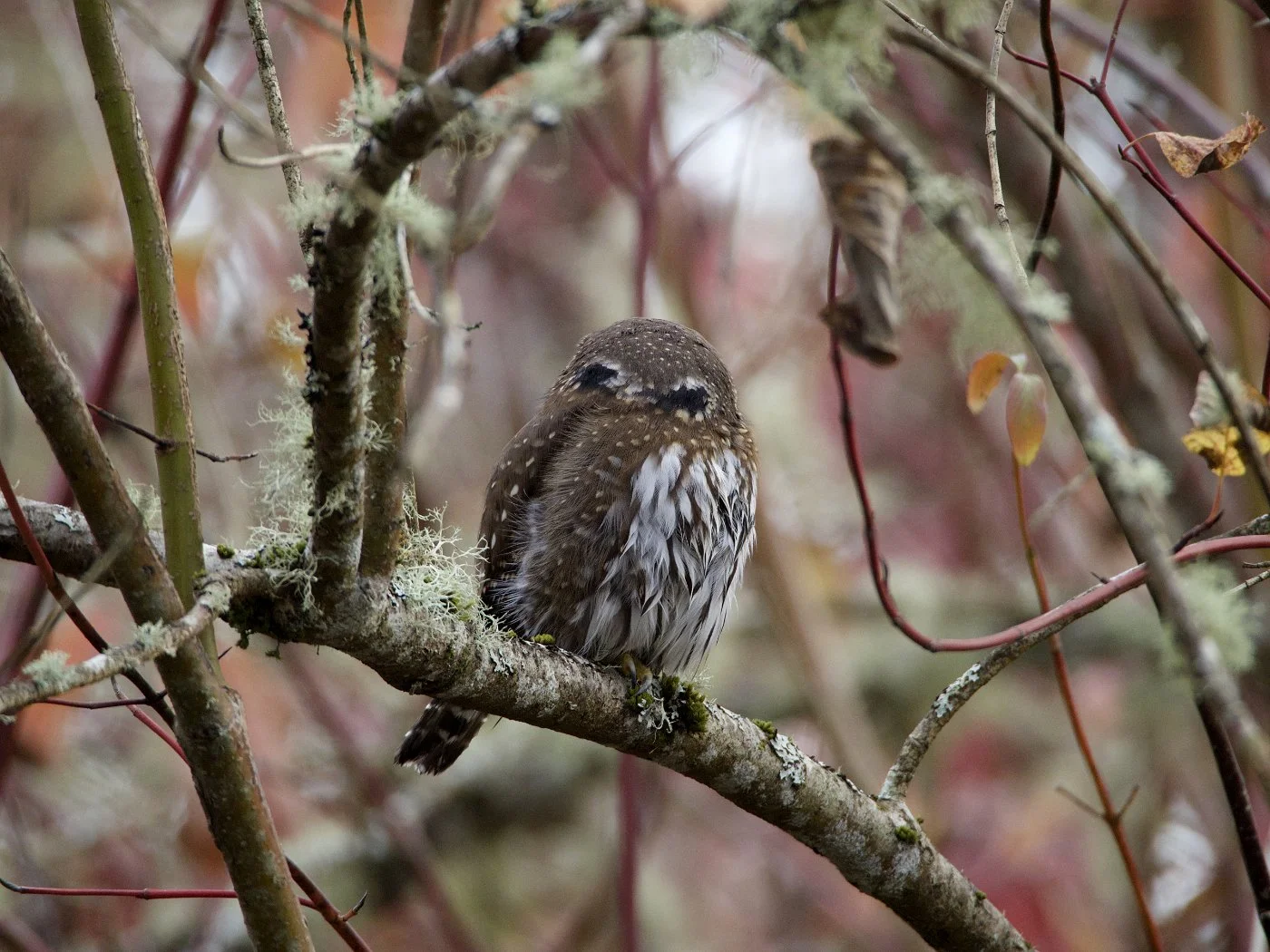
Like all birds, this bird never stops looking around. It is turning its head constantly looking in every direction. Honestly, it seems like it would be exhausting to be constantly scanning for danger or an opportunity to catch a meal or having a bunch of little birds scolding you when they discover your whereabouts. As the northern pygmy owl looks over its shoulder, you realize that it has “eyes” in the back of its head. It is assumed that these black spots will fool predators or mobbing song birds that it is watching them. It looks convincing to me.
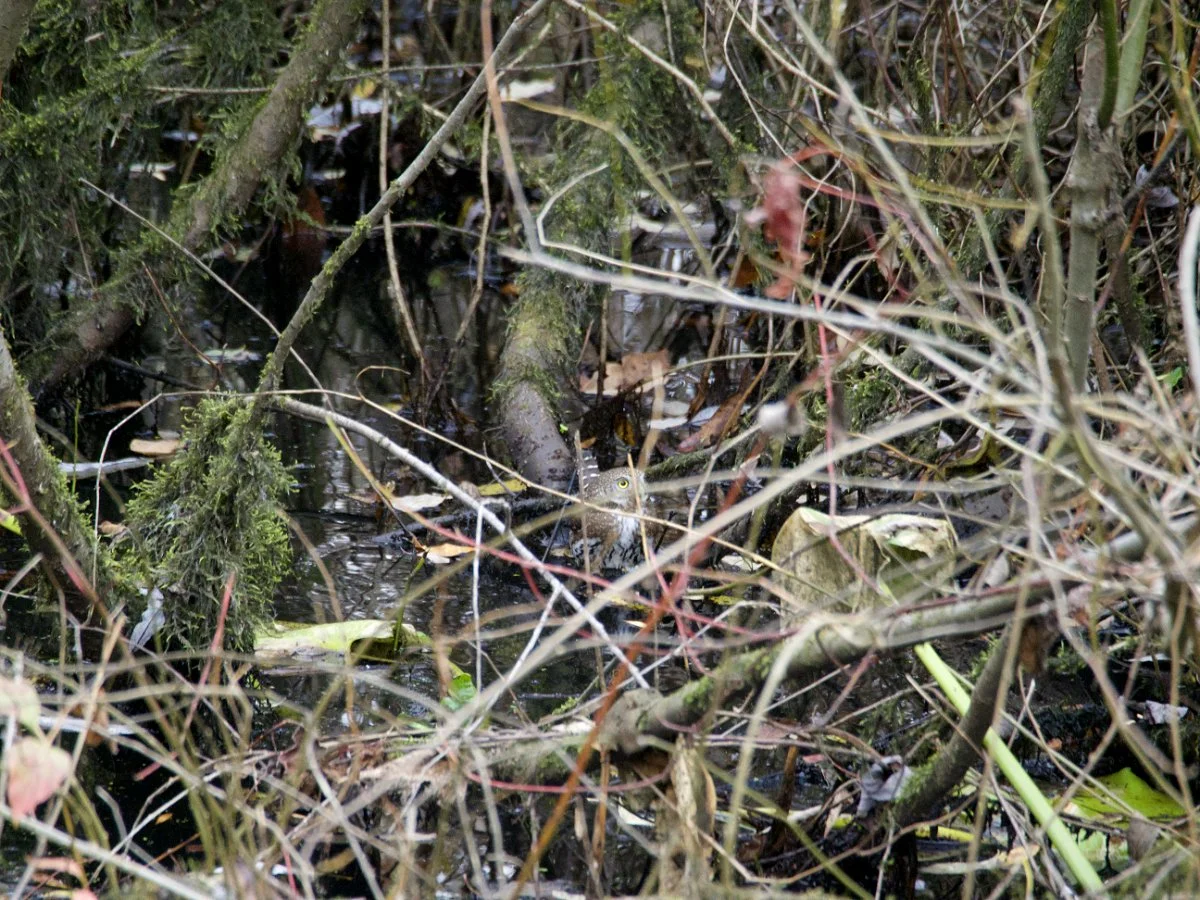
Okay, let’s get back to the story. This little owl flew to a limb just above the water and hopped around and down to a tree limb that led into the water. It waded into the water and began to bathe. It dipped its head into the water to spill water over its back and body and fluttered its wings merrily splashing. It bathed and preened for about 15 to 20 minutes and then flew up to the branch where I took the first photo of this post. There it fluffed its feathers, preened and dried off. That was the first time I have seen an owl take a bath.
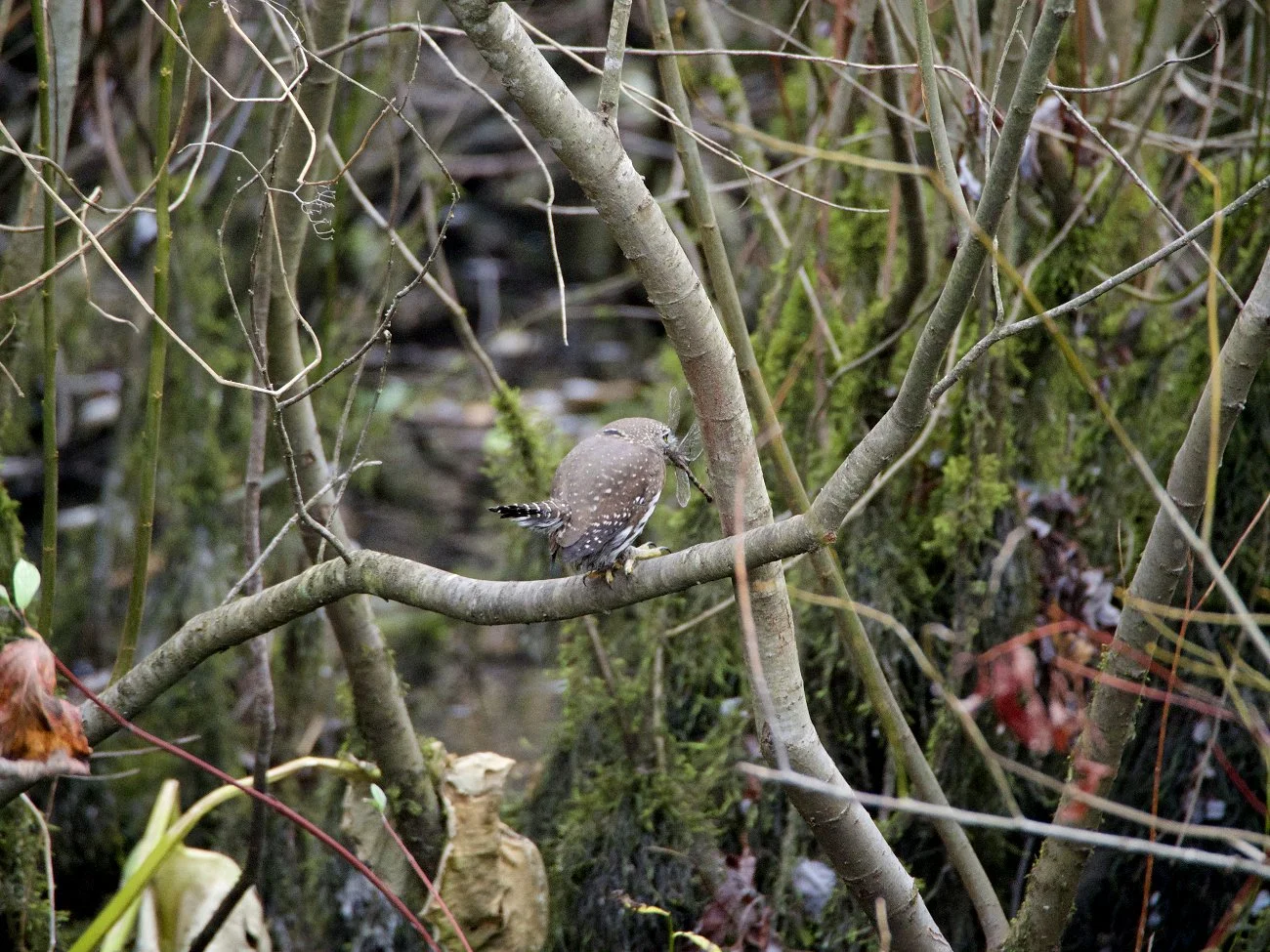
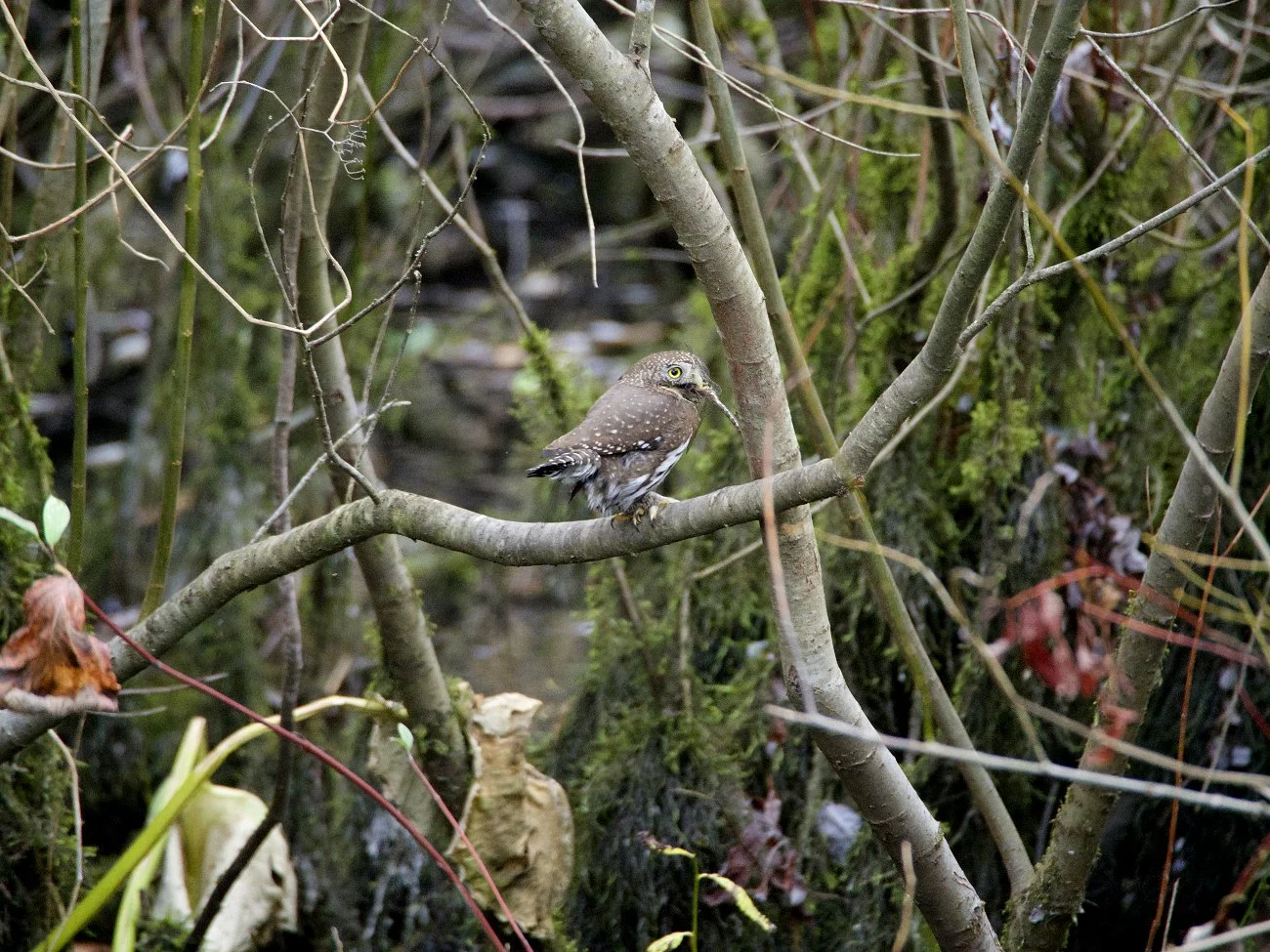
I continued watching my little friend as it perched on a limb and vigilantly observed its surroundings. The small songbirds had scattered at this point and all was quiet. I’m sure it was relieved to have a little peace and quiet. It sat there for probably a half an hour before it suddenly darted down behind it to a log lying in the water. It then flew up to this limb and I saw that it had caught a dragonfly! I had seen that dragonfly flying around while the owl was bathing and I wondered if the owl would catch and eat it. It did! Once it got the dragonfly situated in its talons, it gobbled it right up.
It was at this point that I really noticed that the pygmy owl has big, yellow feet! For such a small bird, I was surprised to see these strong, thick feet with formidable looking claws. Once in their grip, I am sure that it is over for their prey. This is the list of food on Cornell’s All About Birds: “Northern Pygmy-Owls mostly eat small birds, such as hummingbirds, chickadees, warblers, and sparrows, as well as small mammals, including shrews, moles, and chipmunks. However, they occasionally attack prey much larger than themselves, such as Northern Bobwhite and California Quail. They also eat insects such as beetles, butterflies, crickets, and dragonflies, as well as reptiles such as lizards and skinks.” I am so happy that there is a ecosystem out at the arboretum that can support this amazing creature.
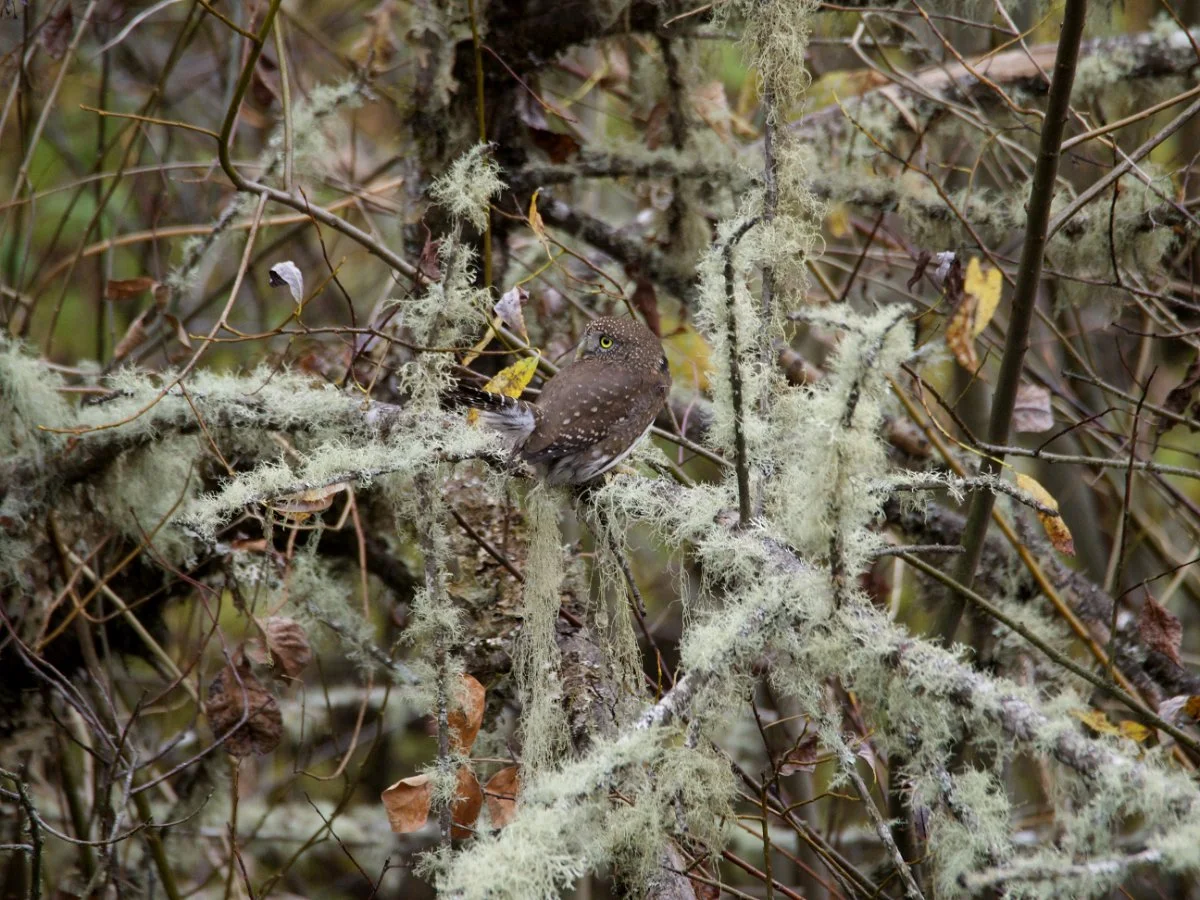
One last thing that I want to mention. I noticed that it would sometimes have its tail cocked up, flick it side-to-side or hold it off to the side a little. The Birds of the World database by Cornell writes that it does this when it is excited or agitated. After a bath, a little rest, and a dragonfly appetizer, it moved up to this lichen-encrusted limb with its tail was cocked up and occasionally flicking it from side to side. It was getting late in the afternoon and maybe it was ready to find a meal before bedtime.
This bird is so beautiful and I am so grateful for it letting me spend the afternoon with it. Thank you little owl and thank you for checking in and reading my blog.
Nature is an inexhaustible source of wonder. I hope to see you out there.