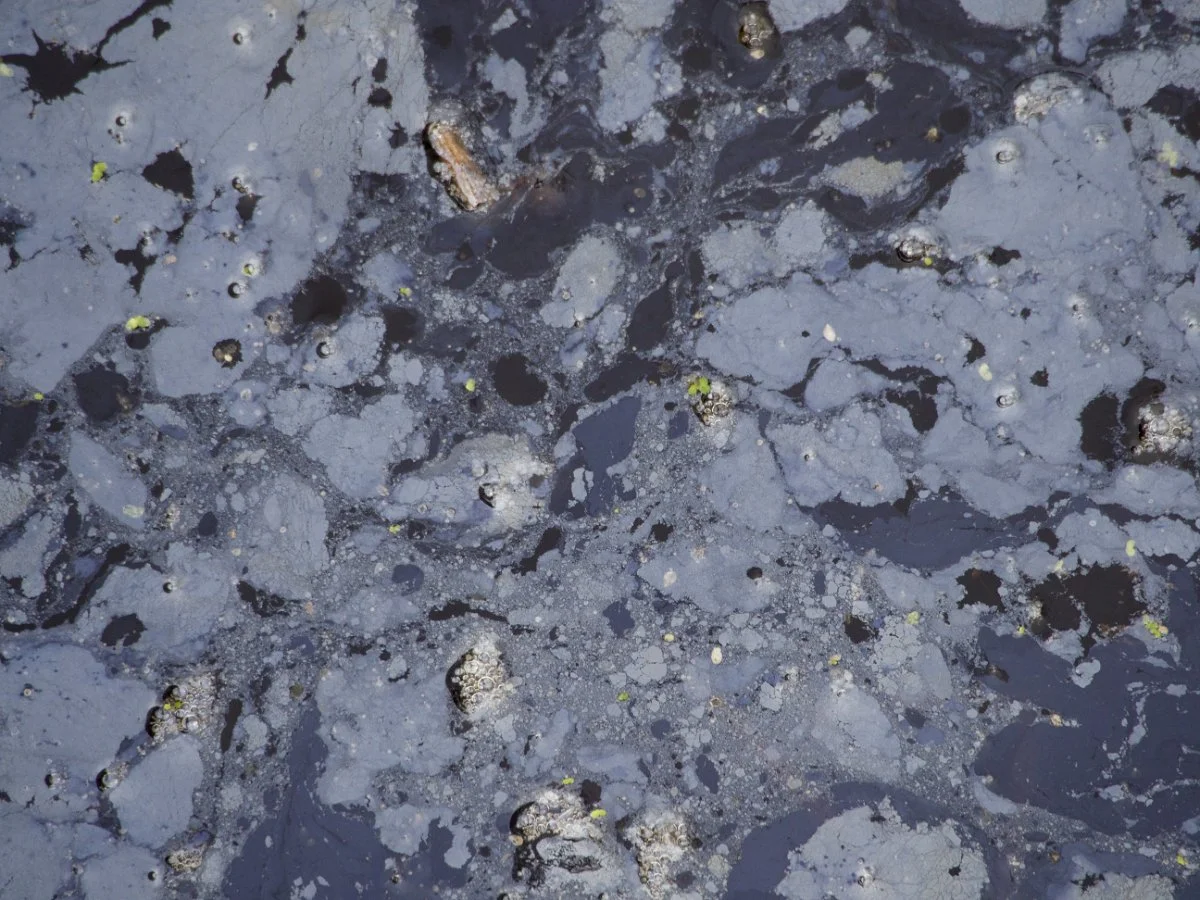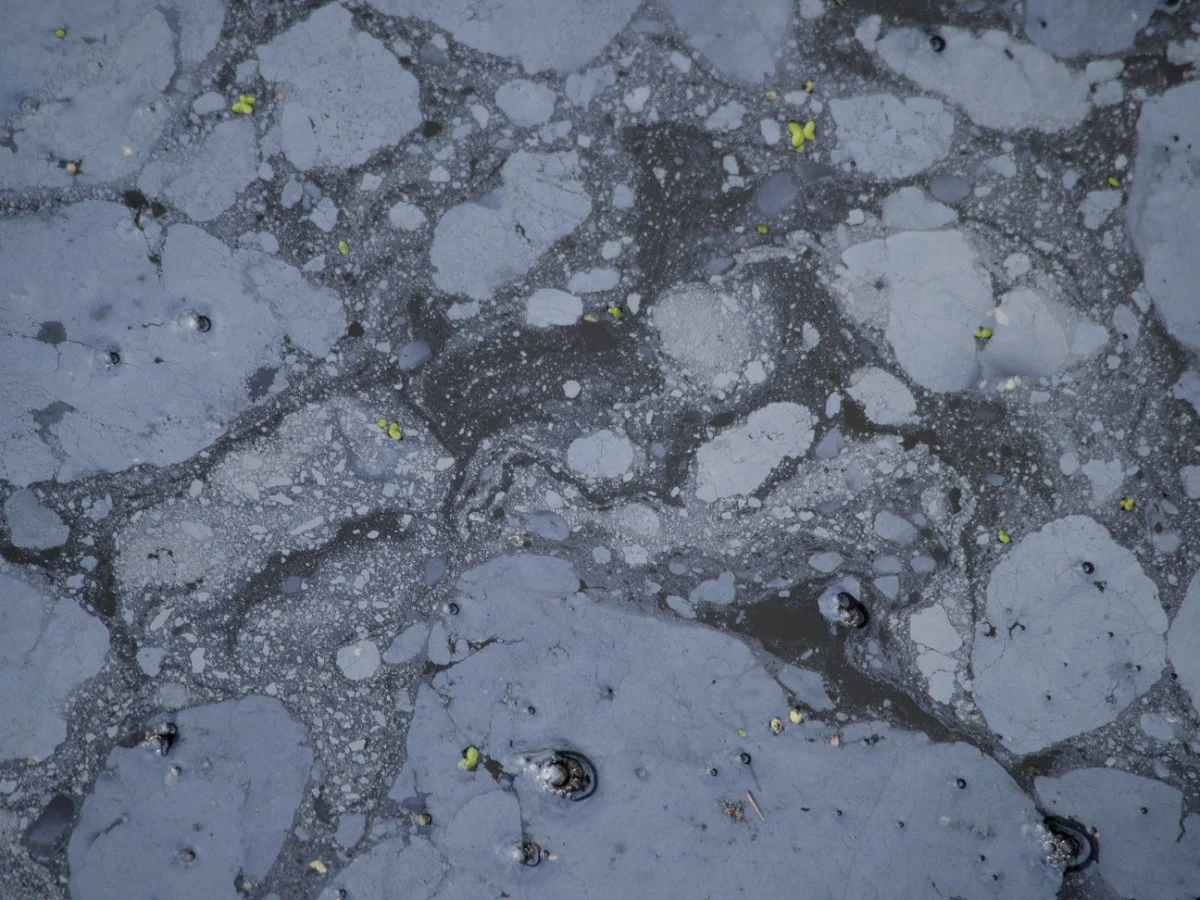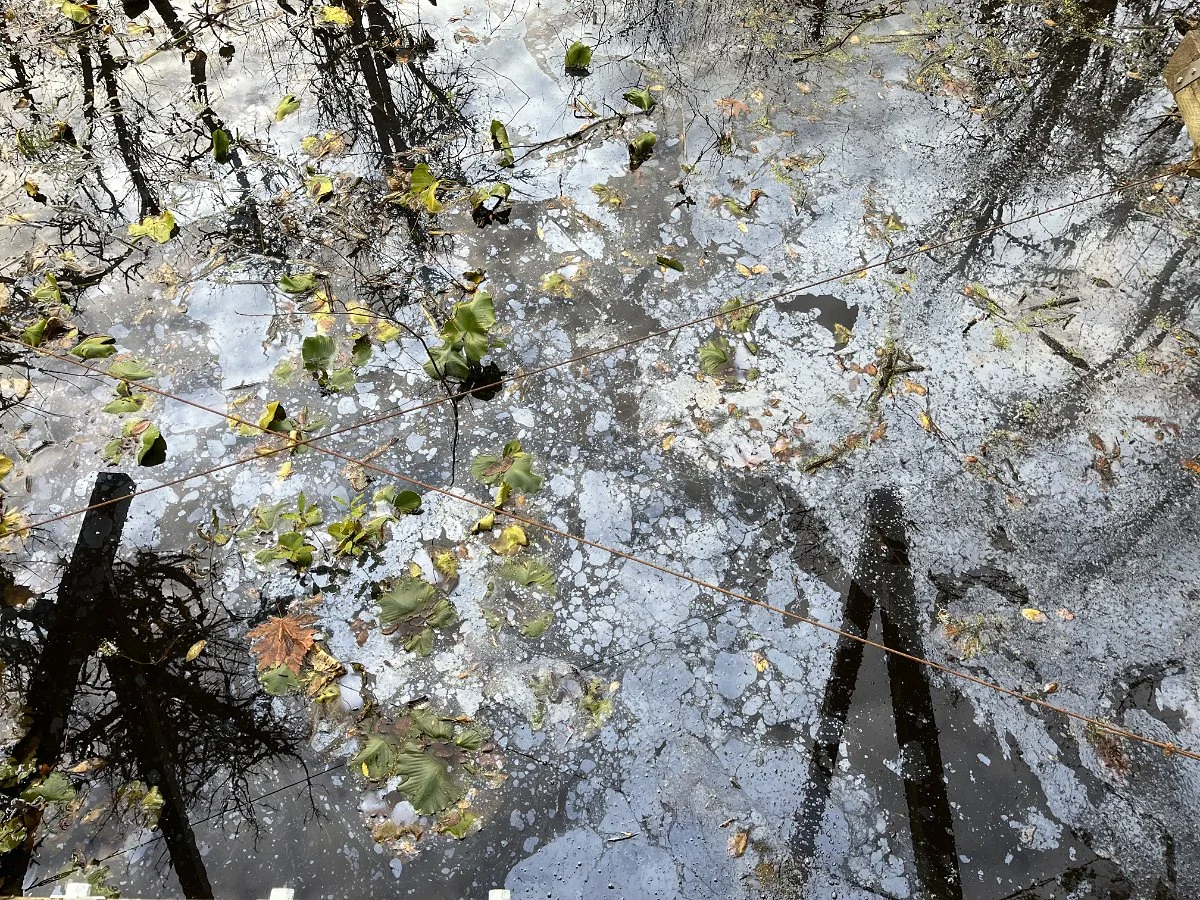
During the first couple of weeks of November, the surface of the water was covered with a thin film that had become fractured and had a colorful sheen suggestive of an oily substance.
One way biological surface sheens can occur is the result of bacteria decomposing organic matter. Places like the wetlands become a suitable environment for bacteria to flourish because the flow of water is very low or not at all which can lead to low levels of oxygen in the water. With the heaps of newly added leaves from deciduous trees and shrubs growing in the wetlands, the perfect, soupy environment has been created to break down all this plant material and create a biosheen.
A biological sheen can appear similar to a sheen caused by petroleum. To tell the difference, a biological sheen breaks into irregular or jagged edges when the surface of the water is disturbed and petroleum sheens stays together in a slick.
After I made time to do a little research on the phenomenon, I went back to area to investigate if it felt oily, had an odor, etc. Disappointingly, I found that it had completely disappeared. I stood there wondering about it and wished I had been more curious earlier. Where did it go? Why was its presence so brief? Did it dissovle? Did another organism eat it?
I have been looking around the internet and haven’t come across more specifics on how biosheens are created as a byproduct of decomposition and more details of their makeup. I will leave it there at that moment as I continue to solve this puzzle.
Nature is an inexhaustible source of wonder. I look forward to seeing you out there.