
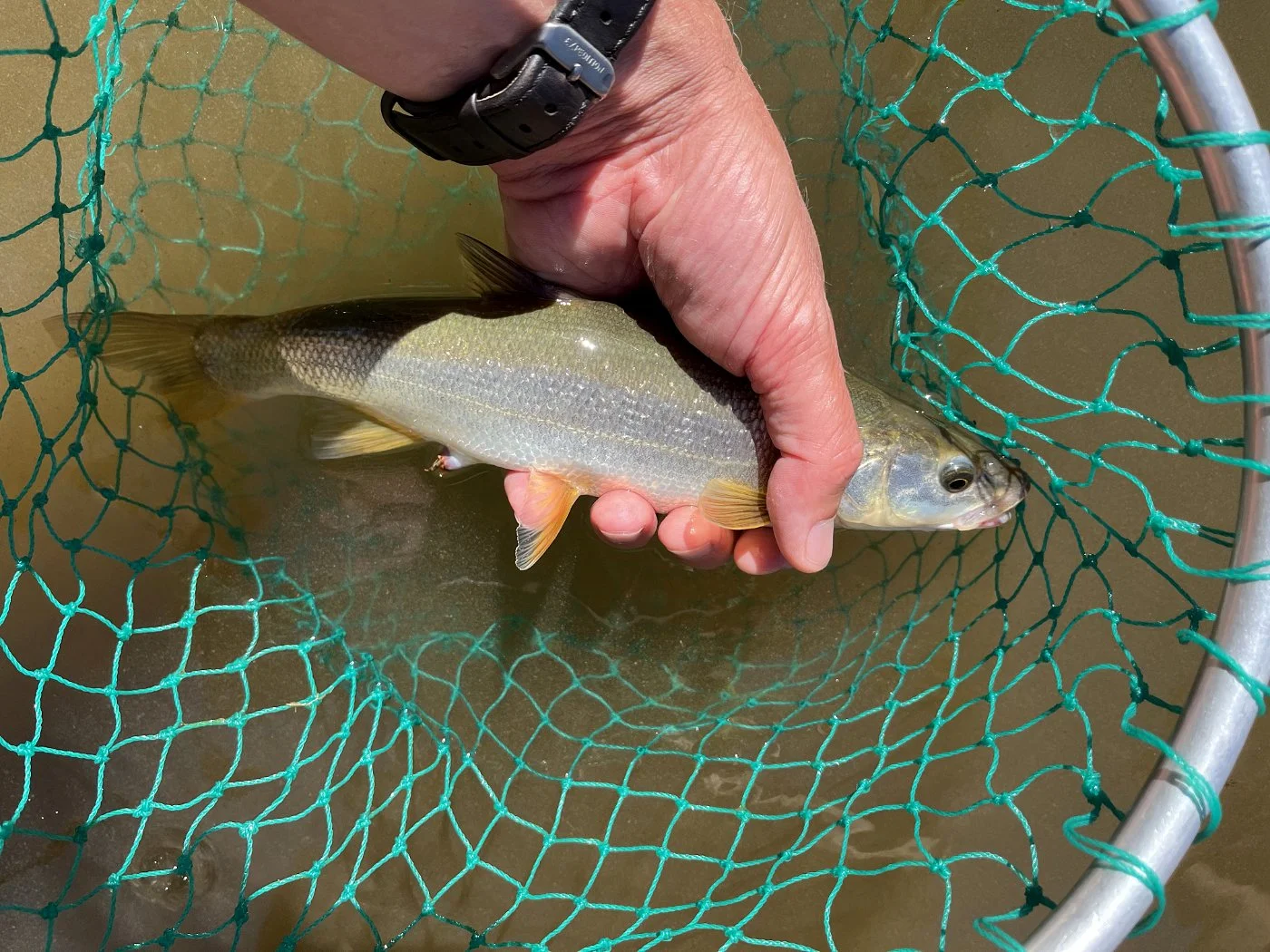
While fishing with my homies at the arboretum, we caught a native fish of the Northwest called a Northern Pikeminnow, Ptychocheilus oregonensis.
Its a beautiful fish with silver sides and an olive colored back. One of the first things I noticed with this fish is its translucent yellow-orange fins. The males display this color when they are spawning, otherwise they are clear.
Males reach sexual maturity in 3 to 5 years while females mature at about six years. They spawn from May to early July over gravelly substrate in streams and lakes. A mature female can lay 30,000 eggs annually!
They feed on macro invertebrates especially when they are small and are first developing and will add fish to their diet as they grow larger. They typically grow to be 12 to 24 inches long, weighing between 2 to 4 pounds. Apparently, under certain conditions they can grow quite large. A field guide on a Montana state website reports: “Northern Pikeminnow are among the largest native North American minnows. Weights of over 7 pounds have been reported in Montana, with weights of nearly 30 pounds reported from Canada.”
Because the adults are piscivorous (fish-eating), they have been considered a threat to juvenile salmon and steelhead. There is a program called The Pikeminnow Sport Reward Fishery Program to reduce the numbers of northern pikeminnows. Since 1990, nearly 6 million Northern Pikeminnow have been removed through the program. I wondered what happened to all those fish and found a NBC News report that stated: “Fishermen have to turn in the pikeminnows to claim the bounty. The fish are then ground up into fertilizer. (An attempt a few years ago to turn them into fish sticks in Chicago proved a failure. Pikeminnows are not good eating; they are bony and the flesh is mushy and has little flavor.)” I didn’t see anything about what happens to the fish on the Oregon Department of Fish and Wildlife website.
I am sure that salmon, steelhead and northern pikeminnows have been coexisting and flourishing in the same habitats for a long time. So, I imagine there are many factors that are contributing to the reduction of salmon and steelhead populations like loss of habitat caused by dams that destroy and impede access to spawning grounds.
It is a complex issue and what I know is that we should strive to be better stewards of the earth and all its lifeforms. Thanks for reading.