
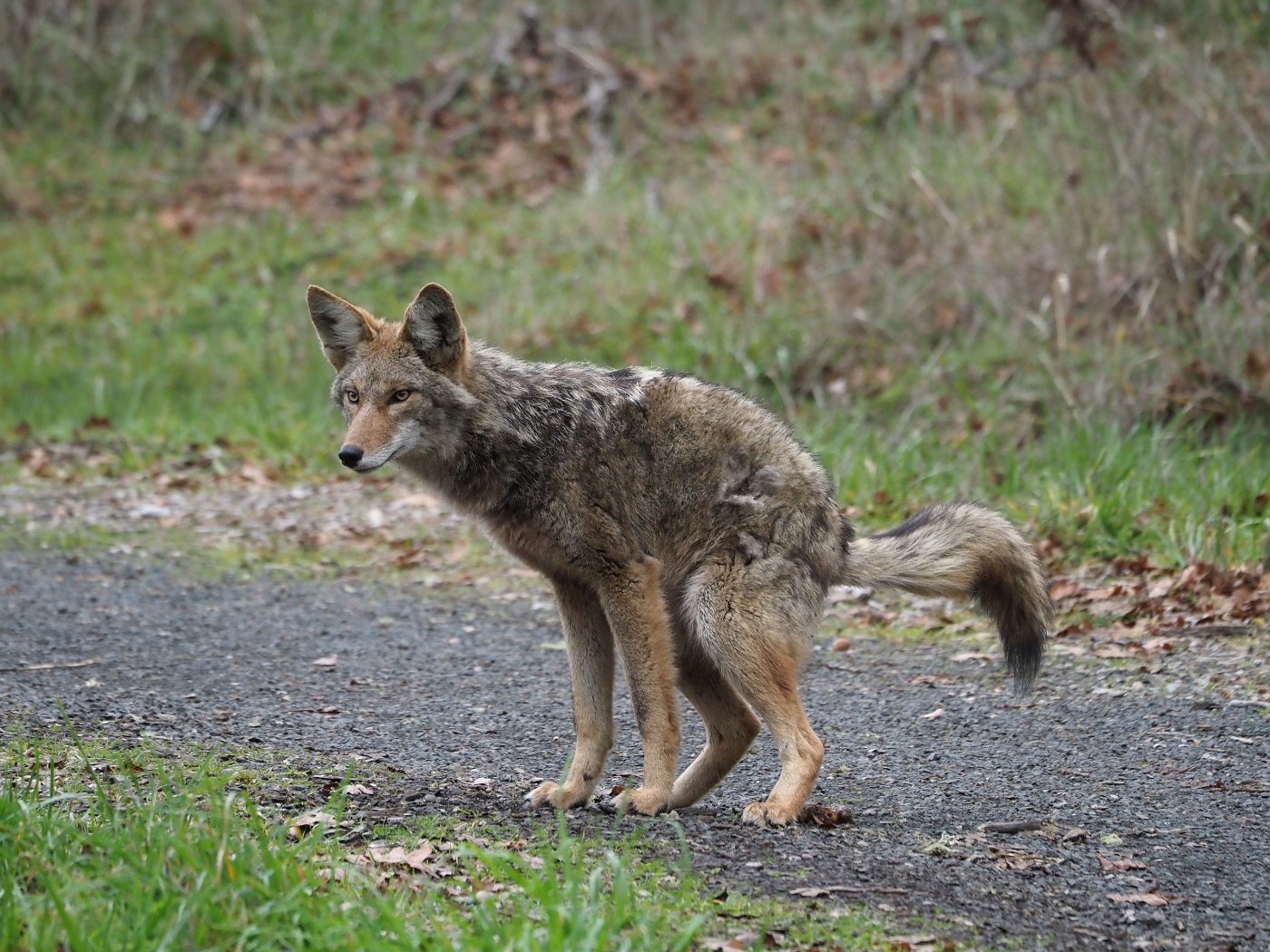
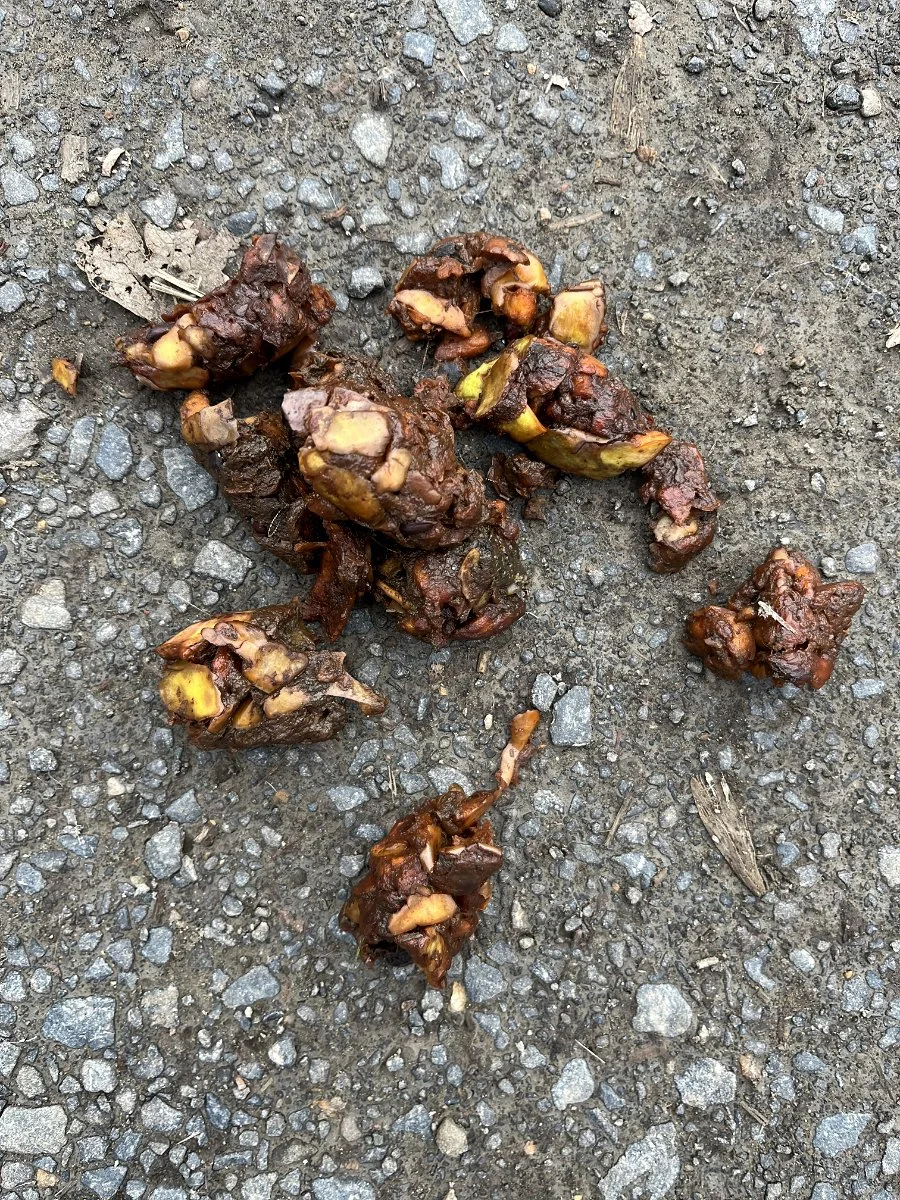
This coyote has been hanging around the entrance to the arboretum for a while this winter, which I have seen individuals do in years past at this time of year. Usually it keeps its distance as it hunts and roams around the open, grassy areas, but this year this one has become a bit more comfortable with people. A few people have reported to me that they have seen people feeding it in the parking lot, but I have not witnessed it myself. That might help explain why it has been seen more frequently in and around the parking lot. Please do not feed any animals at the arboretum. This day, I was photographing some lichen on an oak branch, when I looked over to see that it had snuck up on me. It was watching me and inquisitively sniffing the air. It then slowly trotted a little ways up the gravel road leading to the administrative building, stopped, and defecated on the road—a bold statement indeed. What is it saying?
Coyote scat is frequently found on the trails at the arboretum. Like other canines, it defecates in conspicuous spots like trails, roads, prominent rocks, or other elevated spots such as fallen trees. The intentions of placing the scat in these locations is primarily to communicate to other coyotes and animals that this is its territory. Under the section on red foxes in his book Tracking and the Art of Seeing, Paul Rezendes says, “Most wild canines have anal scent glands and are actually depositing scent on scat. Some scientists believe that animals can identify other individuals from these scents.” Beyond establishing who you are and your territory, what information is being passed on to other coyotes and animals in these scents is not fully understood, as far as I can ascertain from the reading I have done so far.
The message I took away from the coyote defecating on the trail is that the coyote is a beautiful, fascinating creature that calls the arboretum its home. I need to honor its life by respecting its right to be here, and be a thoughtful steward of the arboretum in order that it may flourish and give it space to live out its life here in peace and harmony.
Resource
Rezendes, Paul. Tracking & the Art of Seeing: How to Read Animal Tracks & Sign. 2nd ed., HarperCollins, 1999.