
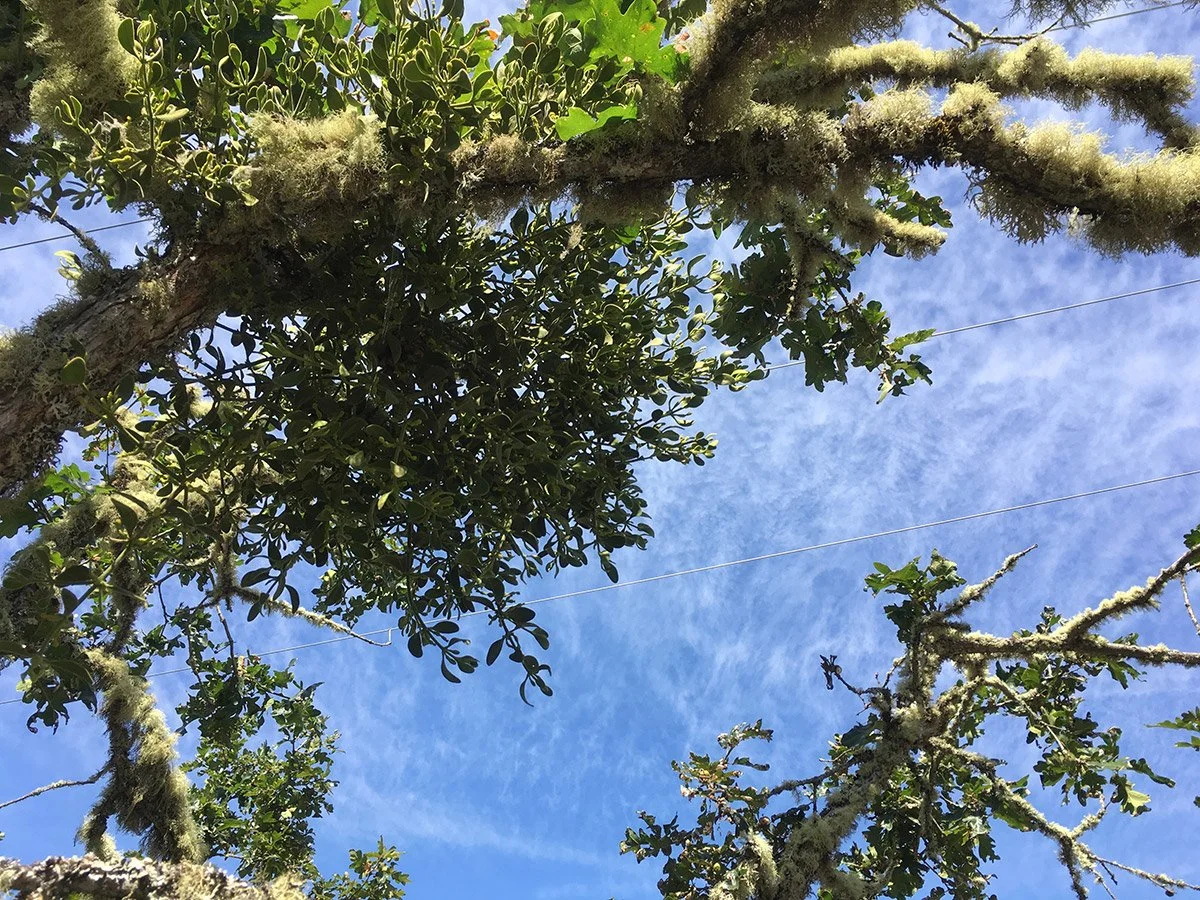
Mistletoe can be seen growing in the Oregon White Oak trees out at the arboretum. They are evergreen and keep their fruit into the winter which is a beneficial food source for birds like Western Bluebirds.
Mistletoe is a hemiparasitic plant. This means that it takes water and nutrients from its oak tree host, but also contains chlorophyll and is able to perform photosynthesis to produce some of its own food. The amount that it performs photosynthesis varies once the plant becomes established and varies between the different species.
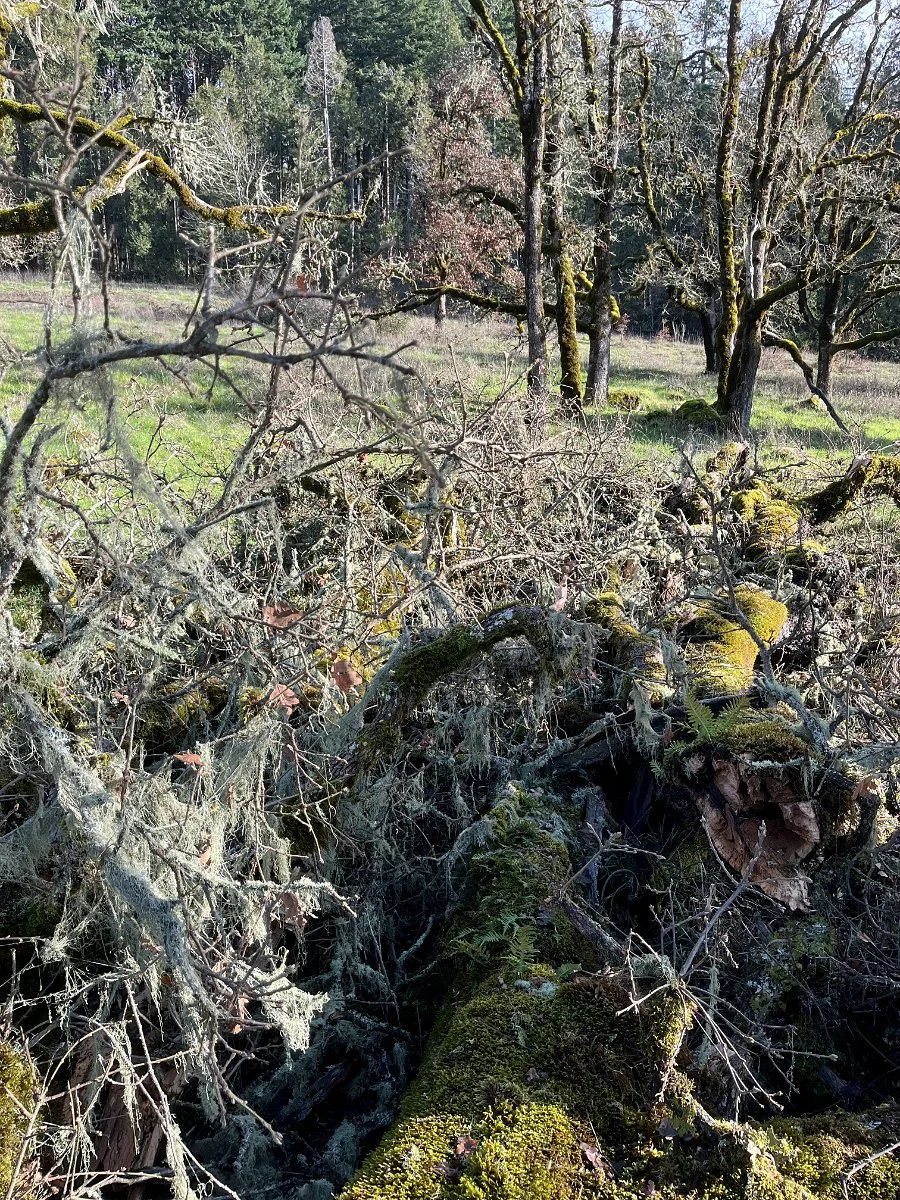
An oak tree recently fell at the arboretum next to the old barn. At the top of the tree there was some mistletoe growing which was now easily accessible as the tree lay on the ground. I trimmed off a small branch that had some mistletoe growing from it and took it over to the wood shop where Patrick neatly cut the mistletoe in half with a band saw so I could see what it looked like on the inside. It was really interesting and beautiful to see the internal structure of where the two plants grew together. Thanks Patrick!
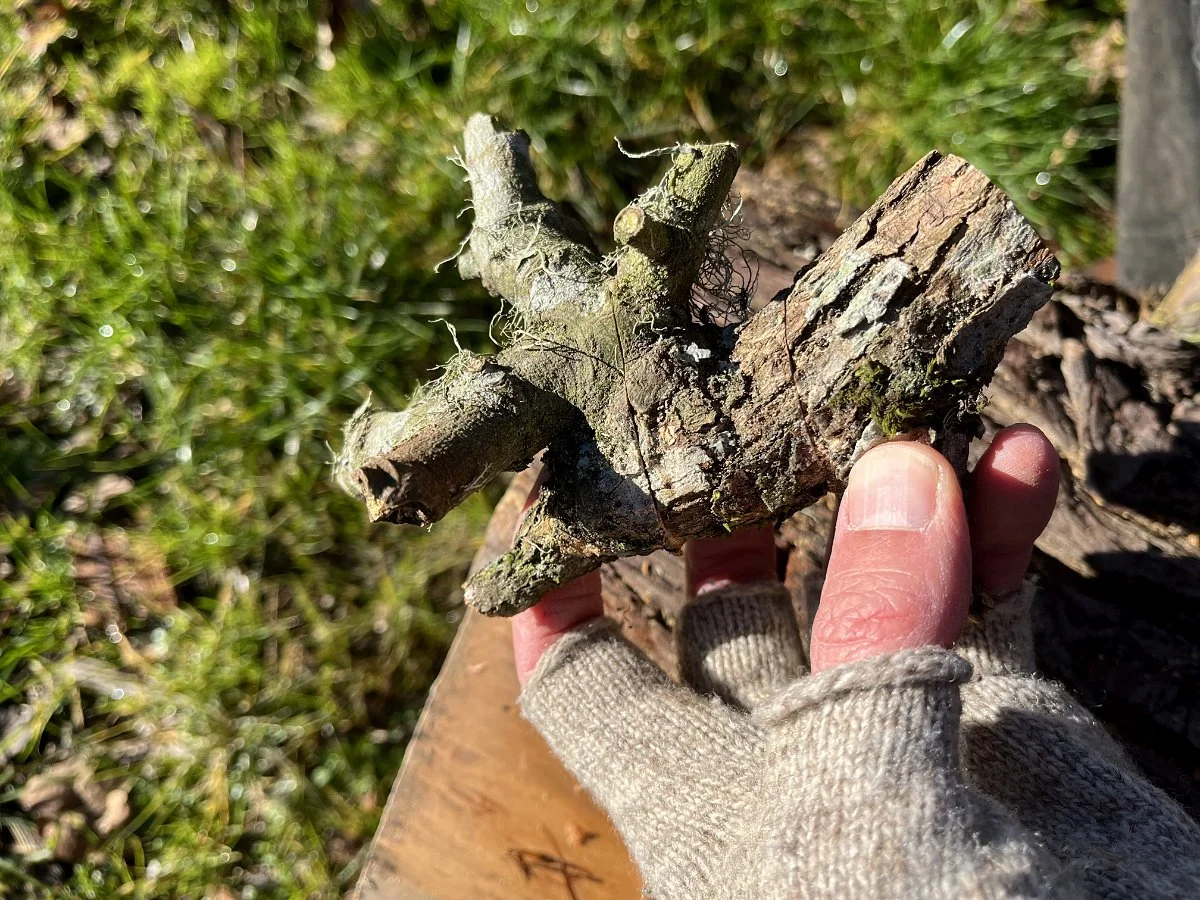
Patrick removed the branches of the mistletoe so that it would fit through the saw. In the photo, you can see me holding the branch in my hand and the mistletoe growing out of the top. He made two vertical cuts, one through the mistletoe and one about an inch to the right on the oak branch.
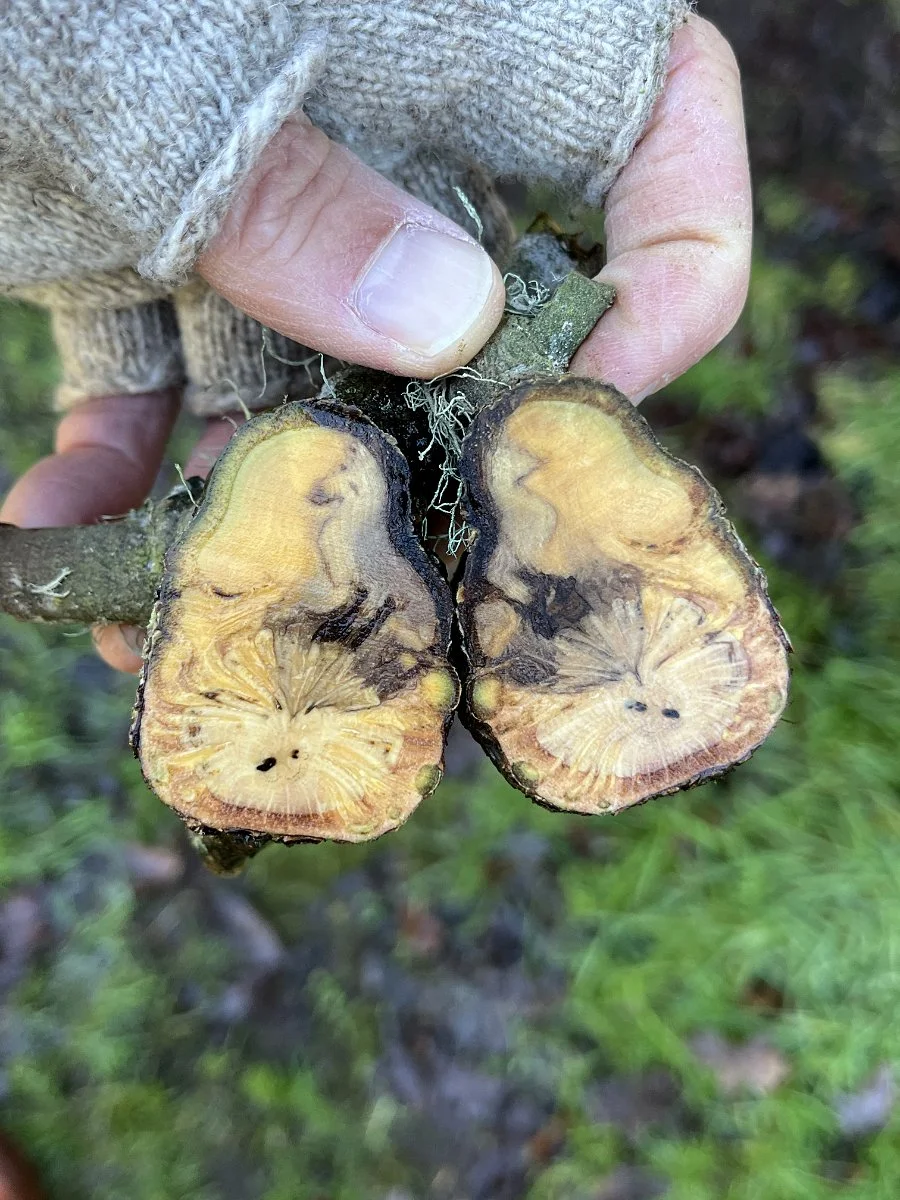
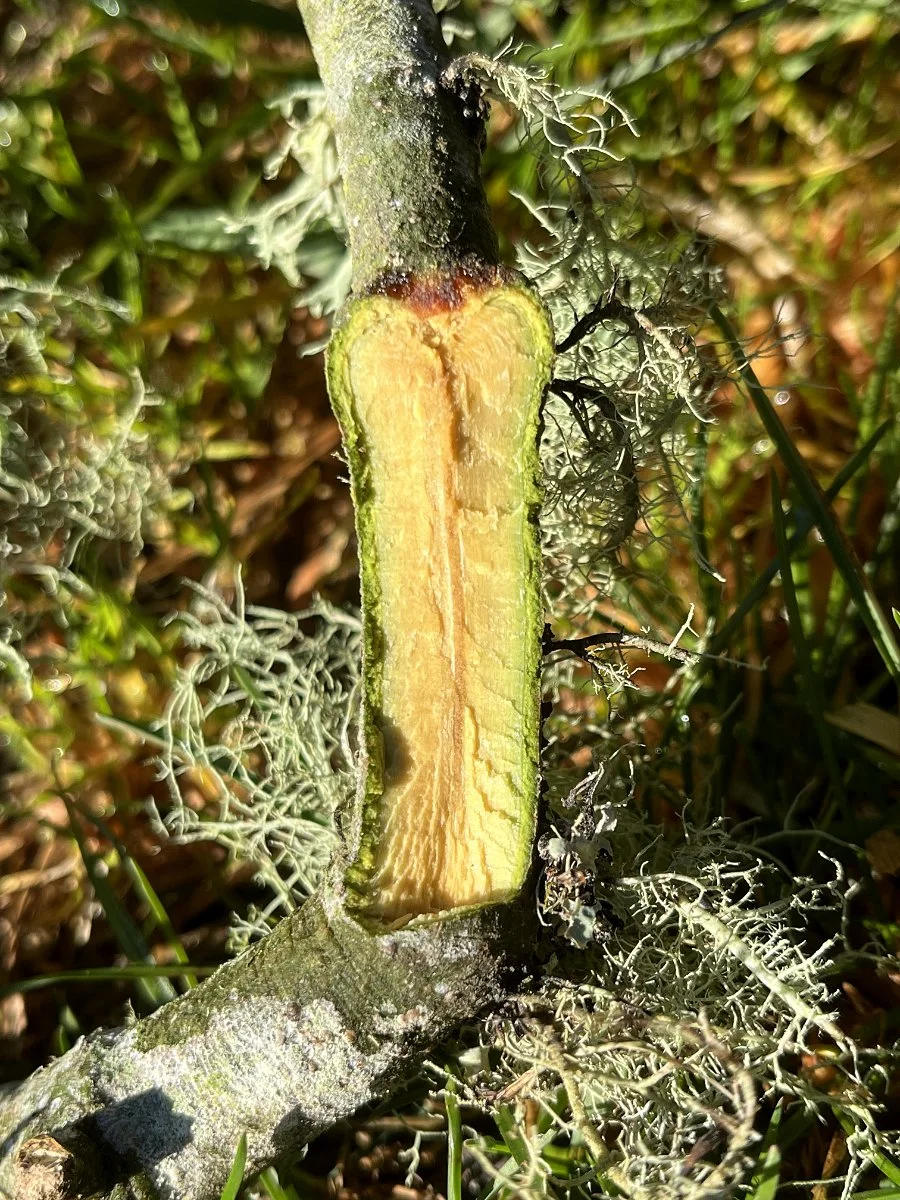
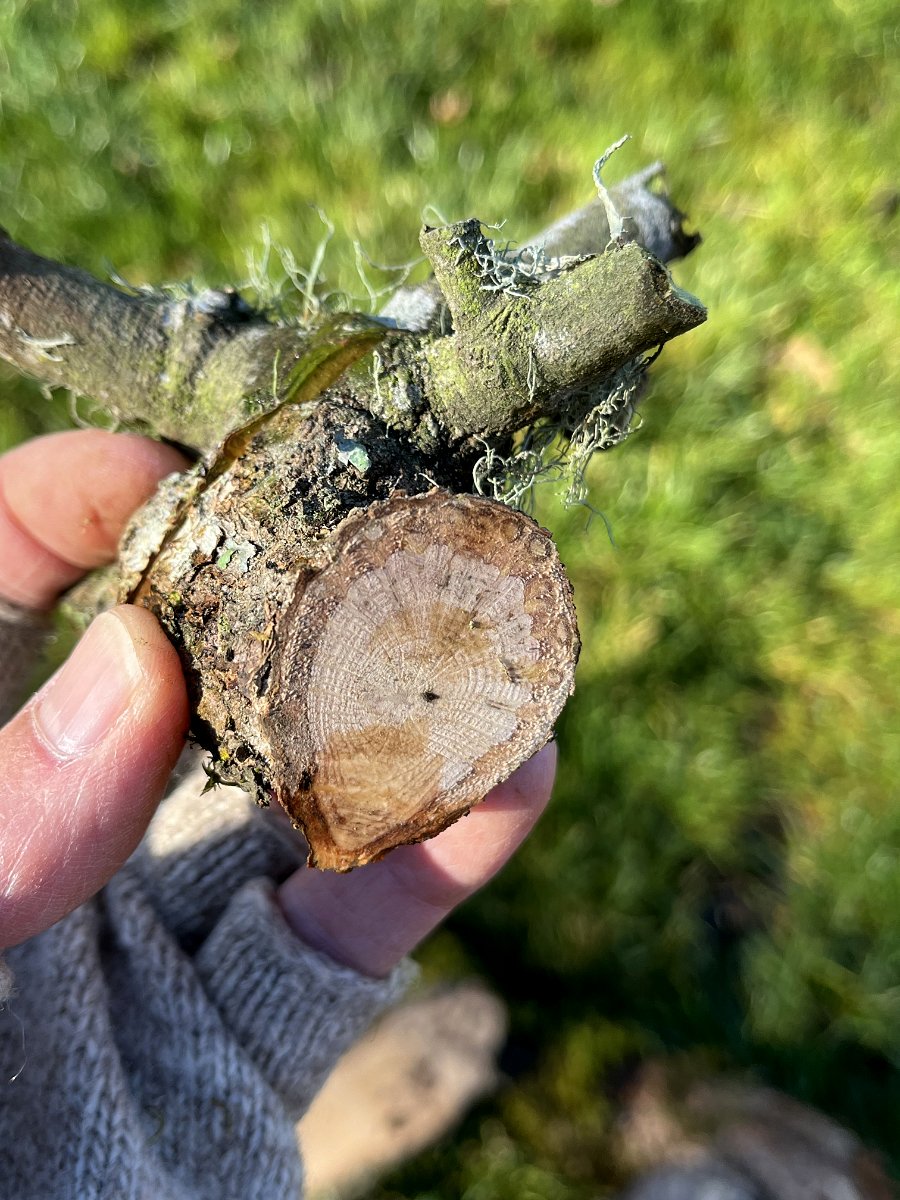
In the photo, I am holding the mistletoe stem and showing you the part where the mistletoe and the branch were cut in half vertically. The top half is the mistletoe and the bottom half is the oak branch. When the mistletoe germinates, it grows down into the vascular tissue where it taps into the xylem and/or phloem. In general, most hemiparasites are primarily parasites of the xylem in order to obtain water and inorganic nutrients. Holoparasitic plants do not photosynthesize and therefore will tap into the phloem as well to obtain nutrients like sugars produced during photosynthesis from the leaves of the host plant.
It is interesting to see the woody tissue of the mistletoe and the oak branch growing together. Once the mistletoe establishes itself on the branch by growing rootlike structures in the vascular tissue, the mistletoe’s growth becomes synchronized with the growth of the oak branch. This coordinated growth area is called the meristem. Essentially, the mistletoe starts to grow like a “branch” on the oak tree limb. In the second photo, you can see that it has a woody stem, a thin layer of bark, and lichens start growing on it. Reading about the biology of the interaction between mistletoe and its host plant can be a bit complex, for me anyway, but that is the overall idea of it from what I understand.
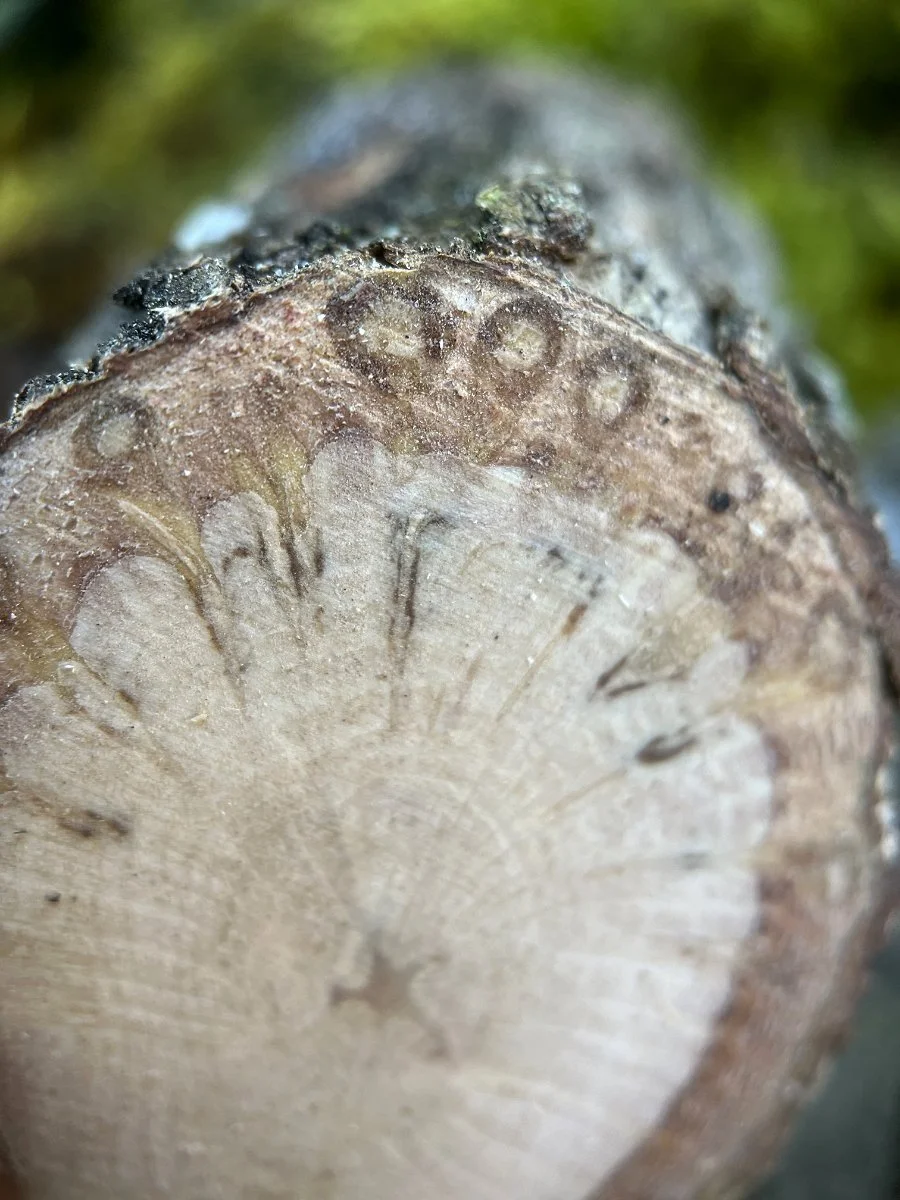
There’s more! There’s also a structure growing beneath the bark of the oak limb growing longitudinally from the mistletoe. These are called cortical strands and help to further establish the mistletoe by gathering nutrients and anchoring it onto the branch. The cortical strands will start to send sinkers down into the branch as well to further assist in securing the mistletoe to the host. This root-like structure of cortical strands and sinkers comprise what is known as the endophytic system of the mistletoe.
Again, reading about all of the biology of the interaction between mistletoe and its host plant is complex, but this is my basic understanding of it. I recommend that you check it out and do some further research, maybe you’ll be saying to yourself, “C’mon Bryan. It’s not that complicated.”
My sincere hope is that this blog inspires you to go outside, check it out, and maybe do some more research into the topic. Nature is an inexhaustible source of wonder. I hope to see you out there!
Resources
Ehrenberg, Rachel. “Marvelous Misunderstood Mistletoe.” Knowable Magazine, 18 Dec. 2020, https://knowablemagazine.org/content/article/living-world/2020/marvelous-misunderstood-mistletoe.
Glatzel, G., and B. W. Geils. “Mistletoe Ecophysiology: Host–Parasite Interactions.” Botany, vol. 87, no. 1, Jan. 2009, pp. 10–15, https://doi.org/10.1139/b08-096.
Whiteman, Noah K. “Mistletoes.” Current Biology, vol. 33, no. 11, June 2023, pp. R467–69. ScienceDirect, https://doi.org/10.1016/j.cub.2023.03.035.