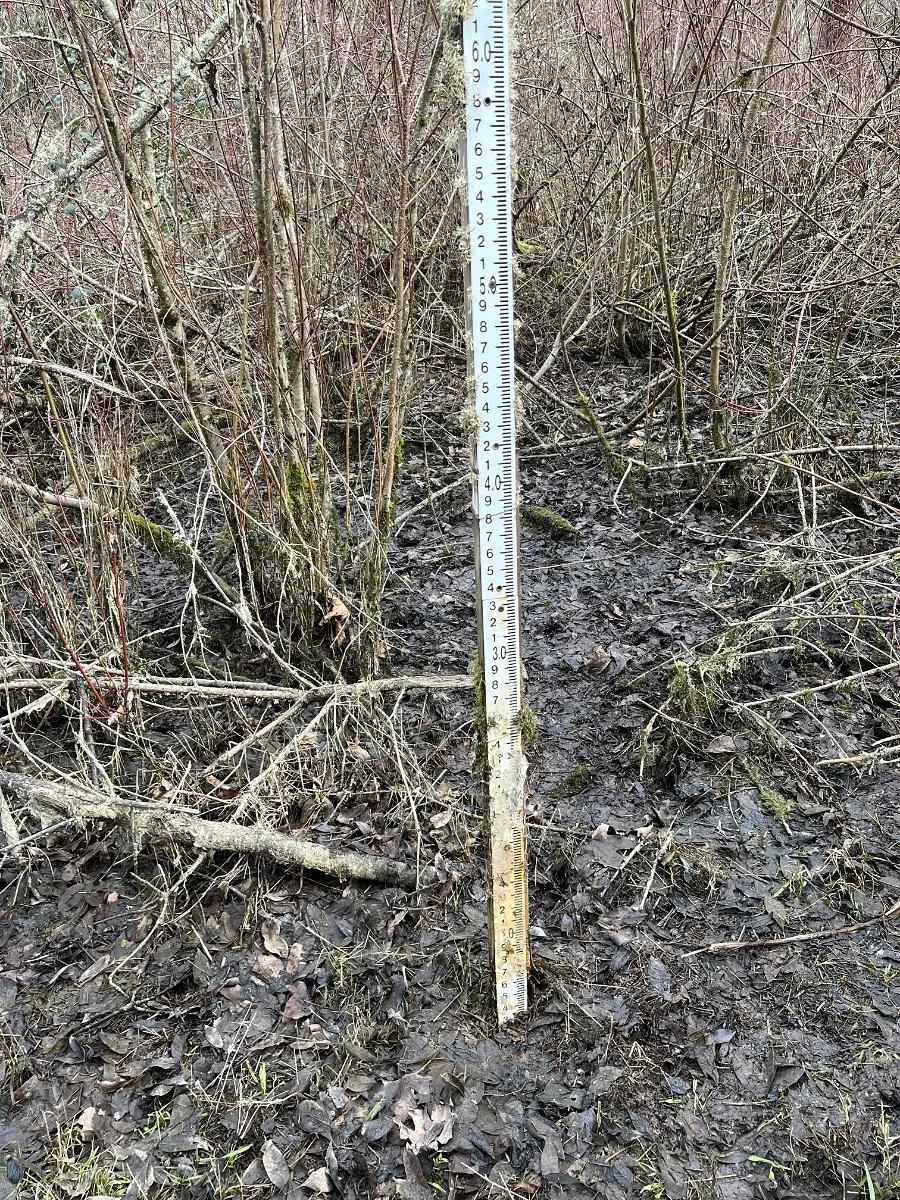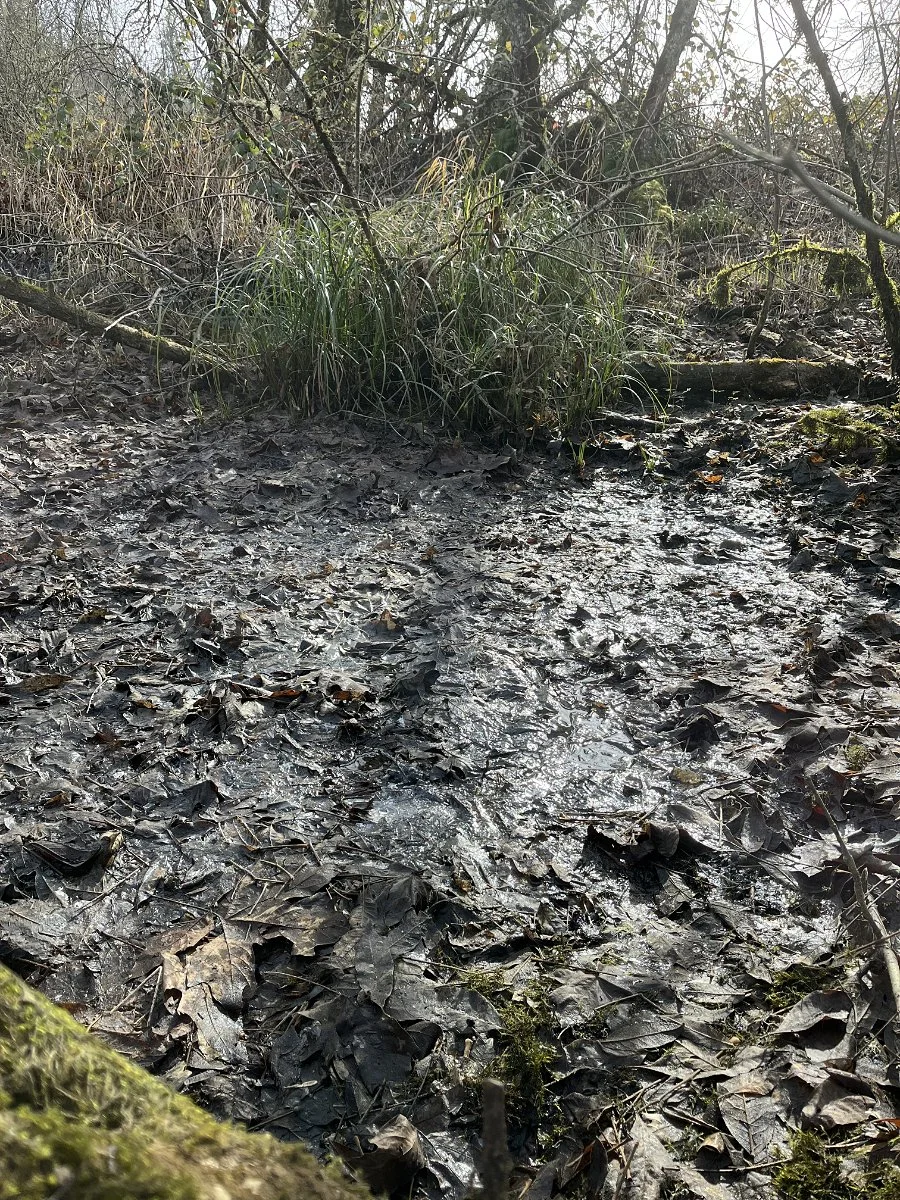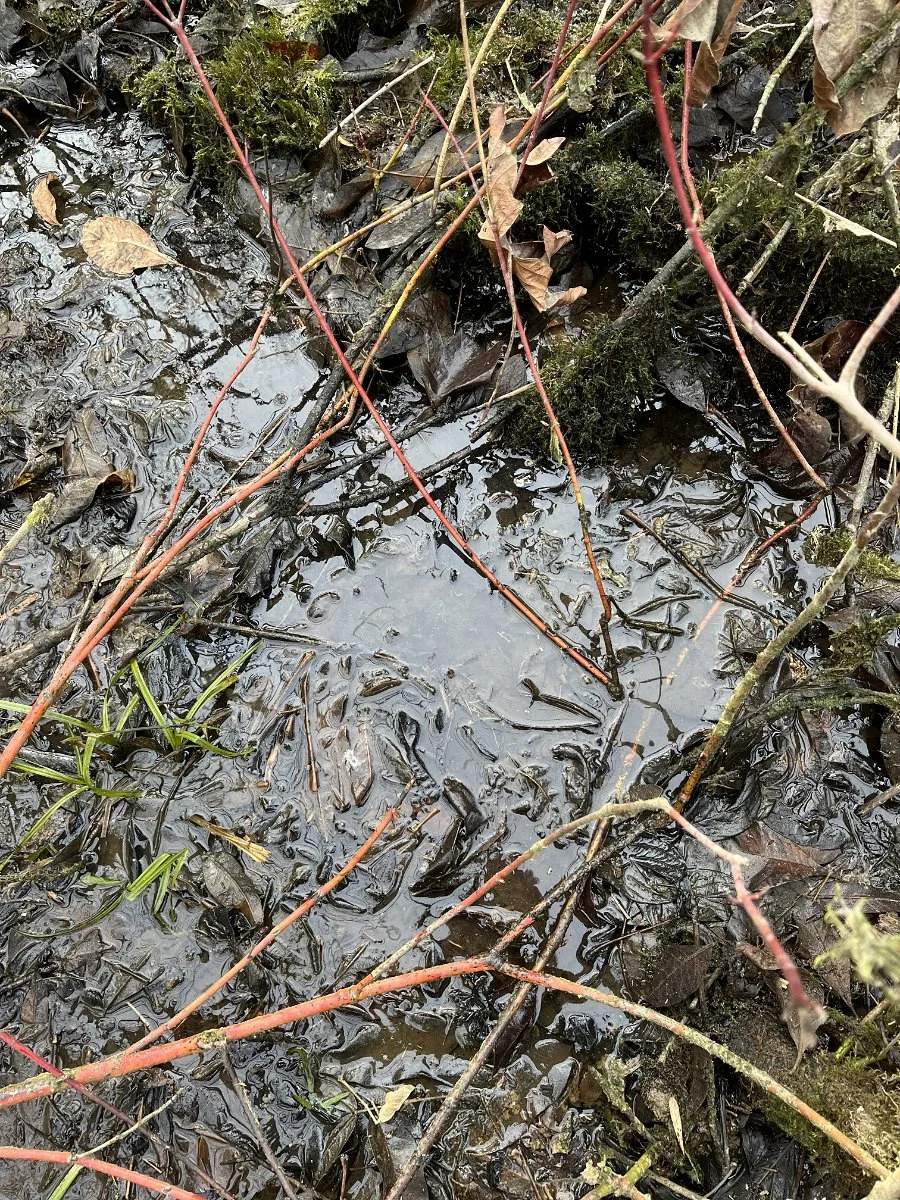
The Sunday before last members of the site committee for the arboretum met up for the day. Our first task was to put on our waders and go out to the wetlands to see if there were any fairy shrimp this winter. When we got there, we discovered that wearing our waders wasn’t necessary. The area was without water except for a few small, shallow puddles full of decaying leaves. Even though we have had very little rain so far this winter, I was still surprised. There is a measuring stick in the ground out there from a previous project years ago. Last year at this time, we recalled the water measured around three feet on the stick and there were some areas that I stayed out of because the water started getting near the top of my waders.
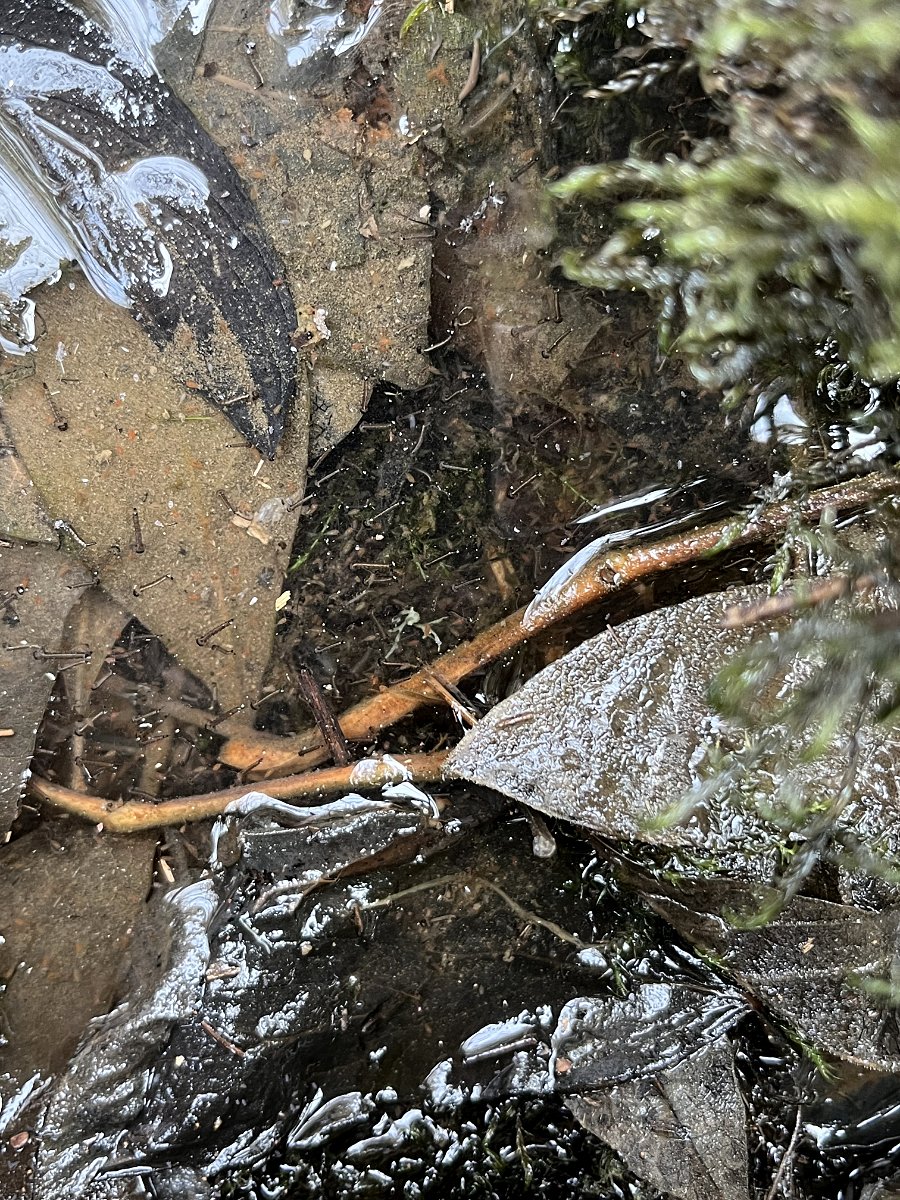
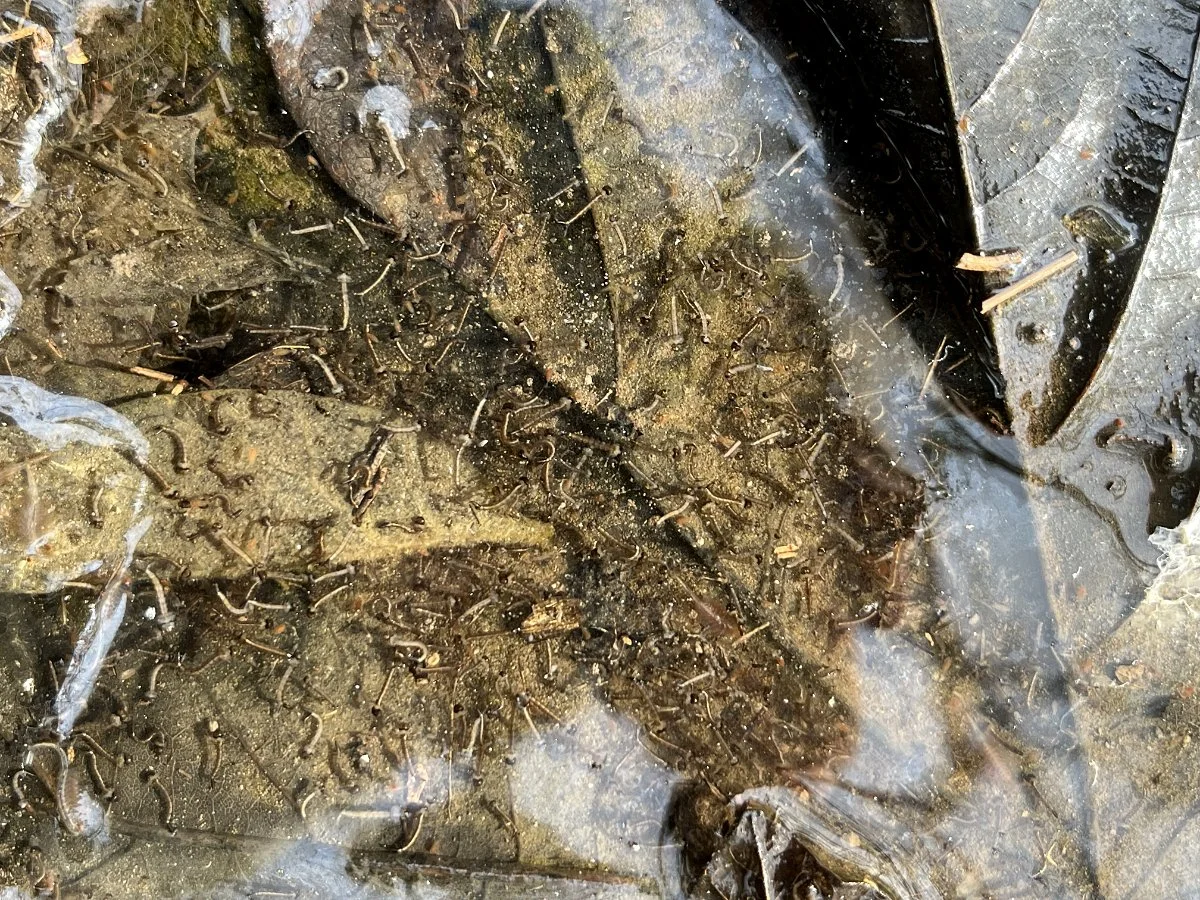
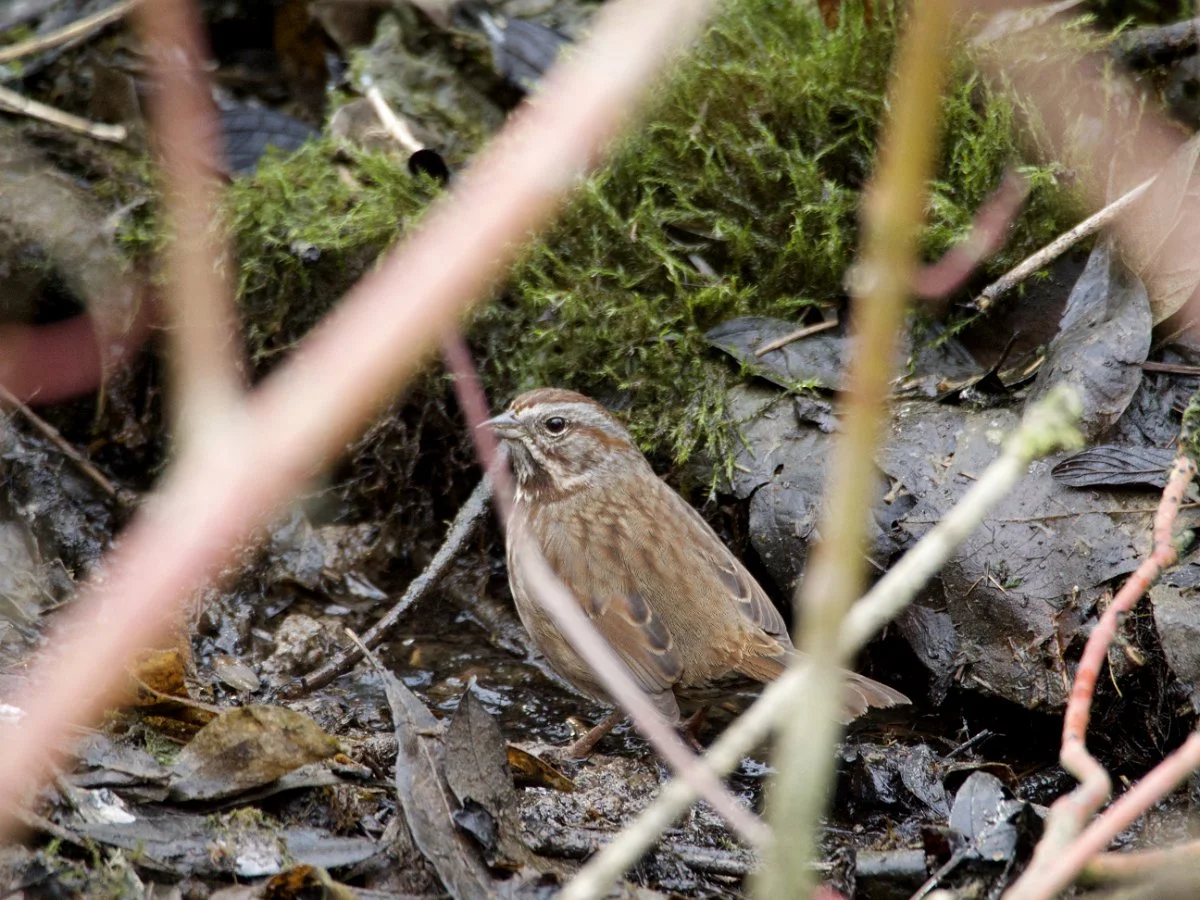
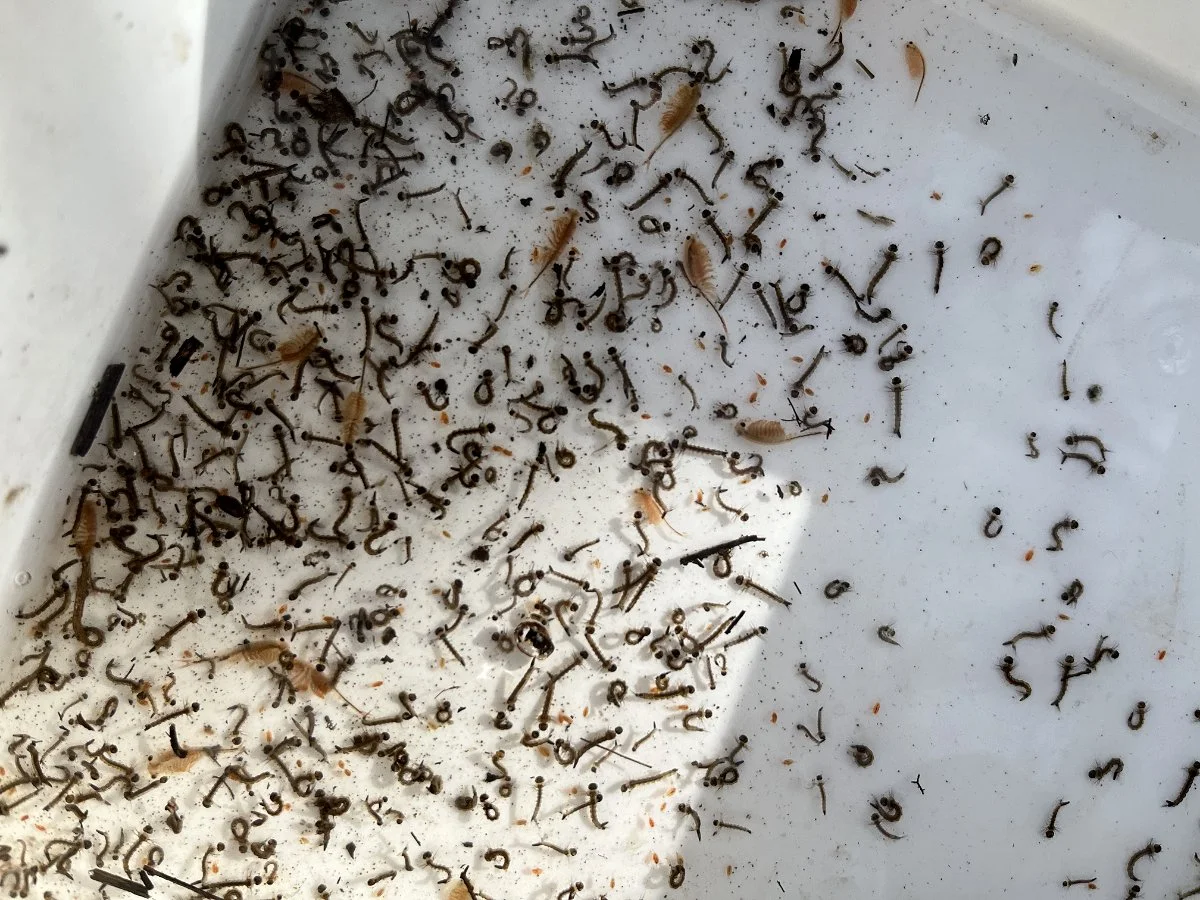
As I approached the area, I noticed that there was six or seven song sparrows busily foraging. Whatever was in that little bit of water must be yummy because they didn’t flush when we approached and they were energetically pecking in the water. I dipped the side of a small white tray down into the leaf puddle and a heap of mosquito larvae, fairy shrimp and these tiny, red organisms came flooding into the tray. This was a song sparrow buffet!
I didn’t know that we would arrive just in time at this area to catch the water level before it receded below the surface. I hadn’t brought my camera because wading around through this area full of water can be tricky with a mushy ground and hidden limbs to step over. Also, in my waders it is difficult to bend at the knees very far because the boots and overalls are all connected as one unit. I went back the next day to take some photos and the water had already sunk below the surface except for a small cupful next to a fallen branch. There was a song sparrow there heartily foraging and other song sparrows, towhees and a pacific wren were picking at the surface of the leaves at all the creatures left stranded from the receded water.
I am alarmed at how little rainfall we have had here this winter. I hope the fairy shrimp had time to complete their life cycle. I was also surprised to see so many mosquito larvae. There have been many days below freezing in January. The water in the wetlands down at the bridge had a layer of ice on the surface that day. The upper part of the wetlands might be a small microclimate, enough to allow mosquitoes to breed. I didn’t imagine them being active this time of year. It made me more curious about their life cycle. The birds were certainly aware of this area and I am sure were grateful to have an abundant food source so easily available.
I hope that you have a place to go near where you live and are able to regularly spend time out there exploring. Be well.