There is a small creek that flows down the hillside at the entrance to the arboretum. The creek’s source of water is rain. So it starts flowing in the fall when the rain returns and stops flowing sometime in June when the rain mostly dries up for the summer.
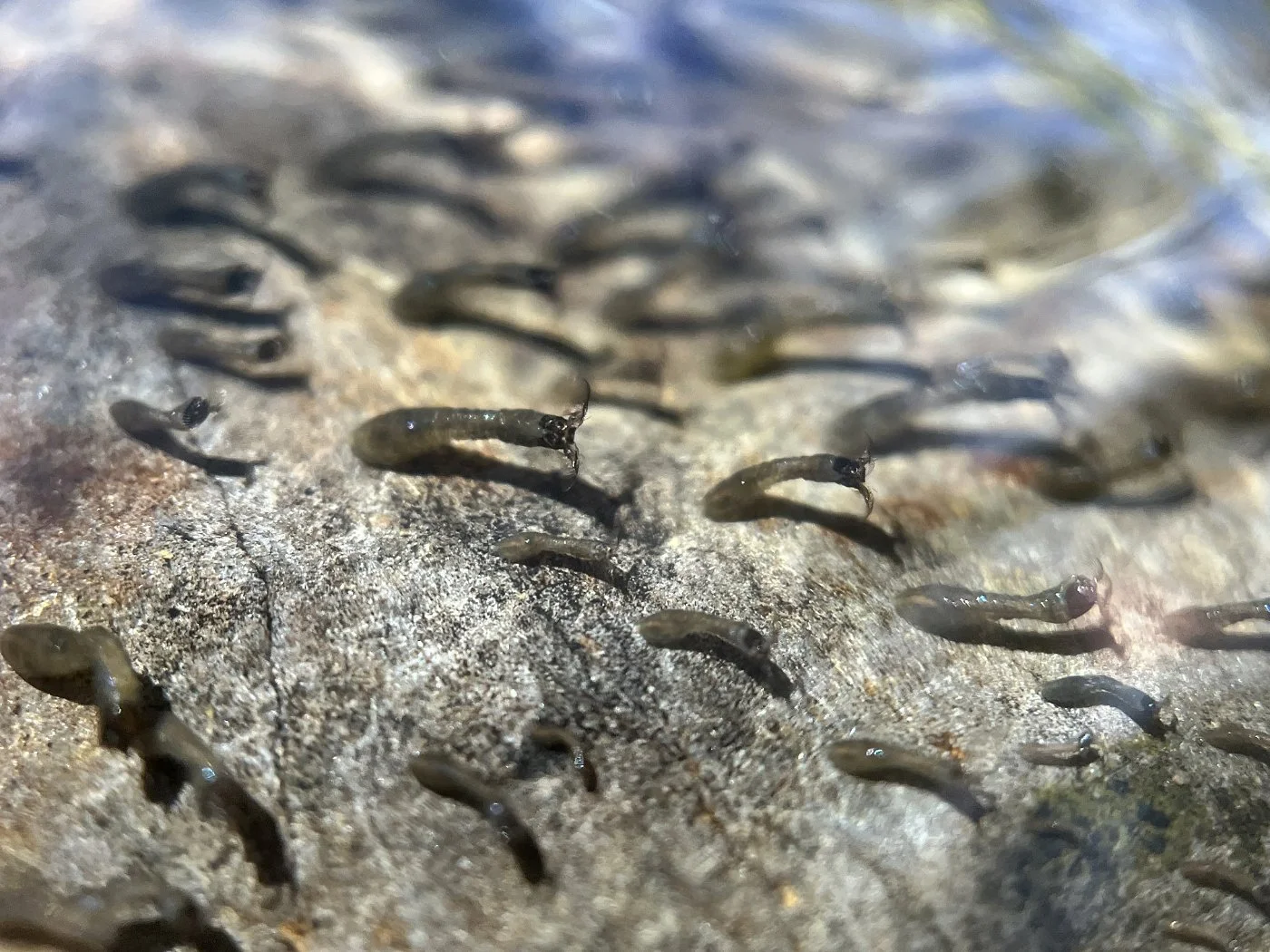
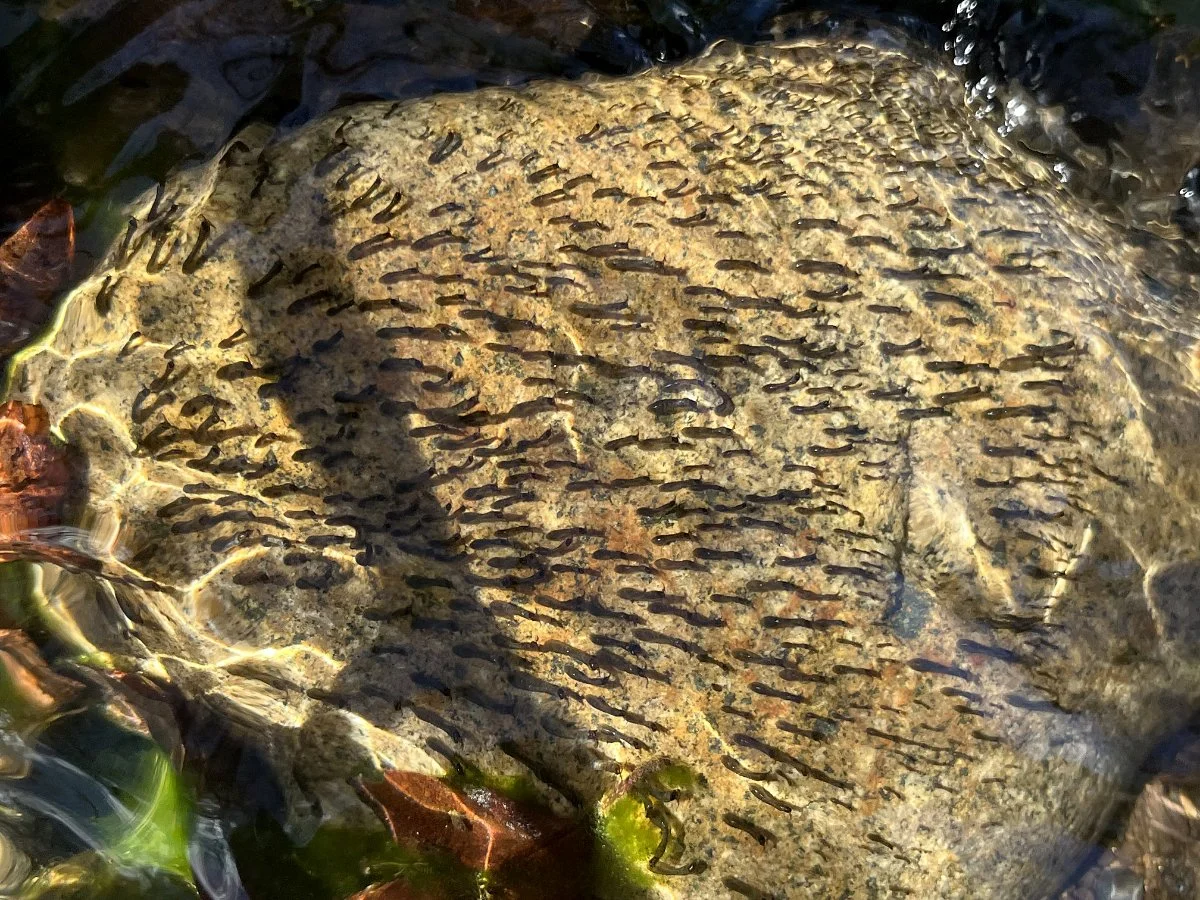
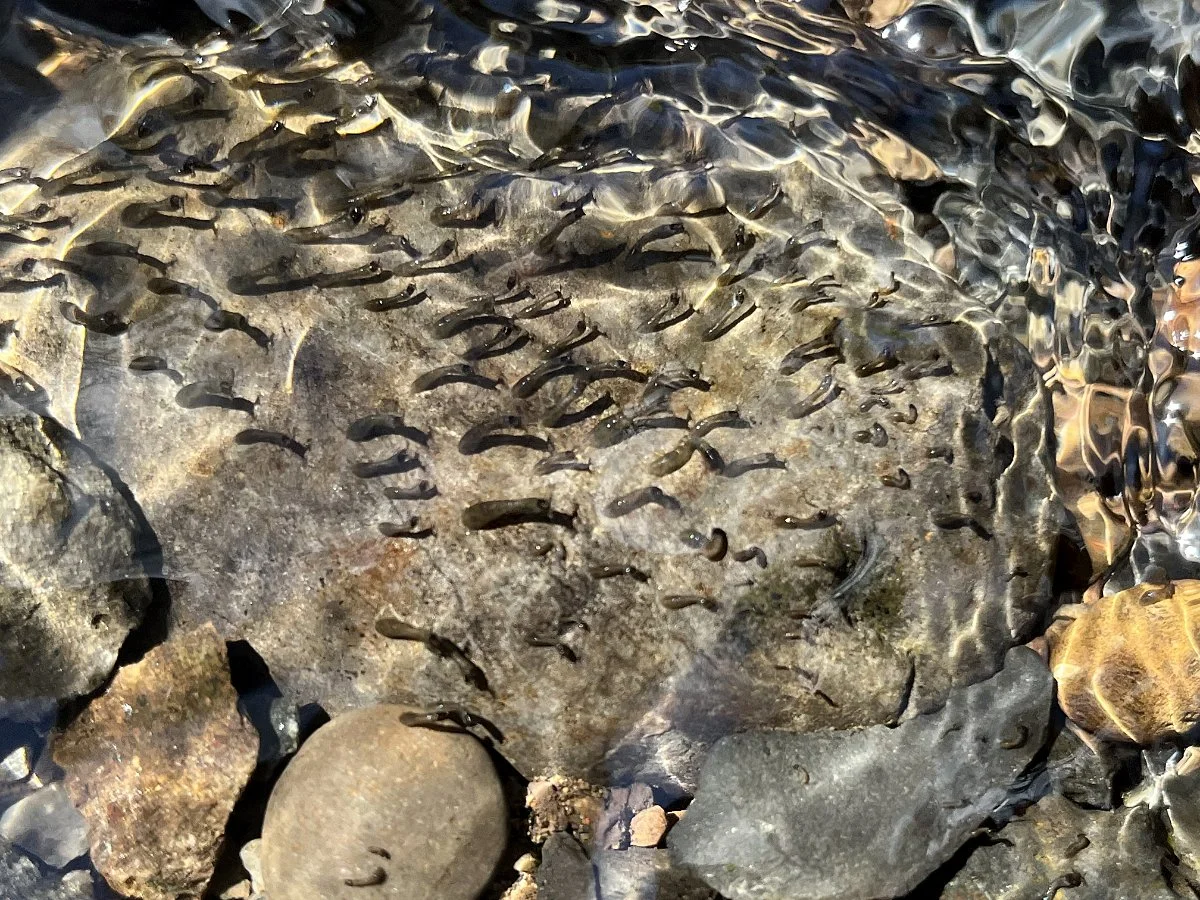
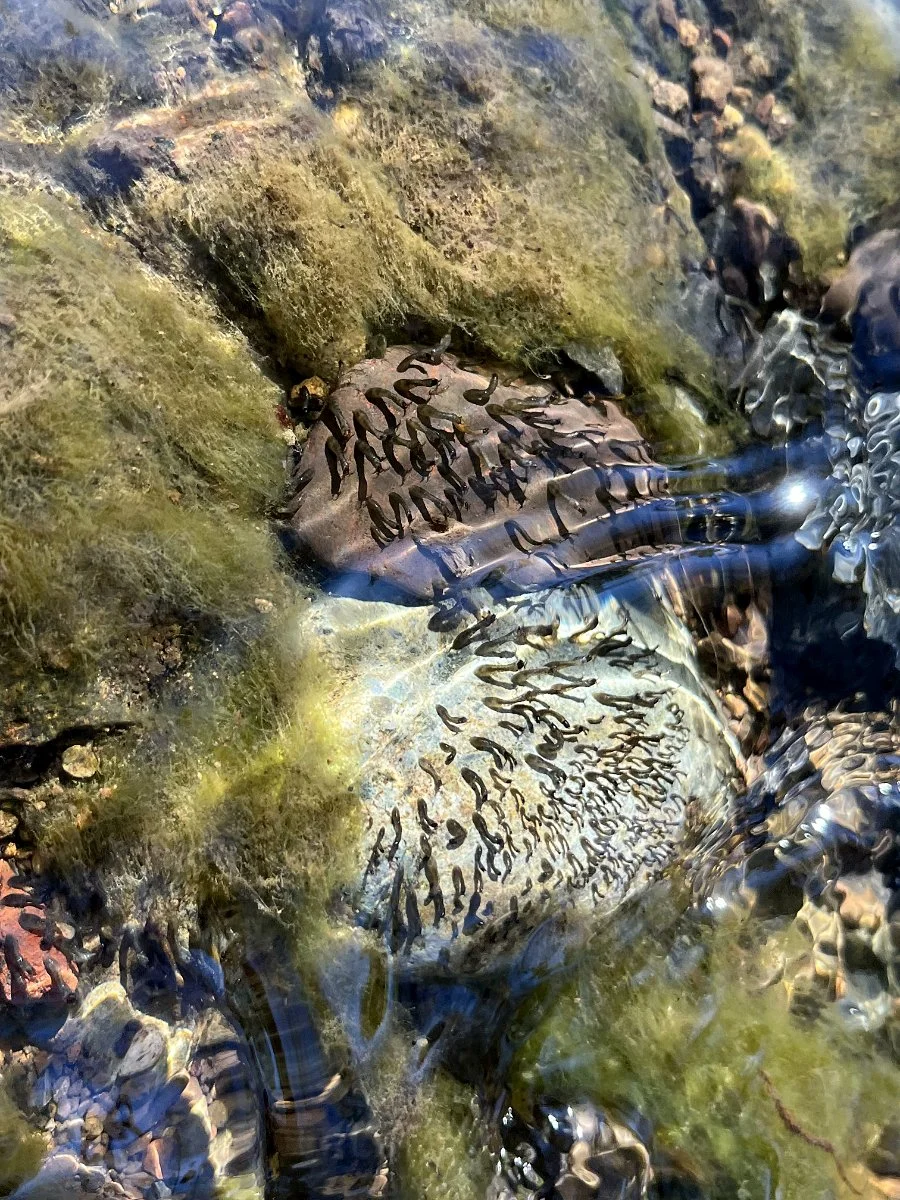
Below the bridge next to the White Oak Pavilion, there is a small rocky bed where black fly larvae are attached to some of the rocks. Its body is shaped like a bowling pin. The bulbous part of its abdomen is attached to the rock. Moving upward, its body tapers in a little before slightly expanding outward to its black head.
To adhere to a rock, stick or other debris, they weave a silken pad and use small hooks located on their abdomen to hold onto it. They will position themselves in the current where they can capture food from the water flowing over their bodies. They use comb-like structures near their mouth that look like eyelashes to filter out microscopic food like algae and bacteria.
Like all organisms on the earth, they have evolved to have a role in the well-being of the environment where they live. They contribute to the health of the ecology of the stream by filtering algae and bacteria out of the water for food which provides the benefit of improving water quality. In addition, black flies are an important food source for fish such as trout. In the last source listed below, the Angler’s Covey website has a Bug of the Month fly tying video by Brian Hilbert at the end of the article. Trout will eat the larvae and the emerging adults floating to the surface. Dragonflies, birds and amphibians will forage on the adult flies. I have often seen American dippers gleaning the rocks in the current of a stream and I now wonder if they were eating black fly larvae.
I tilted one on the rocks a little to try and get a better photo and their bodies quickly contracted and hugged the face of the rock for protection. Seeing that wasn’t going to work, I returned the rock, but the larvae were a little out of the flowing water. As I watched, some of them starting moving back over into the current. They grabbed onto the rock with their mouths, detached their abdomen, moved it over, and then reattached. They repeated this until they were back in a suitable spot.
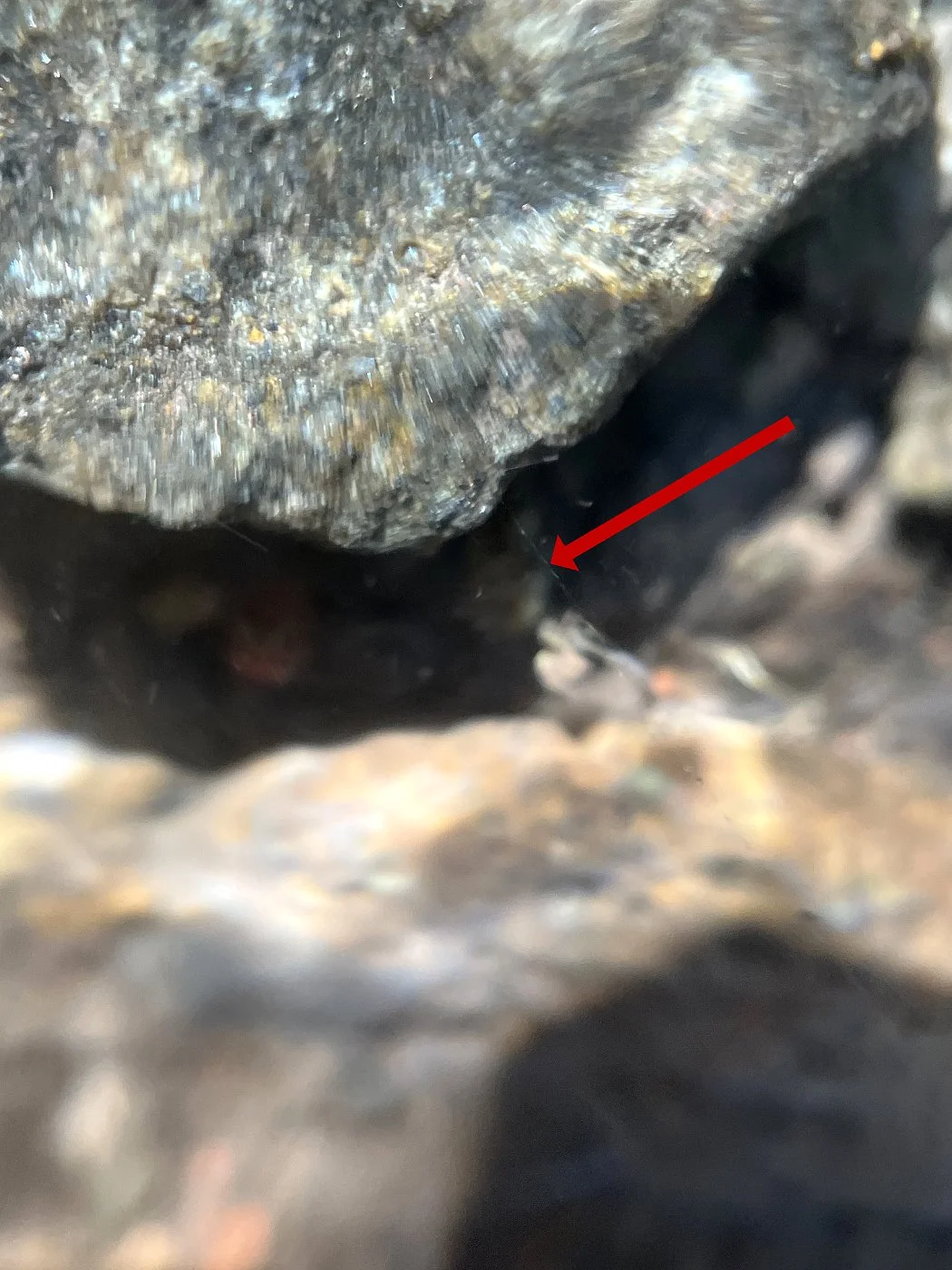
Some of them were disturbed enough that they detached. They are able to move downstream on a silken thread and reattach in another location by weaving another pad. The silk is thin like a spider silk and mostly undetectable in the water. I managed to get my camera at an angle where I could catch the sunlight on the thread. I pointed it out with a red arrow in a photo below.
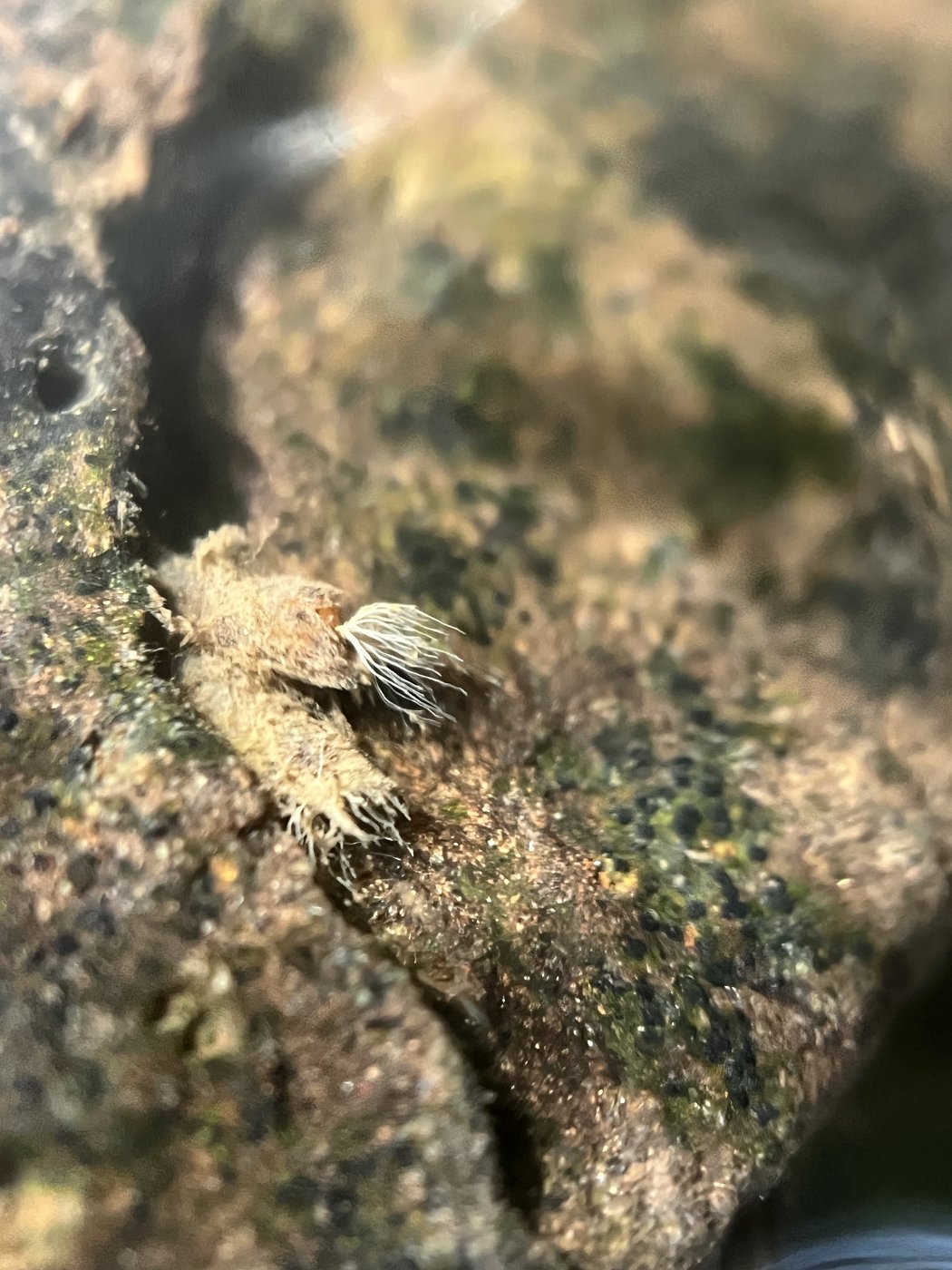
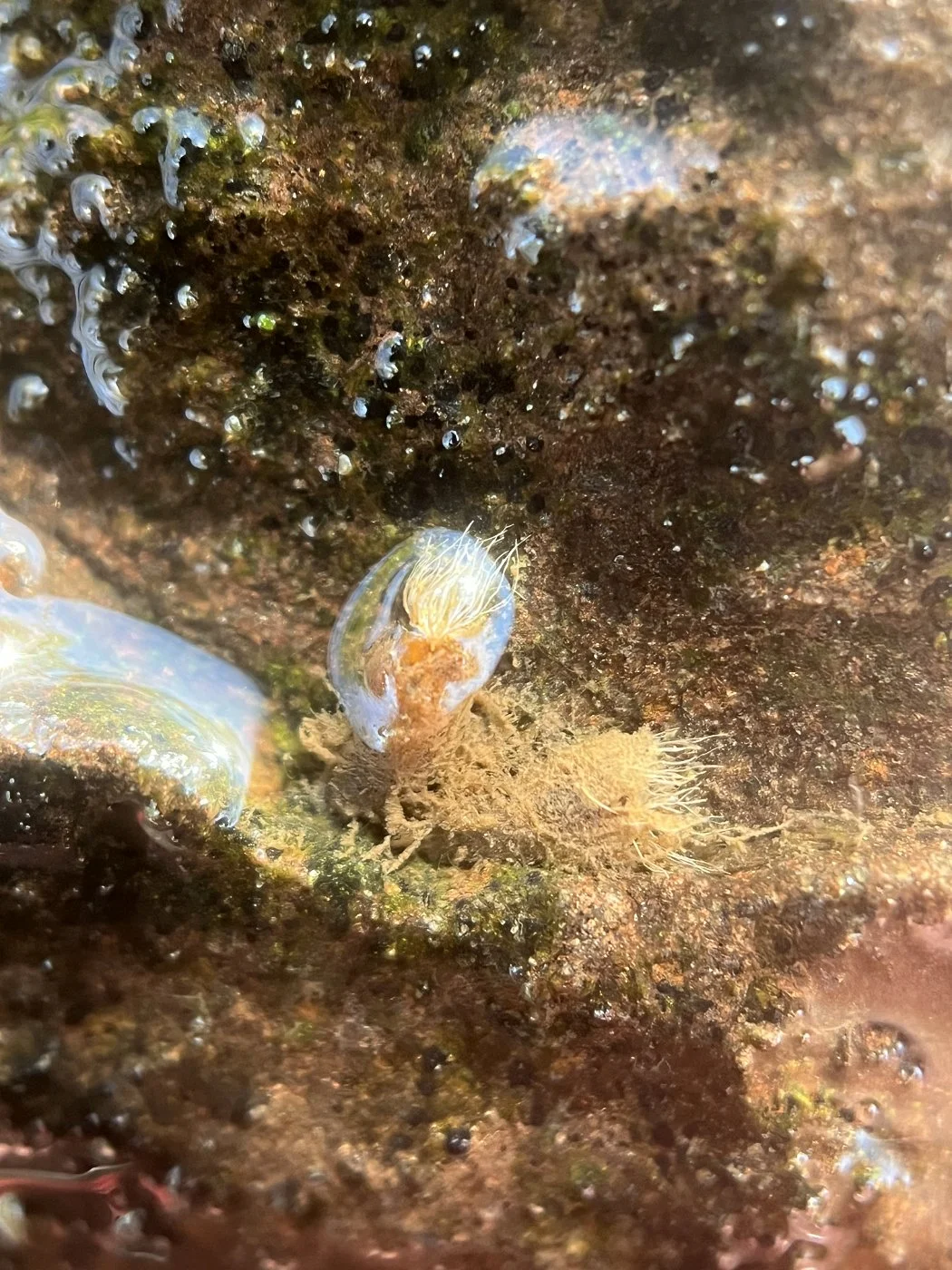
After reading about the life cycle of black flies, I went back to try and find the pupae or emerging adults. I found the pupae on the underside of the rock. The pupae were inside these cocoons that were open on one side. A branched respiratory organ that looked like root hairs waving around in the water extended outward on one side. To adapt to the fluctuations in the water level, the pupae are miraculously able to obtain oxygen in or out of the water. I was unable to locate any newly emerged adults on the rocks or vegetation next to the creek. I’ll keep checking and let you know if I find any.
Thanks for reading my blog. I recommend reading some of the articles listed below for more information. Spring is exploding with life and I hope you are able to get out and do some exploring.
Sources
“Black Fly (Family Simuliidae).” Field Station, 3 Apr. 2012, https://uwm.edu/field-station/bug-of-the-week/black-fly/.
Commonwealth of Pennsylvania. Black Fly Biology. https://www.pa.gov/agencies/dep/programs-and-services/bureau-of-labs/vector-management/black-fly/biology. Accessed 13 Apr. 2026.
Leinweber, Rachel. “Bug of the Month: The Often Ignored Blackfly Larvae.” Angler’s Covey, 14 Feb. 2024, https://anglerscovey.com/2024/02/14/bug-of-the-month-all-about-blackfly-larvae/.