Caterpillar on Larkspur

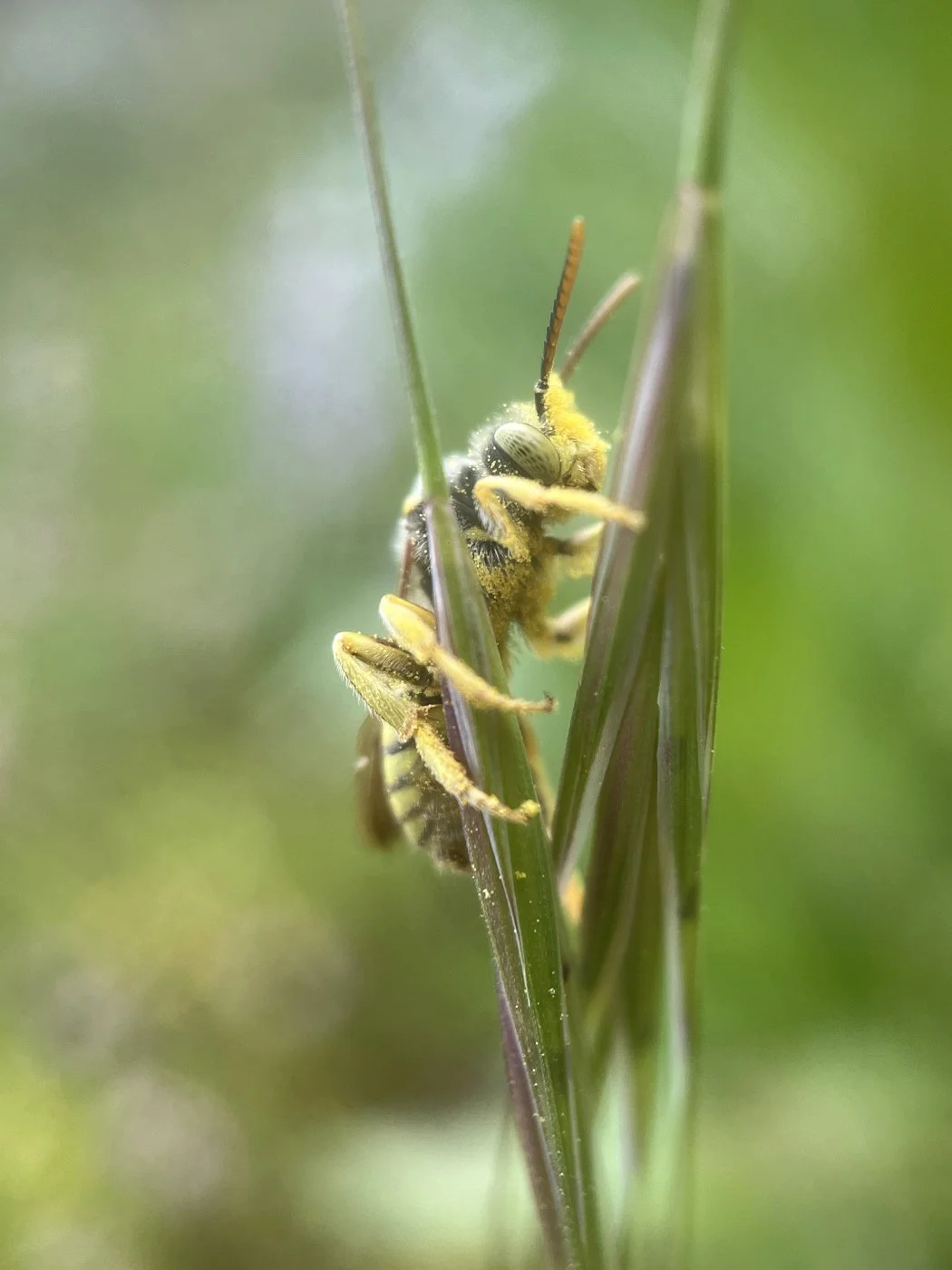
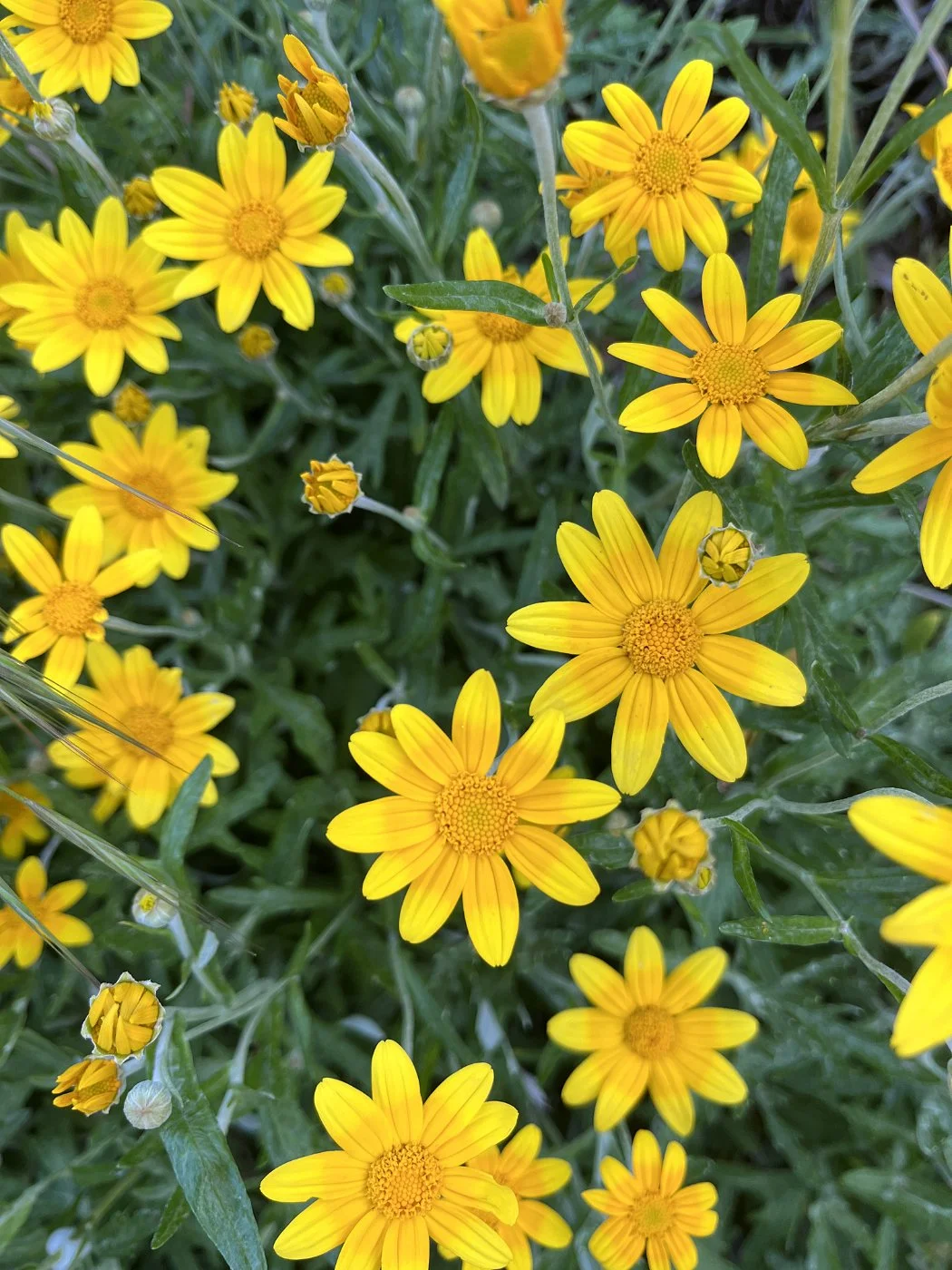
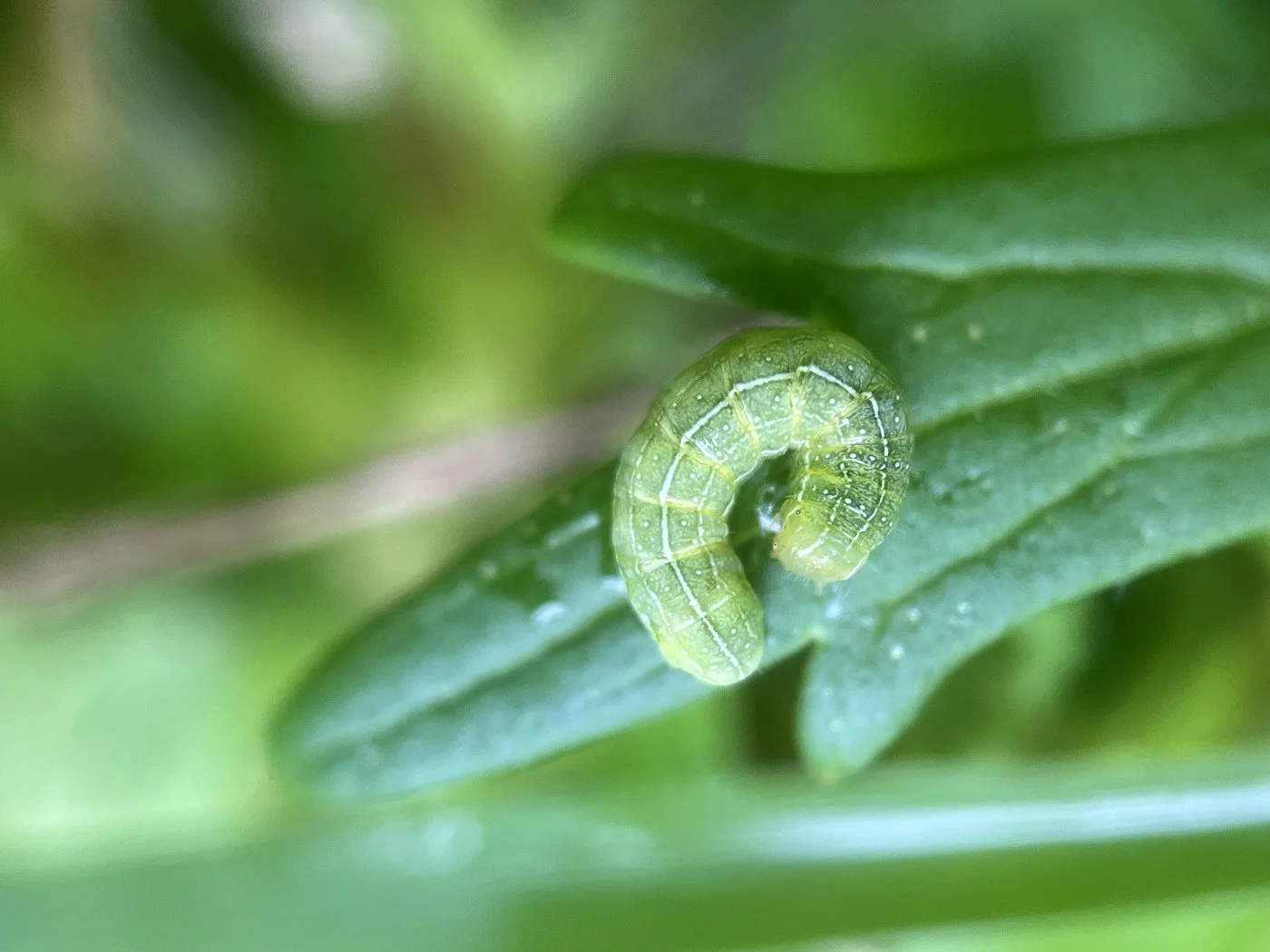
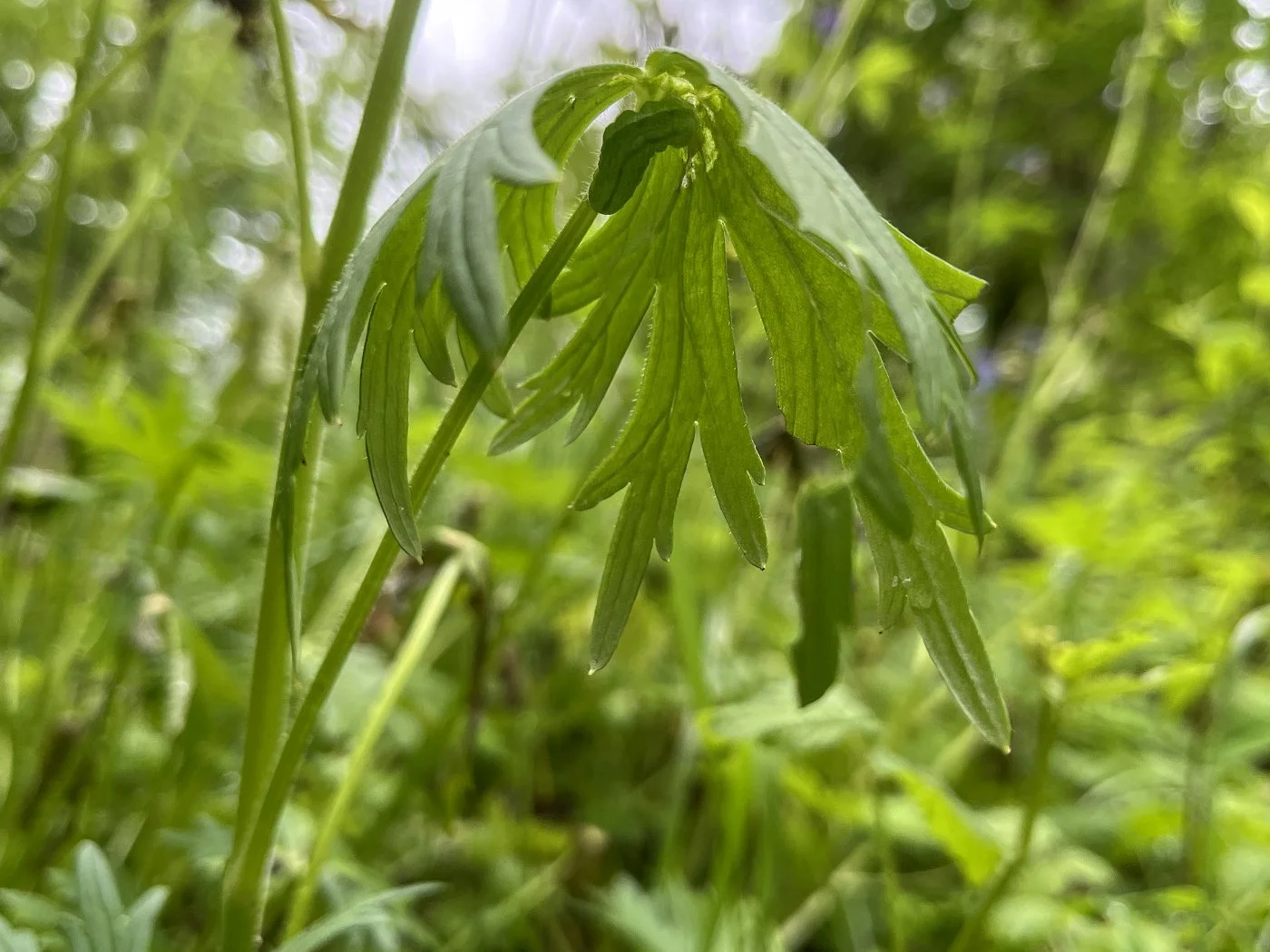
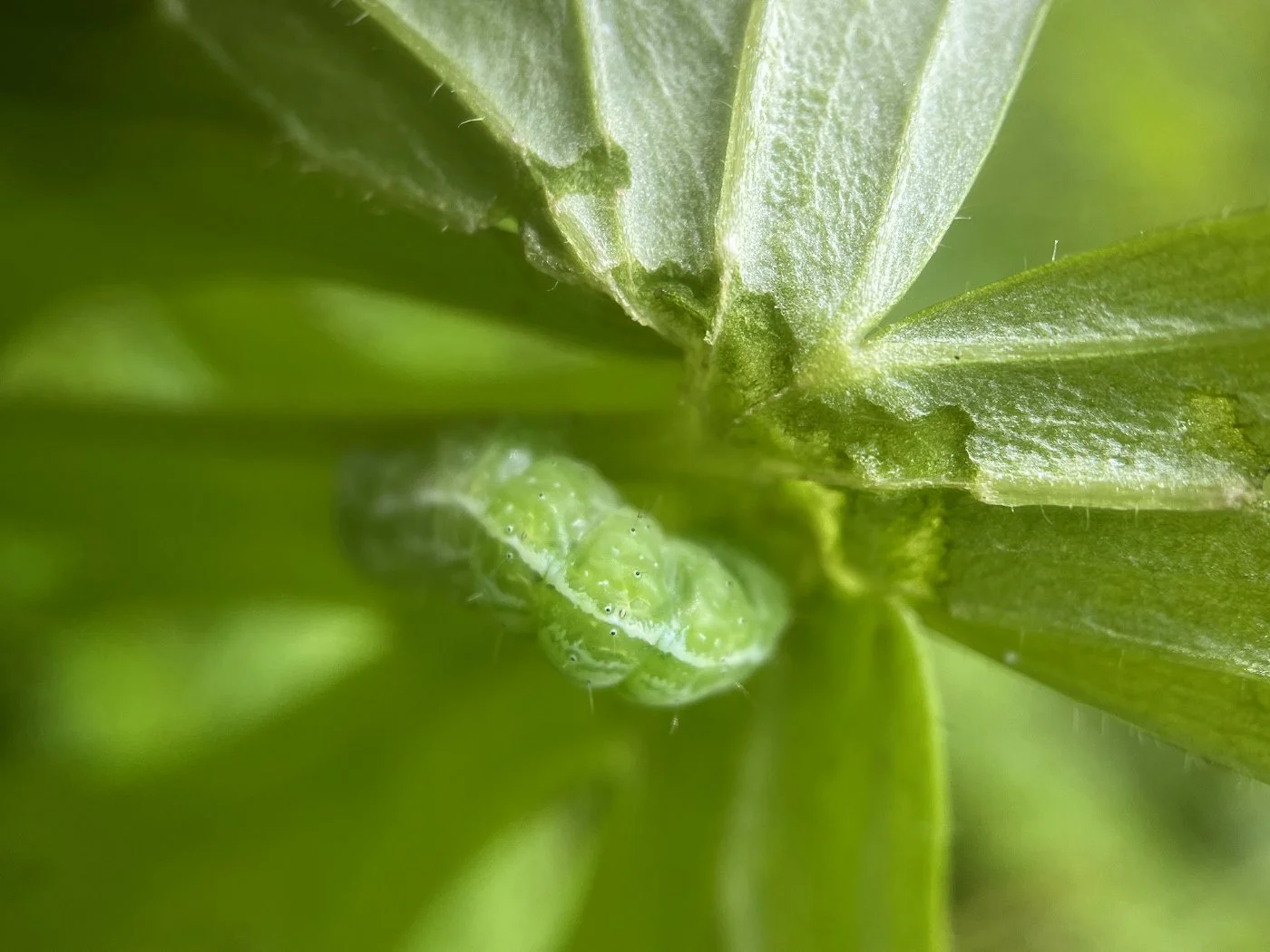
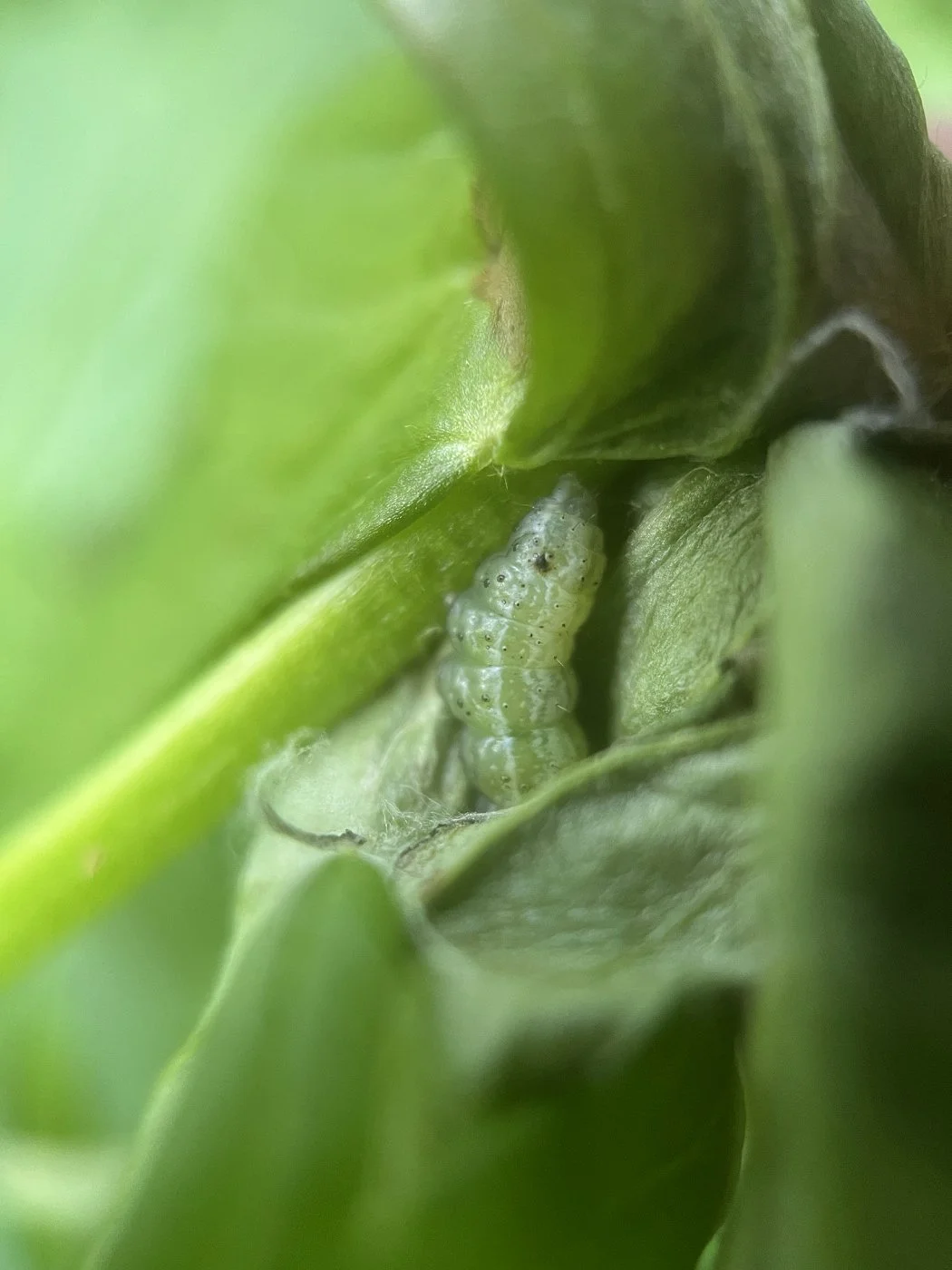
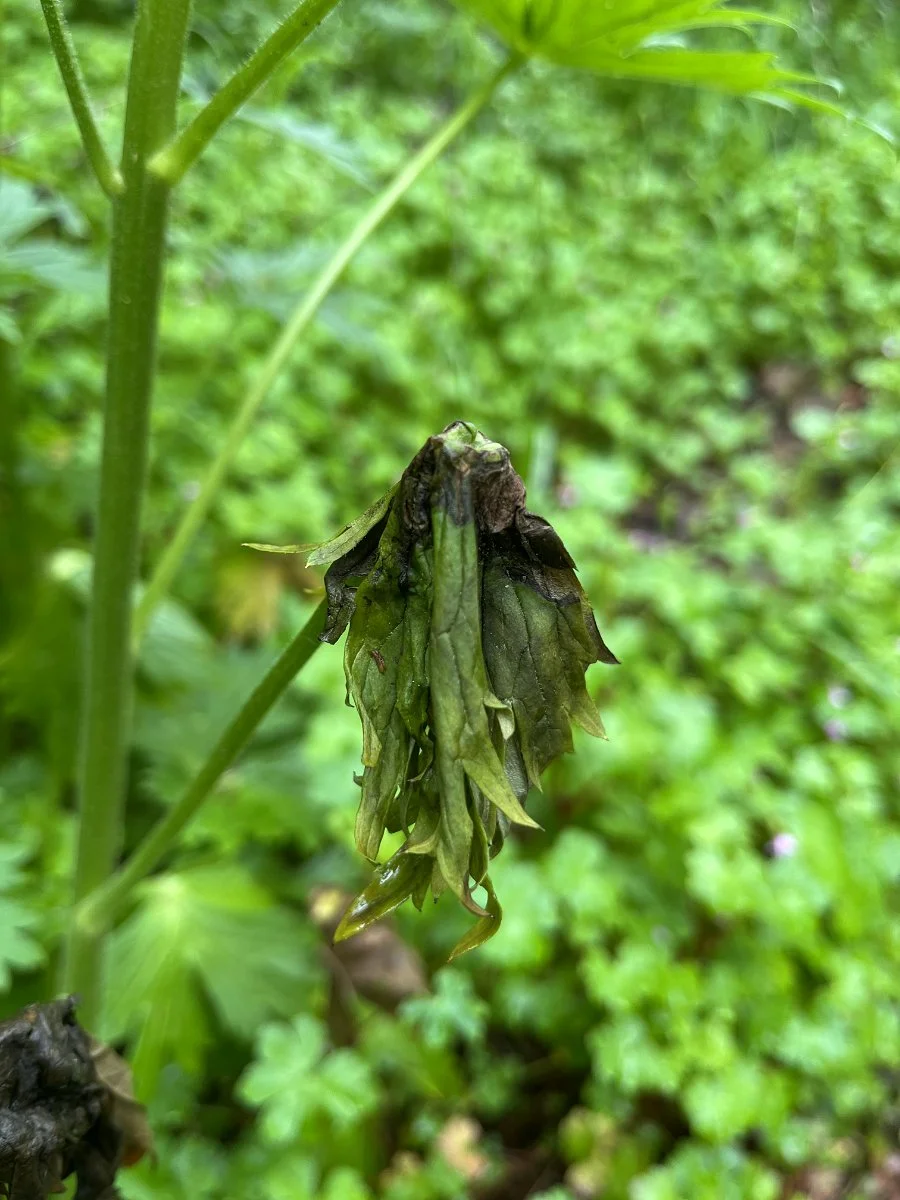
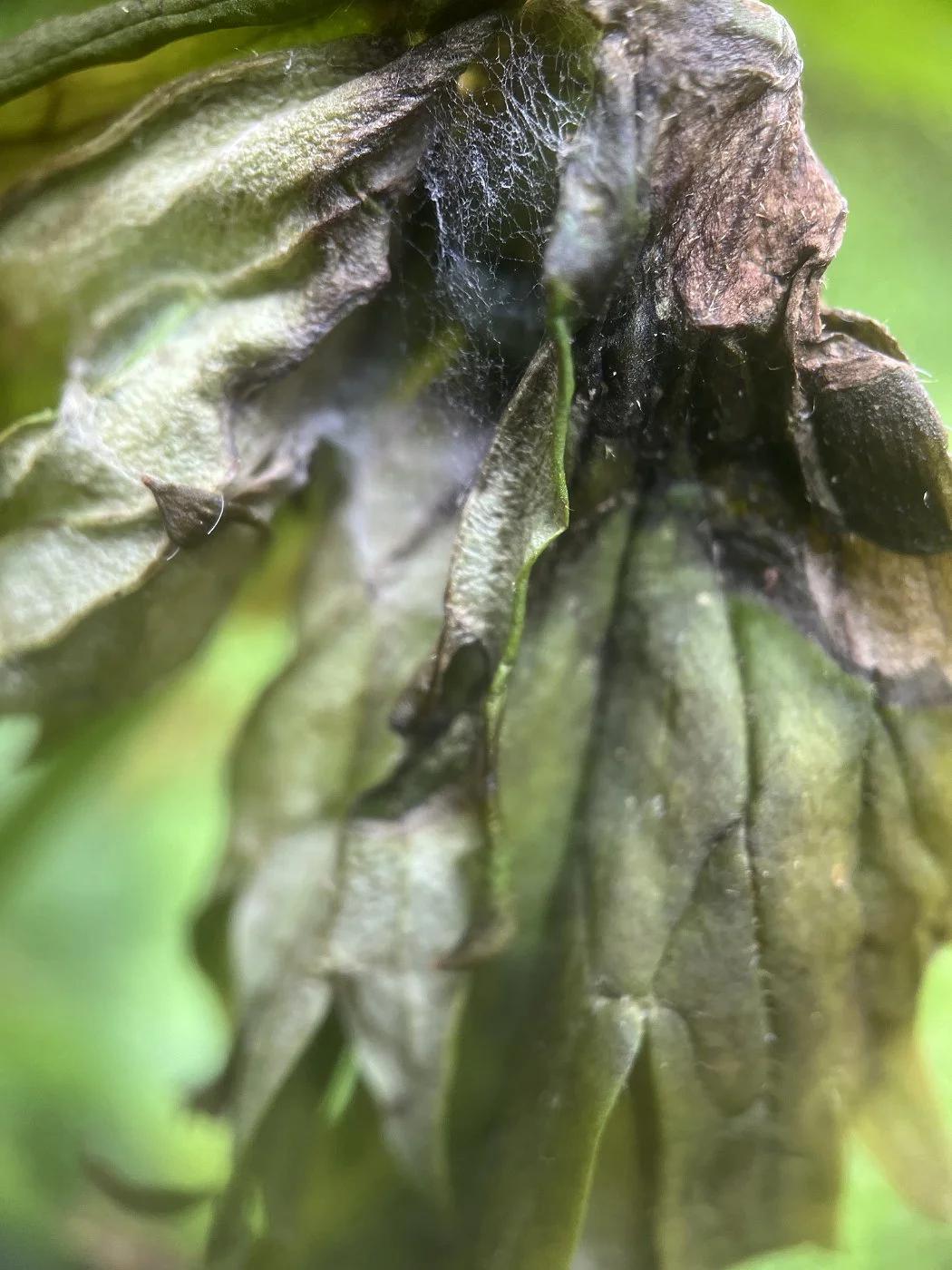
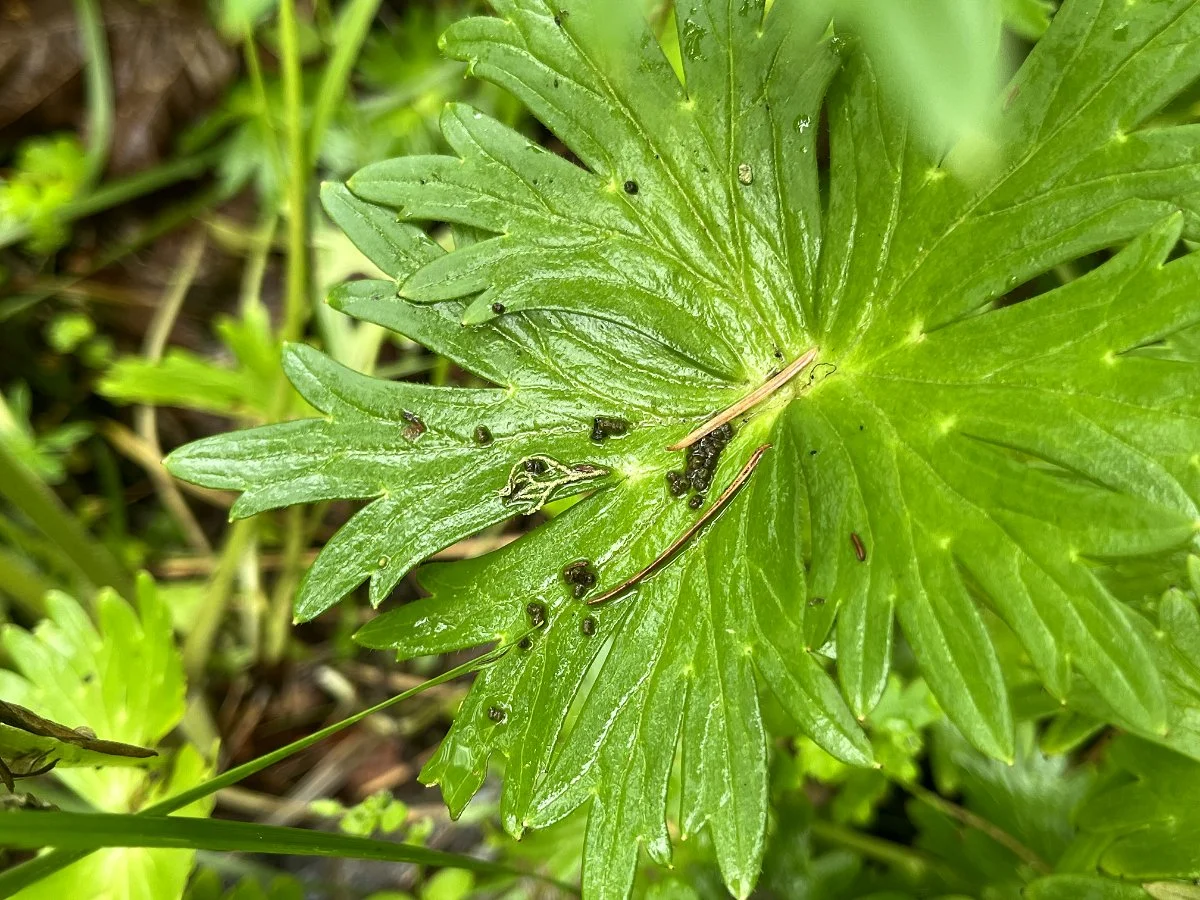
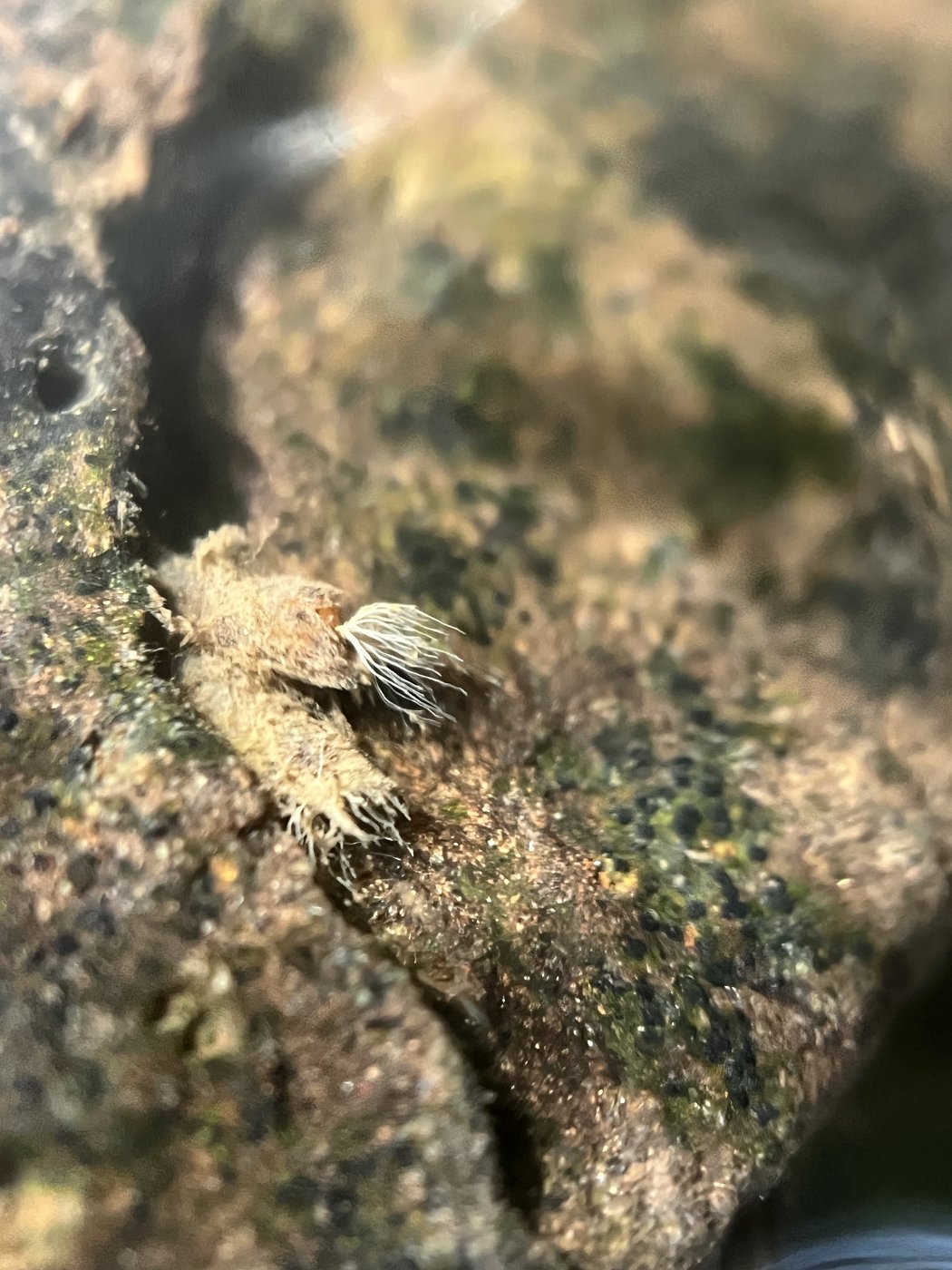
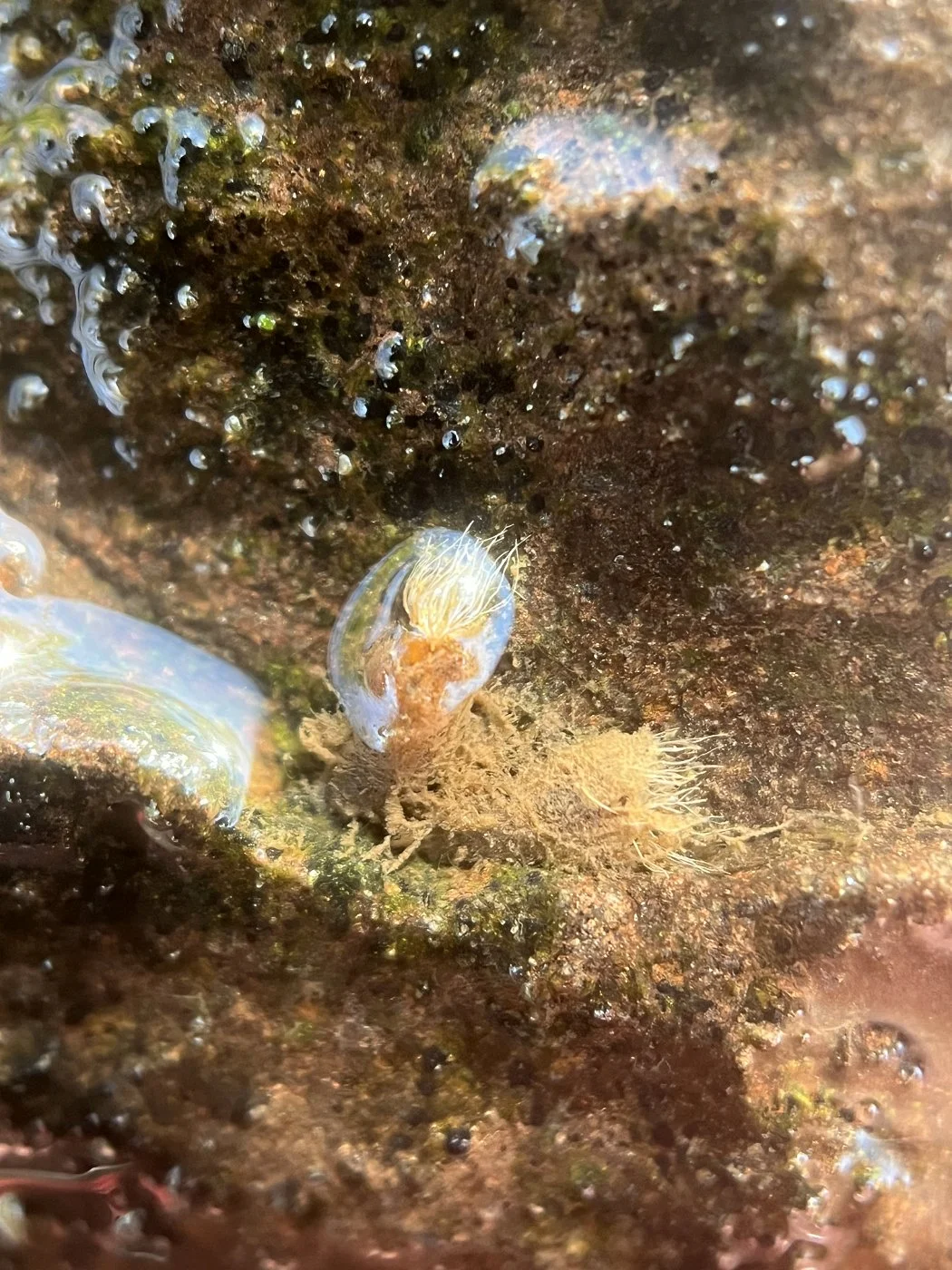
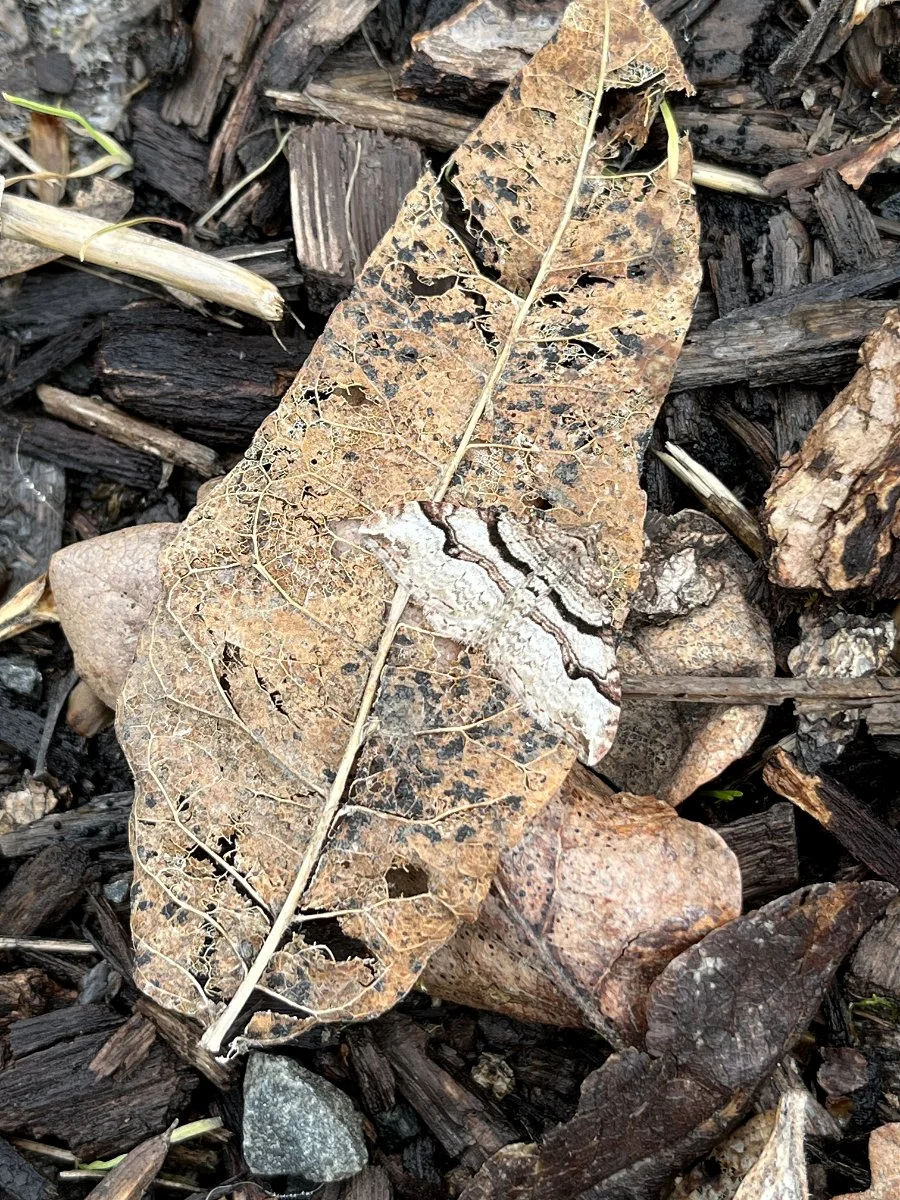
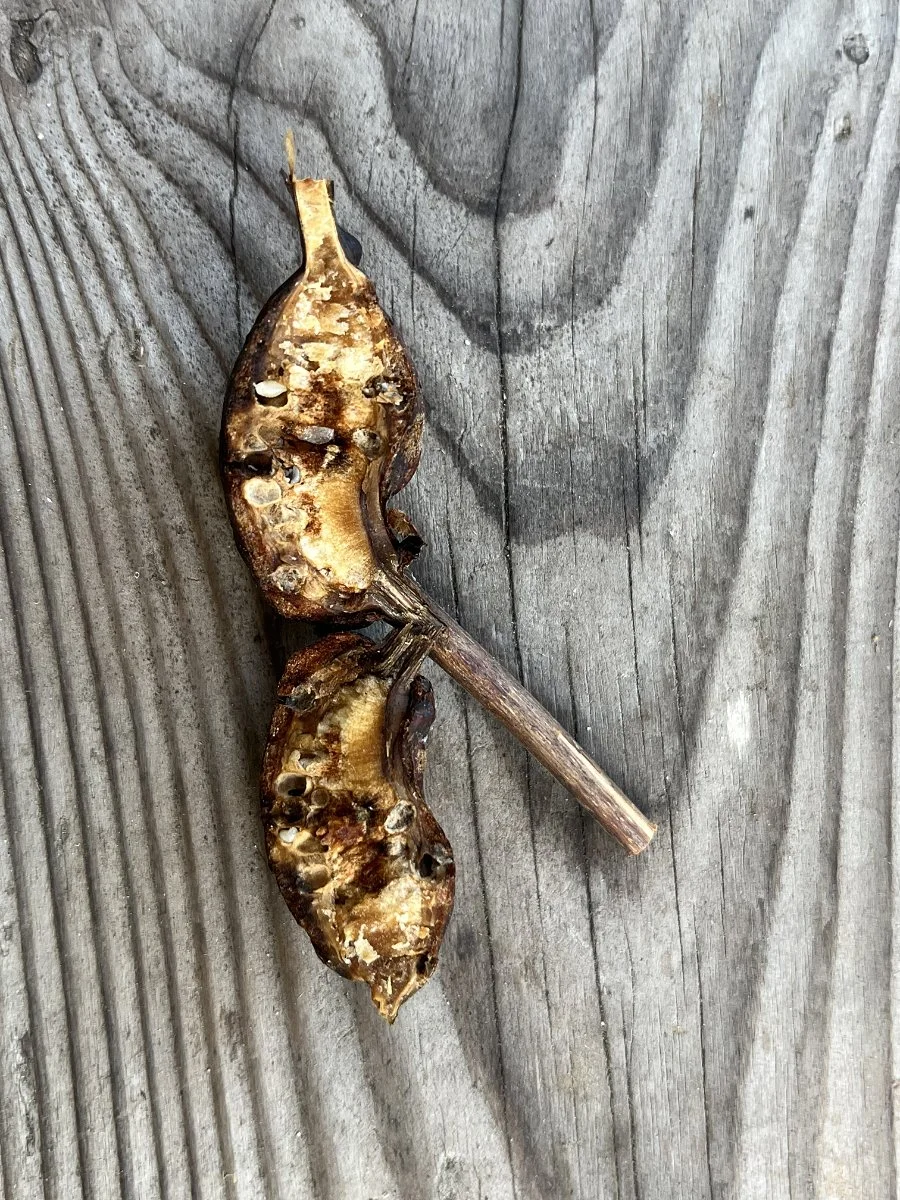
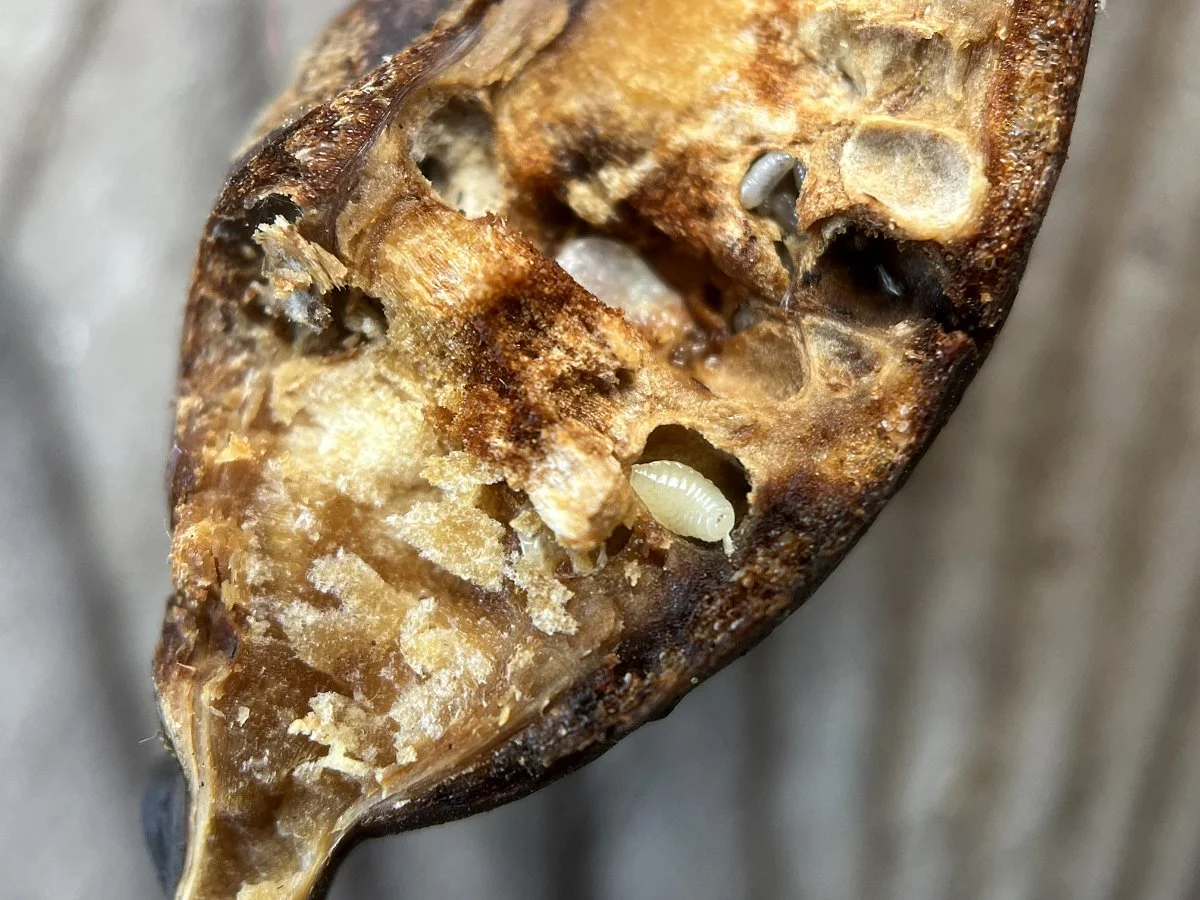
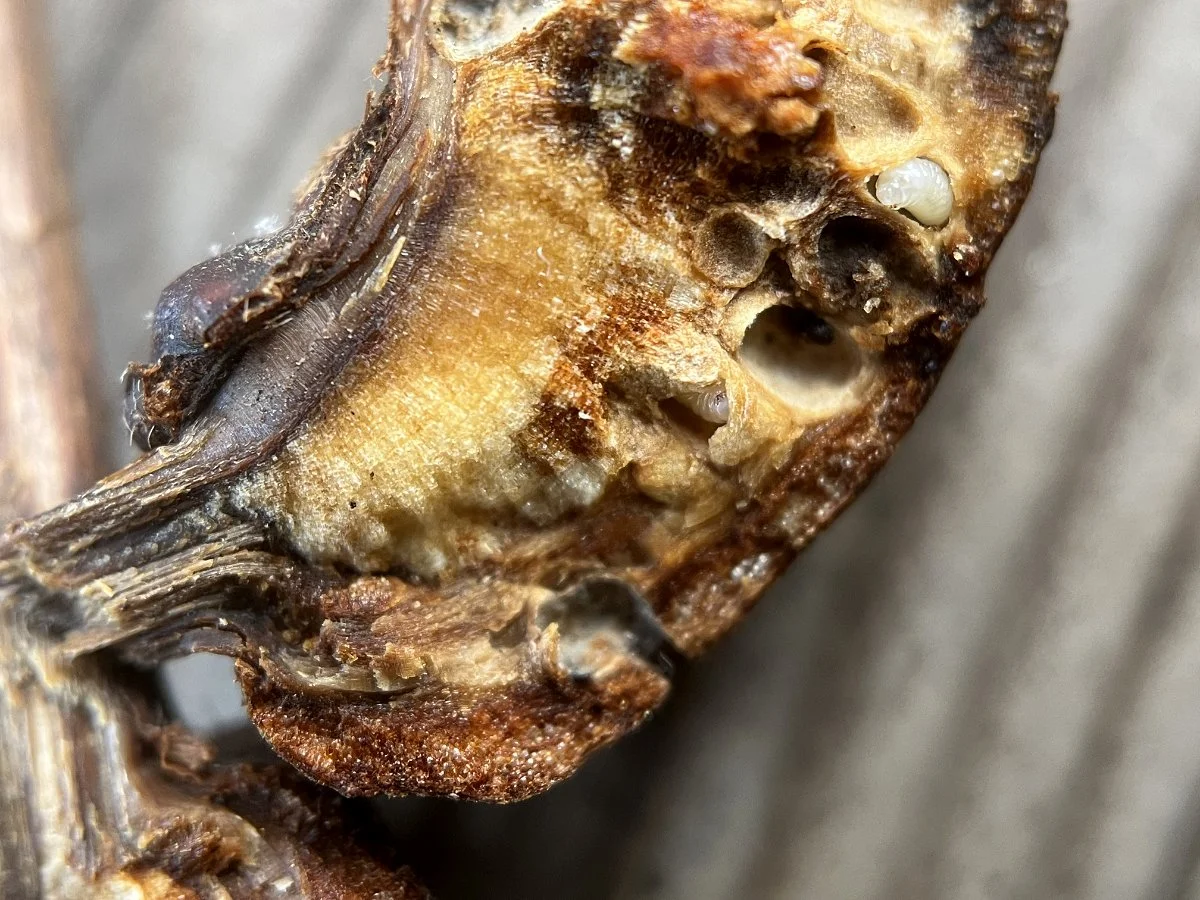
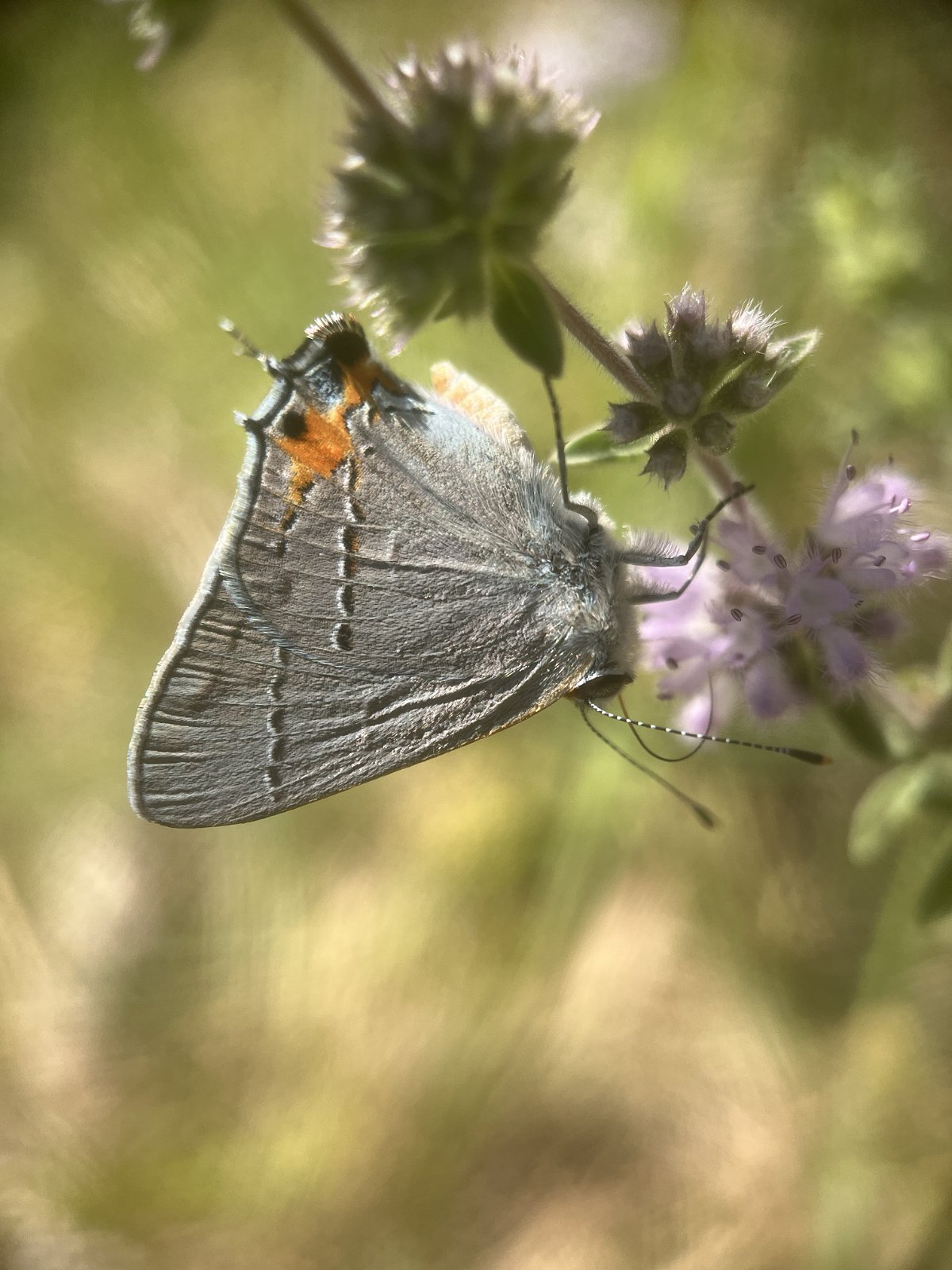
On a patch of Larkspur, caterpillars were steadily eating the leaves. Small black pellets of frass dotted the leaves below. They were becoming plump and green. Pregnant from the energy of the sun captured by the leaves, they were ready to perform some of their own mysterious alchemy. They were going underneath the leaves. Where the leaf petiole met the base of the leaf blade, they were eating the underside of the leaf. This was causing the leaf blade to began to wilt as it nutrient supply was being cut off. As a result, the leaf died, turned a mottled brown, and draped like a cloth over them. Hidden inside they started spinning their silk cocoons. I don’t know what beautiful creature will emerge on some starry night, maybe it will visit me in my dreams.

Black Fly Larvae

There is a small creek that flows down the hillside at the entrance to the arboretum. The creek’s source of water is rain. So it starts flowing in the fall when the rain returns and stops flowing sometime in June when the rain mostly dries up for the summer.

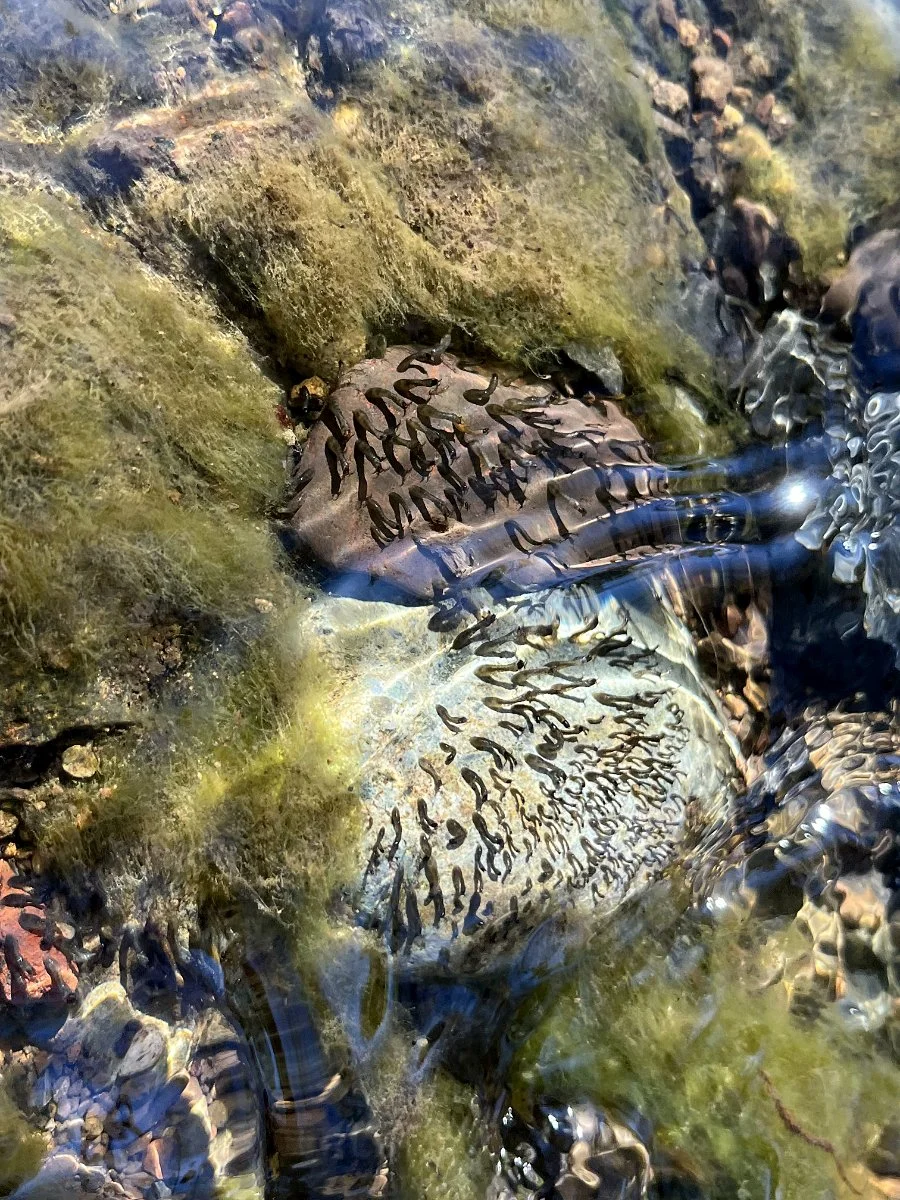
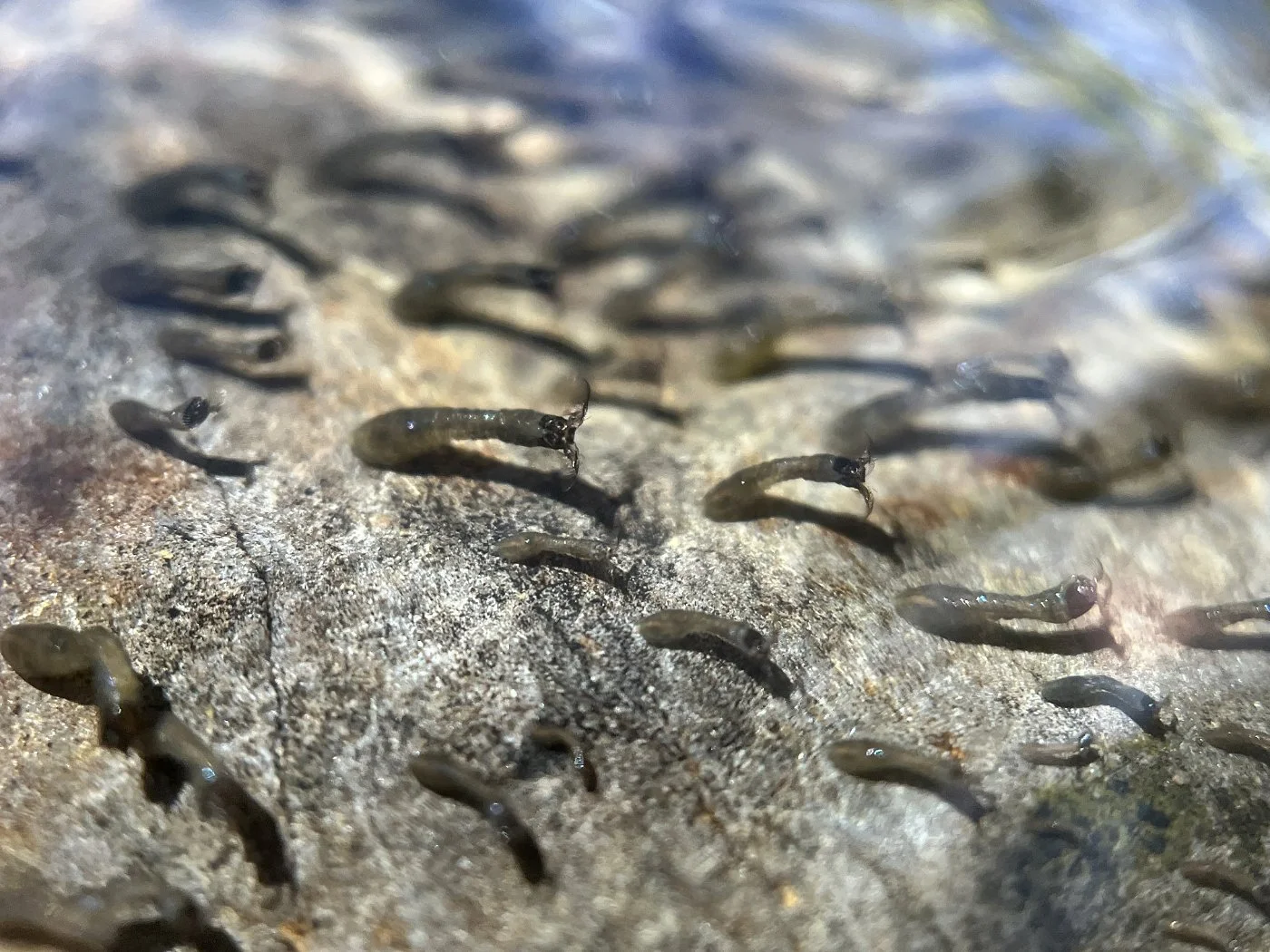
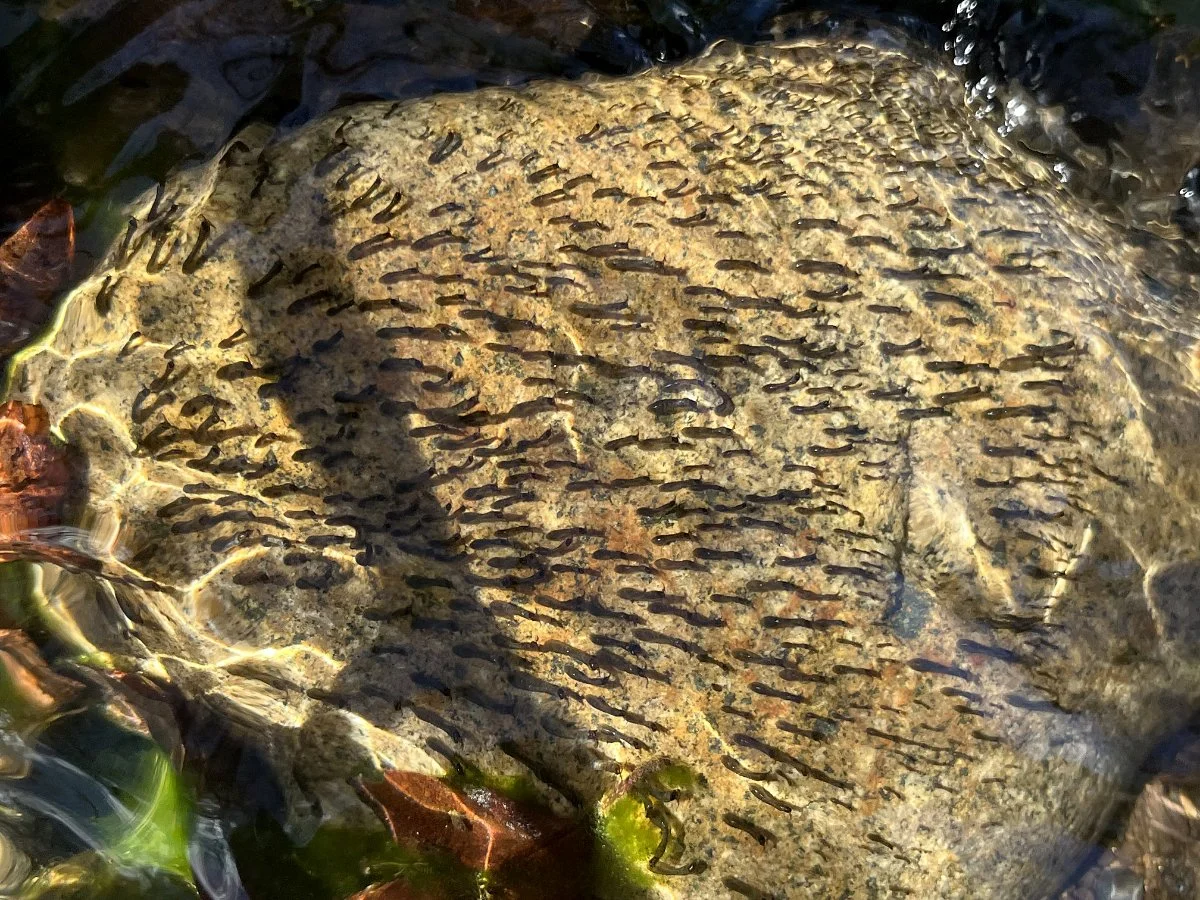
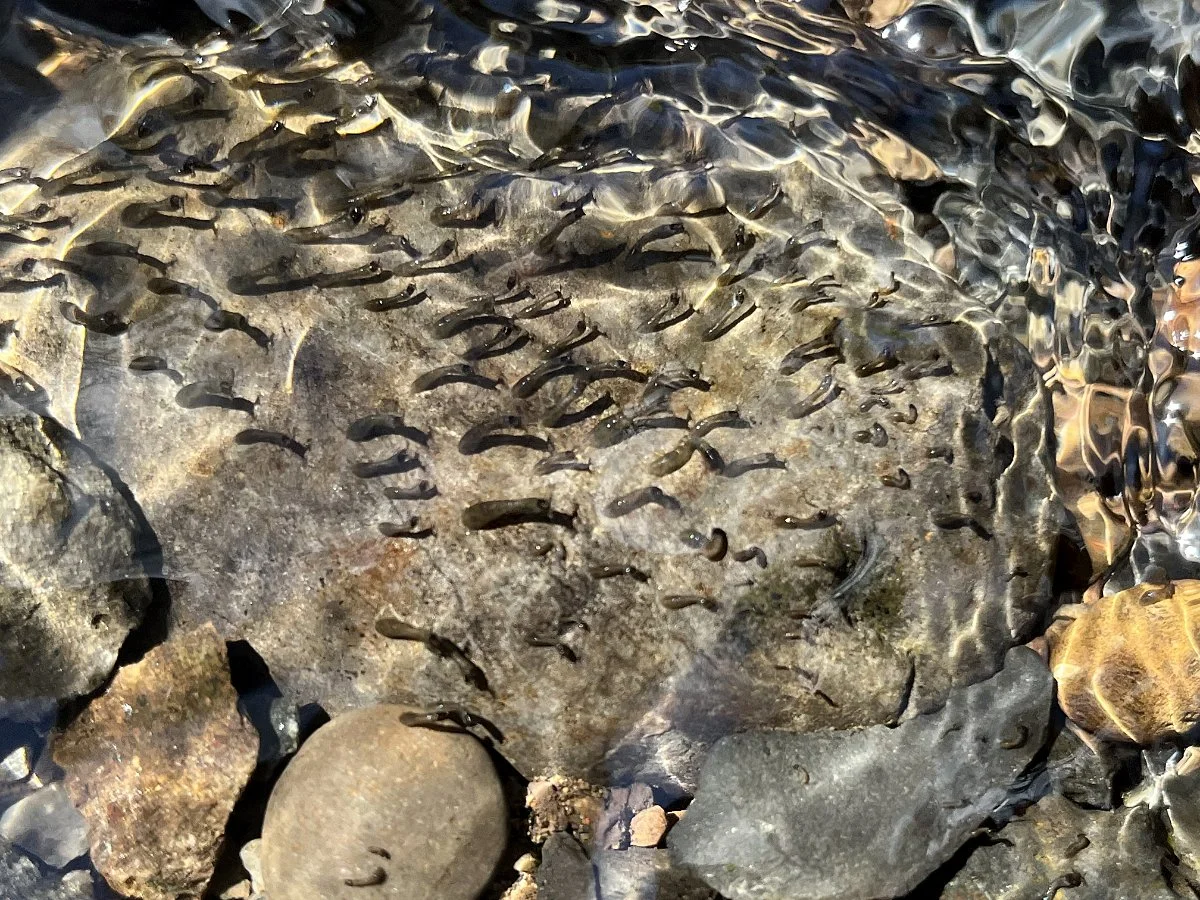
Below the bridge next to the White Oak Pavilion, there is a small rocky bed where black fly larvae are attached to some of the rocks. Its body is shaped like a bowling pin. The bulbous part of its abdomen is attached to the rock. Moving upward, its body tapers in a little before slightly expanding outward to its black head.

To adhere to a rock, stick or other debris, they weave a silken pad and use small hooks located on their abdomen to hold onto it. They will position themselves in the current where they can capture food from the water flowing over their bodies. They use comb-like structures near their mouth that look like eyelashes to filter out microscopic food like algae and bacteria.
Like all organisms on the earth, they have evolved to have a role in the well-being of the environment where they live. They contribute to the health of the ecology of the stream by filtering algae and bacteria out of the water for food which provides the benefit of improving water quality. In addition, black flies are an important food source for fish such as trout. In the last source listed below, the Angler’s Covey website has a Bug of the Month fly tying video by Brian Hilbert at the end of the article. Trout will eat the larvae and the emerging adults floating to the surface. Dragonflies, birds and amphibians will forage on the adult flies. I have often seen American dippers gleaning the rocks in the current of a stream and I now wonder if they were eating black fly larvae.
I tilted one on the rocks a little to try and get a better photo and their bodies quickly contracted and hugged the face of the rock for protection. Seeing that wasn’t going to work, I returned the rock, but the larvae were a little out of the flowing water. As I watched, some of them starting moving back over into the current. They grabbed onto the rock with their mouths, detached their abdomen, moved it over, and then reattached. They repeated this until they were back in a suitable spot.

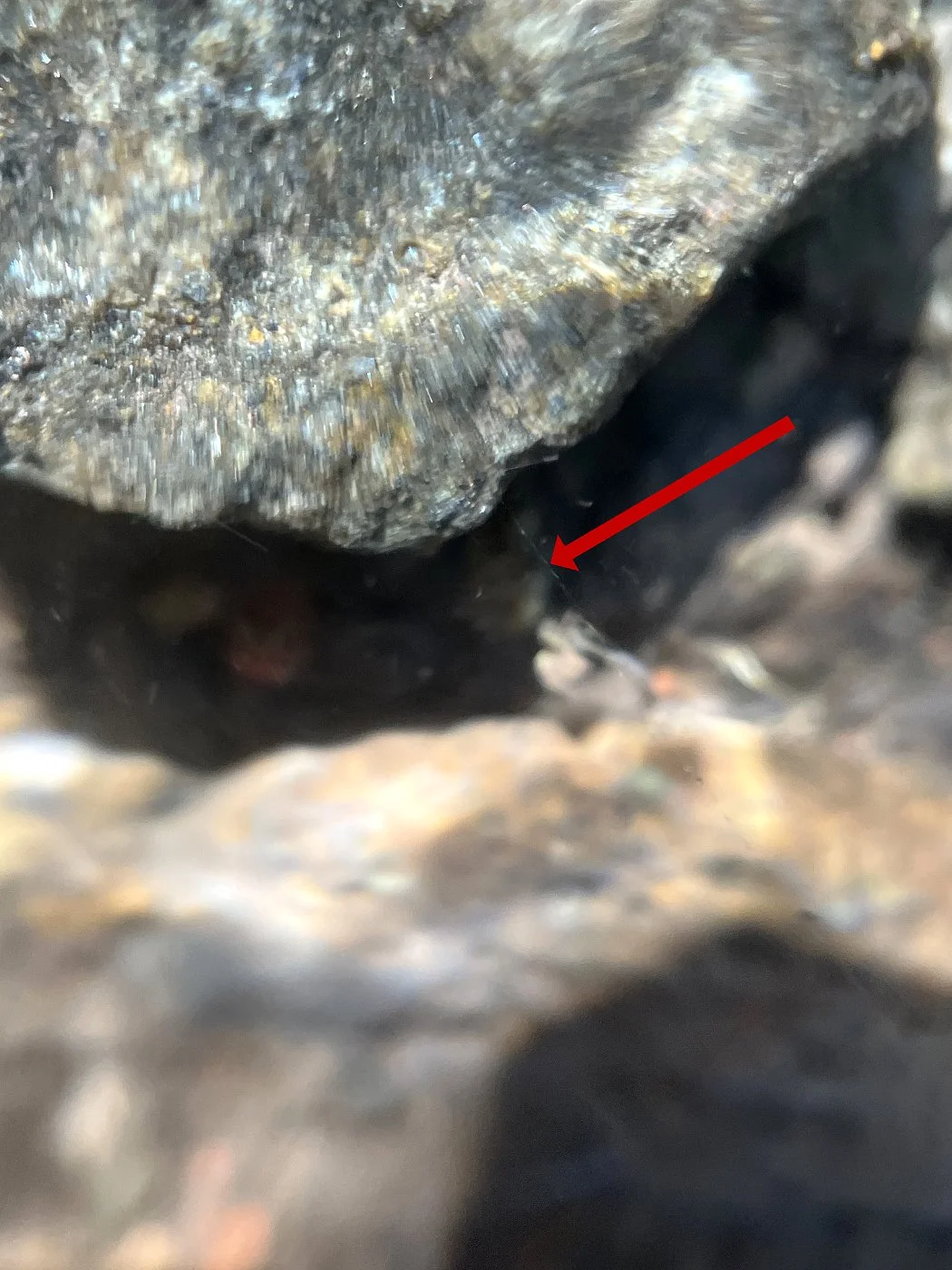
Some of them were disturbed enough that they detached. They are able to move downstream on a silken thread and reattach in another location by weaving another pad. The silk is thin like a spider silk and mostly undetectable in the water. I managed to get my camera at an angle where I could catch the sunlight on the thread. I pointed it out with a red arrow in a photo below.

After reading about the life cycle of black flies, I went back to try and find the pupae or emerging adults. I found the pupae on the underside of the rock. The pupae were inside these cocoons that were open on one side. A branched respiratory organ that looked like root hairs waving around in the water extended outward on one side. To adapt to the fluctuations in the water level, the pupae are miraculously able to obtain oxygen in or out of the water. I was unable to locate any newly emerged adults on the rocks or vegetation next to the creek. I’ll keep checking and let you know if I find any.

Thanks for reading my blog. I recommend reading some of the articles listed below for more information. Spring is exploding with life and I hope you are able to get out and do some exploring.

Sources
“Black Fly (Family Simuliidae).” Field Station, 3 Apr. 2012, https://uwm.edu/field-station/bug-of-the-week/black-fly/.

Commonwealth of Pennsylvania. Black Fly Biology. https://www.pa.gov/agencies/dep/programs-and-services/bureau-of-labs/vector-management/black-fly/biology. Accessed 13 Apr. 2026.

Leinweber, Rachel. “Bug of the Month: The Often Ignored Blackfly Larvae.” Angler’s Covey, 14 Feb. 2024, https://anglerscovey.com/2024/02/14/bug-of-the-month-all-about-blackfly-larvae/.

Fimbriate Gall Forming

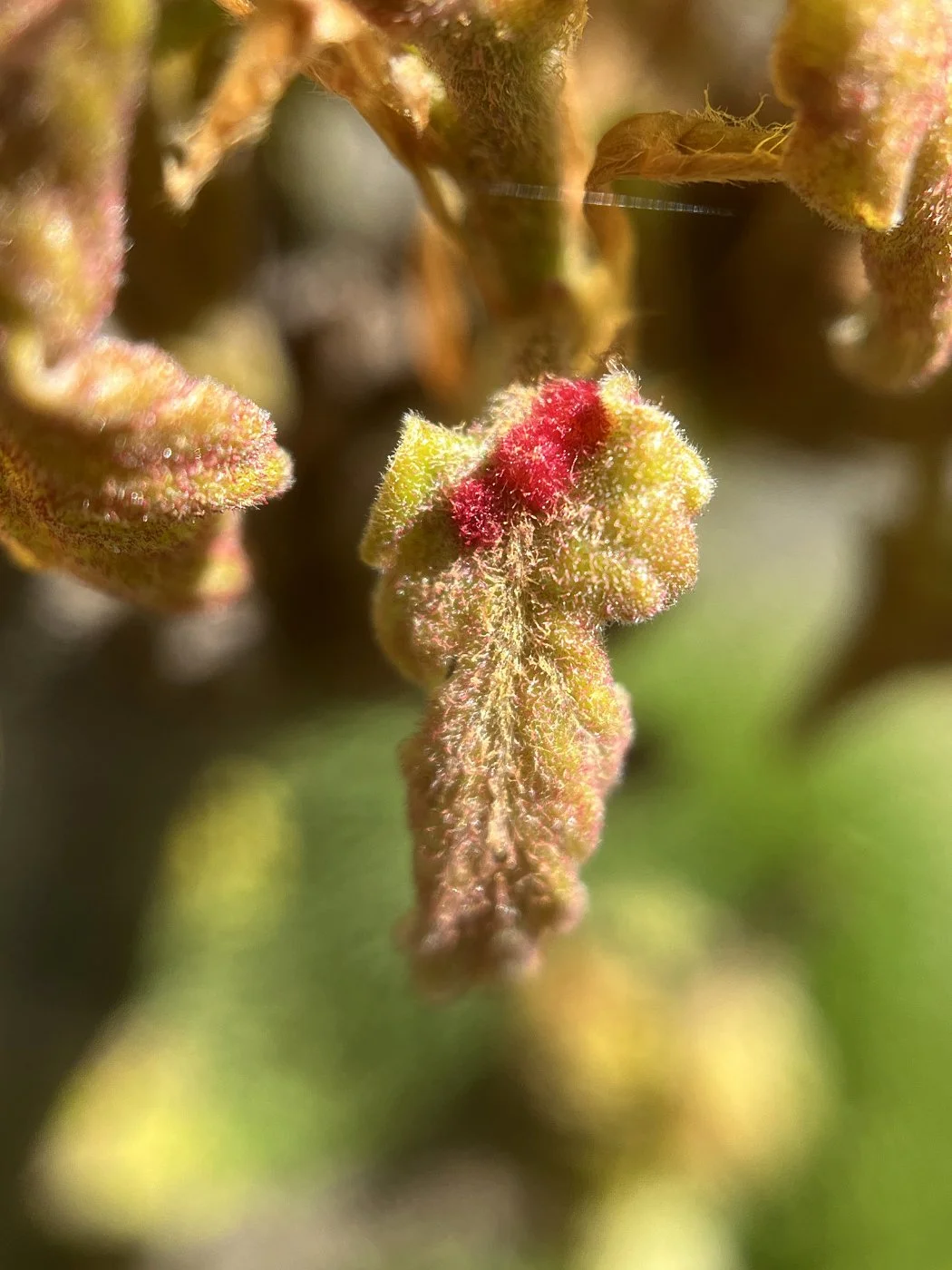
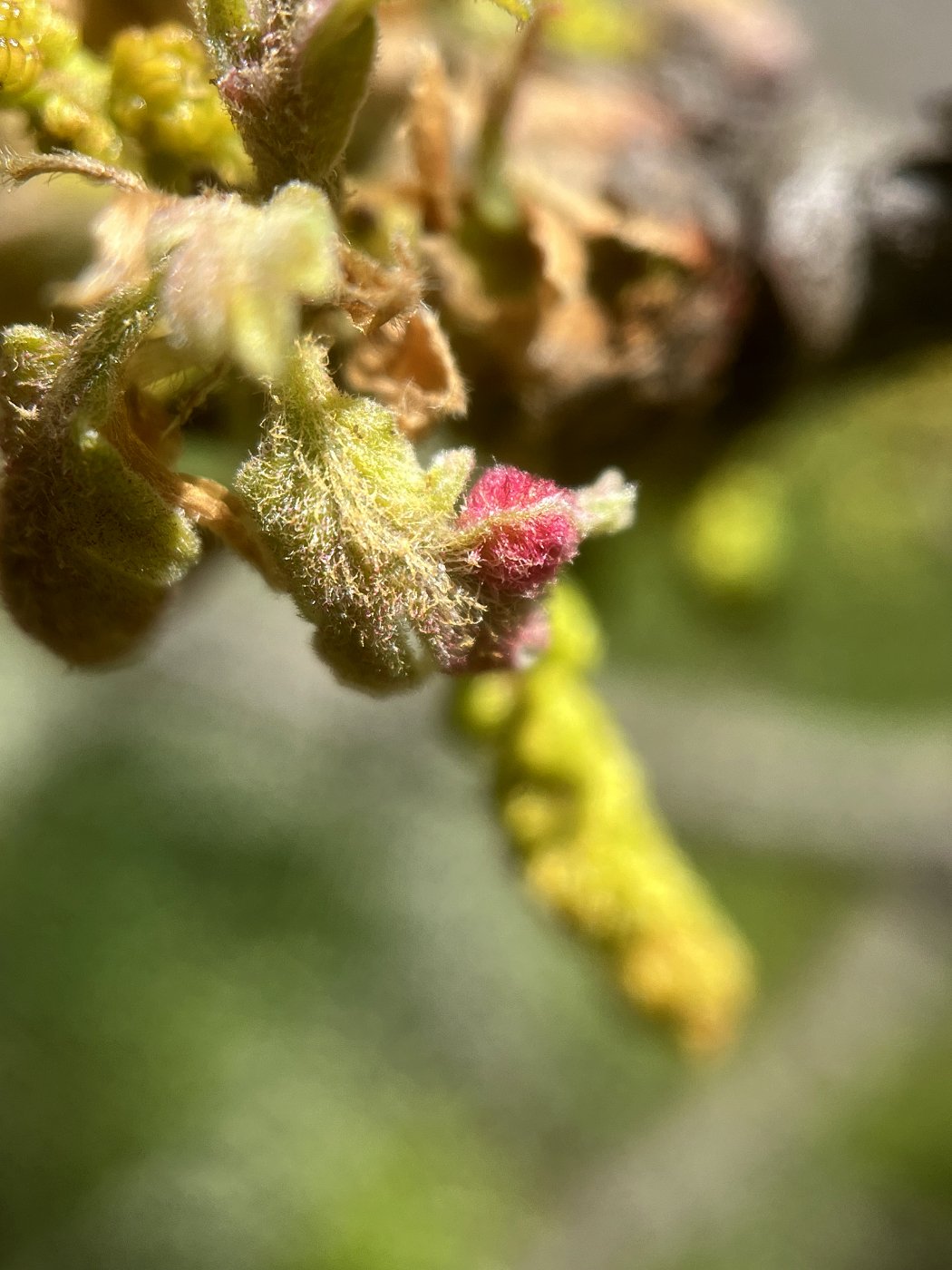
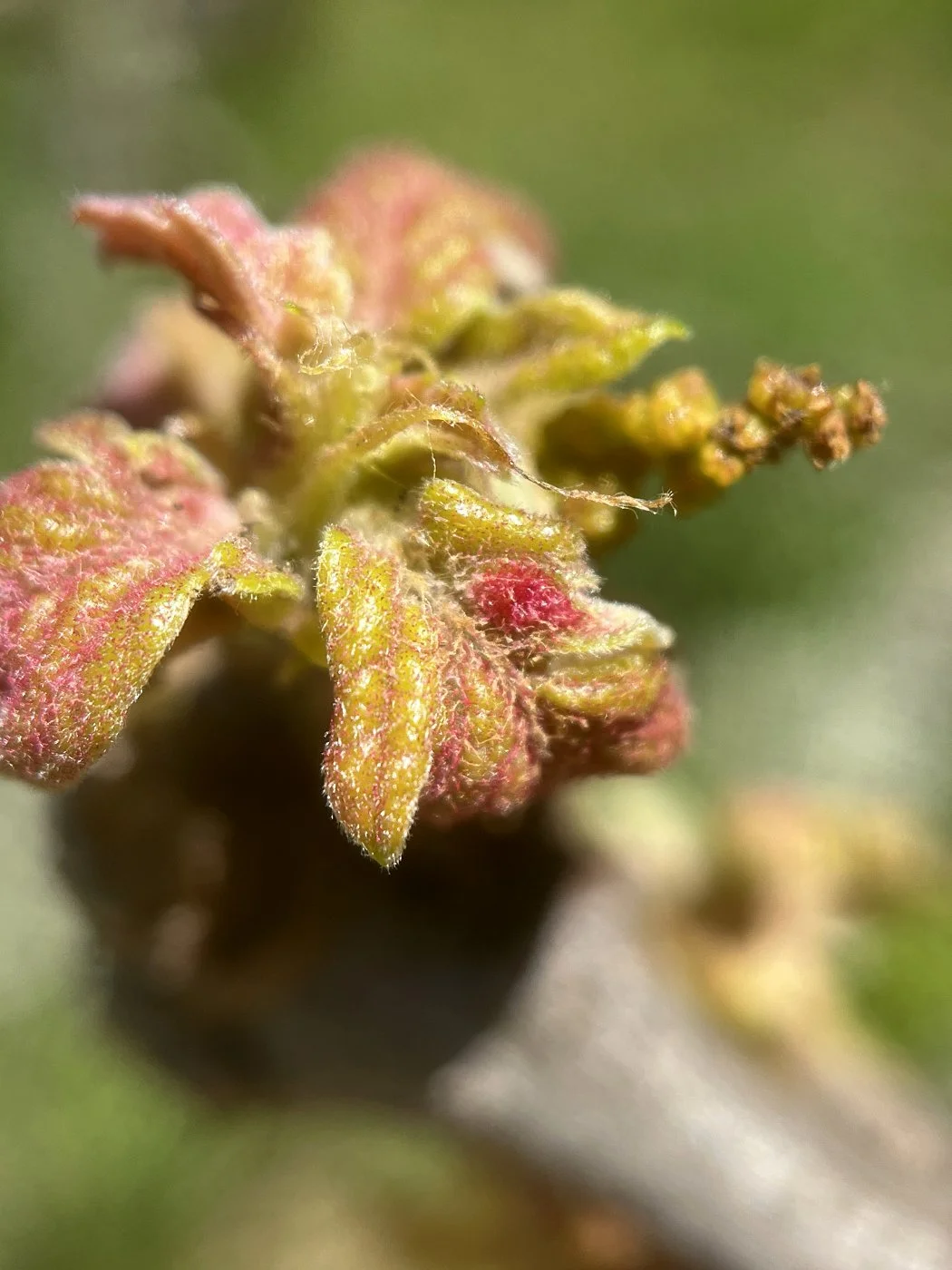
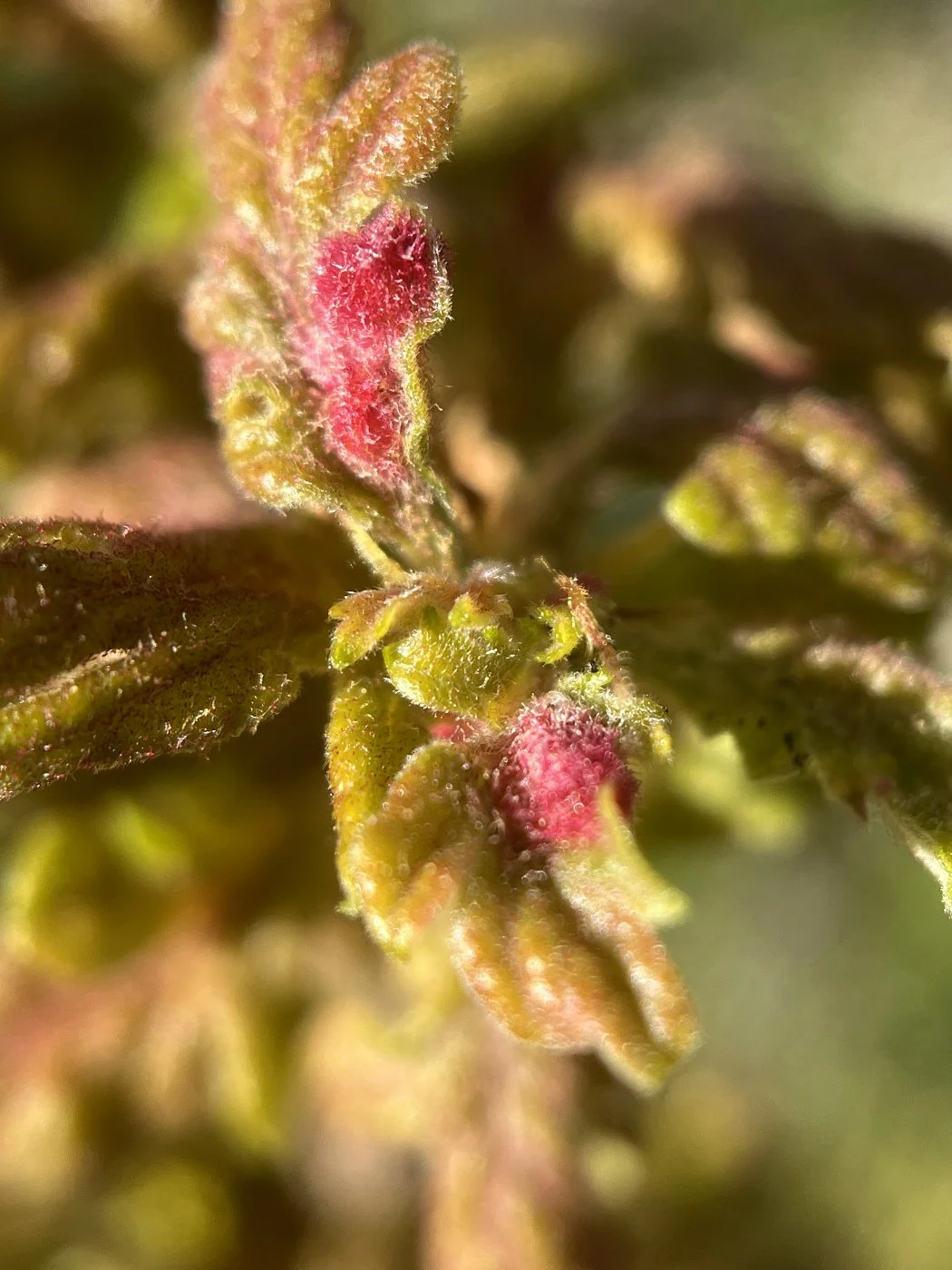
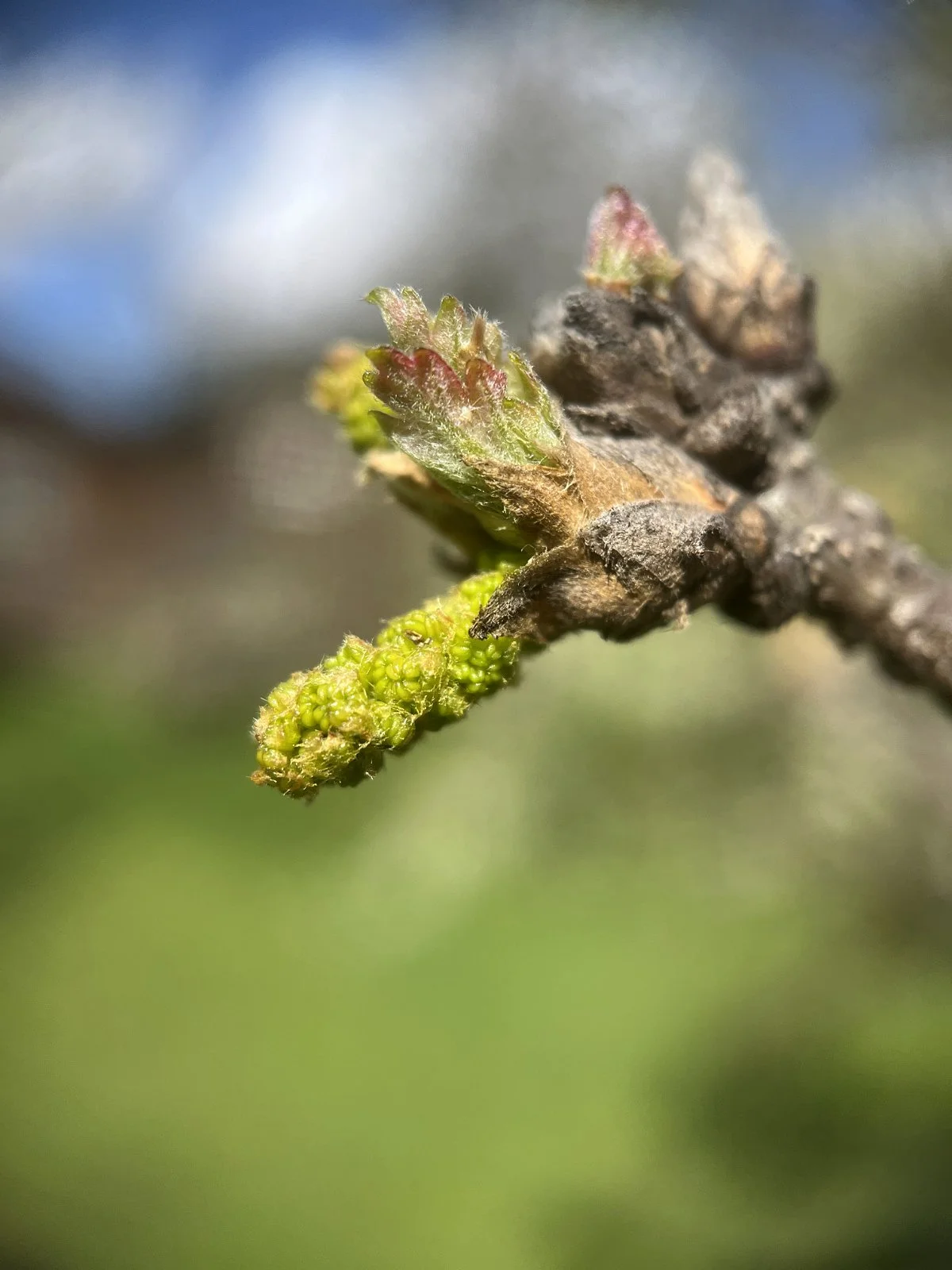
I’m back with an update on the fimbriate gall wasp. The leaves are emerging and there are fuzzy, bright crimson galls starting to form! I love the vibrant red color and as posted before, I want to add my own common name crimson comet gall for this gall.

There is an unimaginable amount of life unfolding around me that it is dizzying to think about. An event, such as the laying of eggs by these gall wasps, has a tiny window in which to witness it. On top of that, the wasps are tiny and easily overlooked too. Observing nature is a mix of things. Sometimes it involves researching what I am interested in seeing and being informed so that I set myself up to be successful by being at the right place at the right time. Most times it is about being curious, staying tuned into my awareness of all my senses, and trying to quiet my mind.

In the poem Sometimes by Mary Oliver, she wrote:
“Instructions for living a life:
Pay attention.
Be astonished.
Tell about it.”

So here I am trying to pay attention, be astonished, and tell you about it in my blog in hopes that you will be inspired to spend time wandering around outside exploring nature. Thanks for checking out my blog. I hope that you are enjoying spring. See you out there!

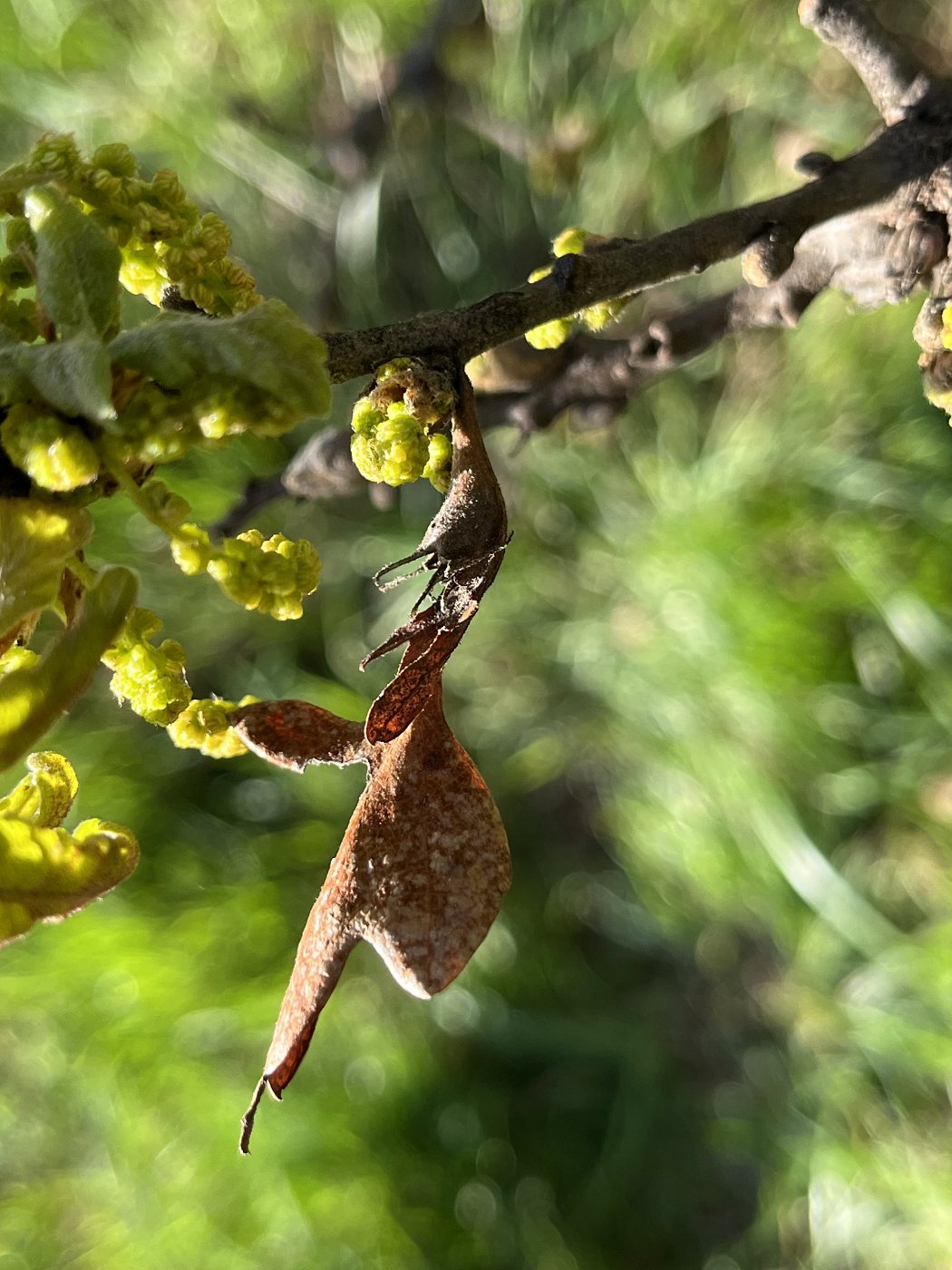
P.S. The last photo below shows an old leaf from last year that is still hanging on and it looks like it had a fimbriate gall on it.

Gall Wasp Laying Egg

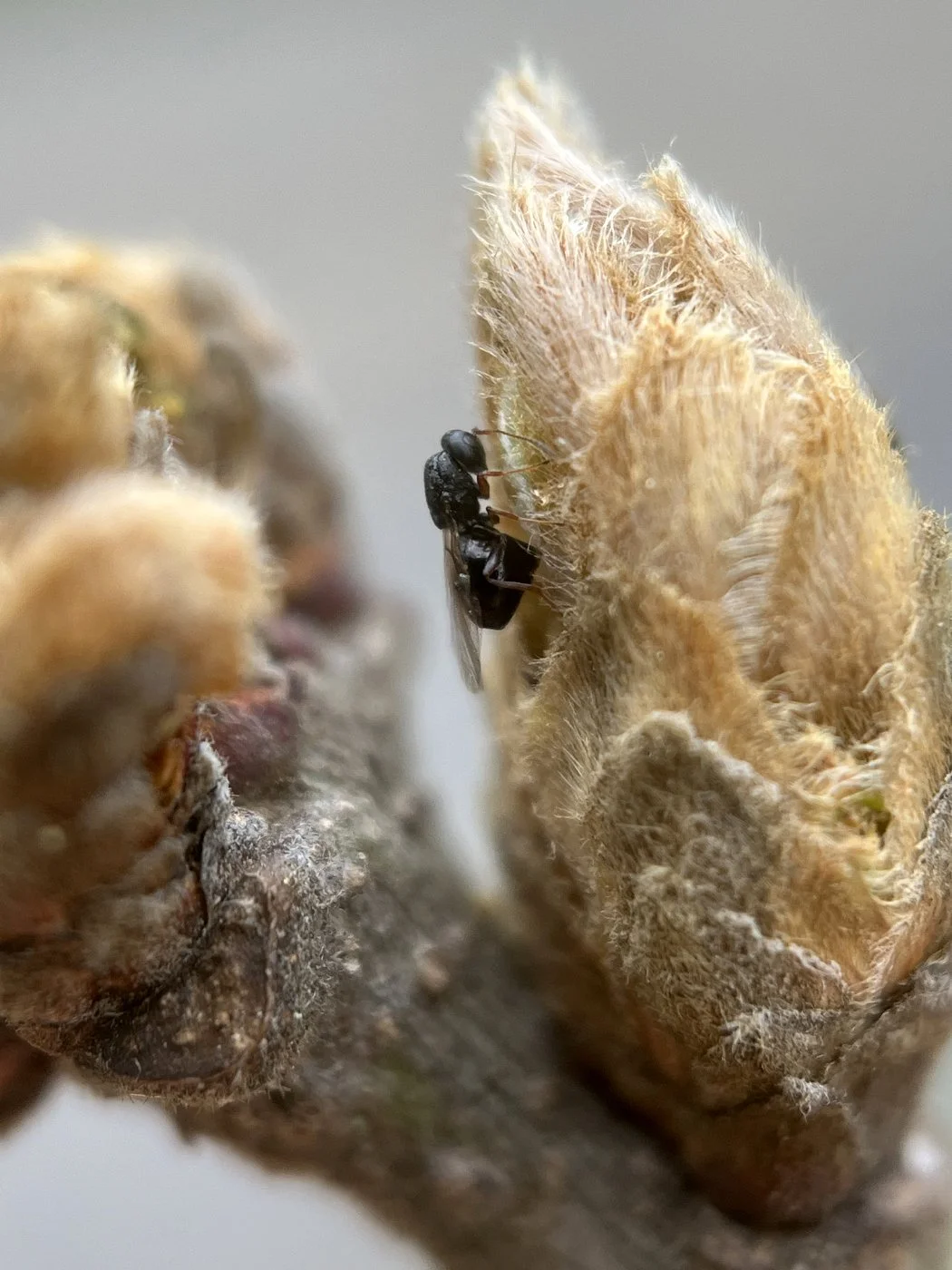
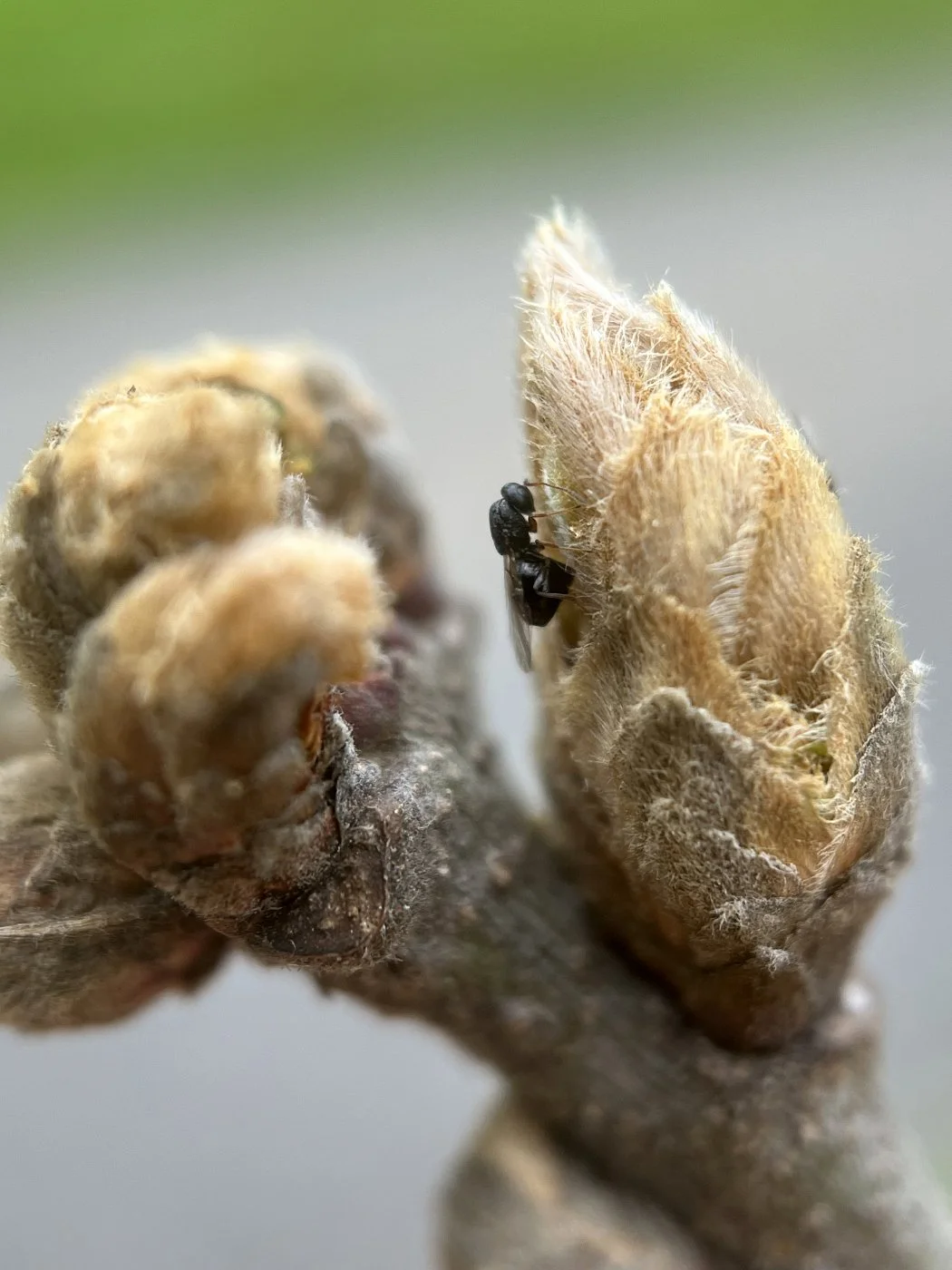
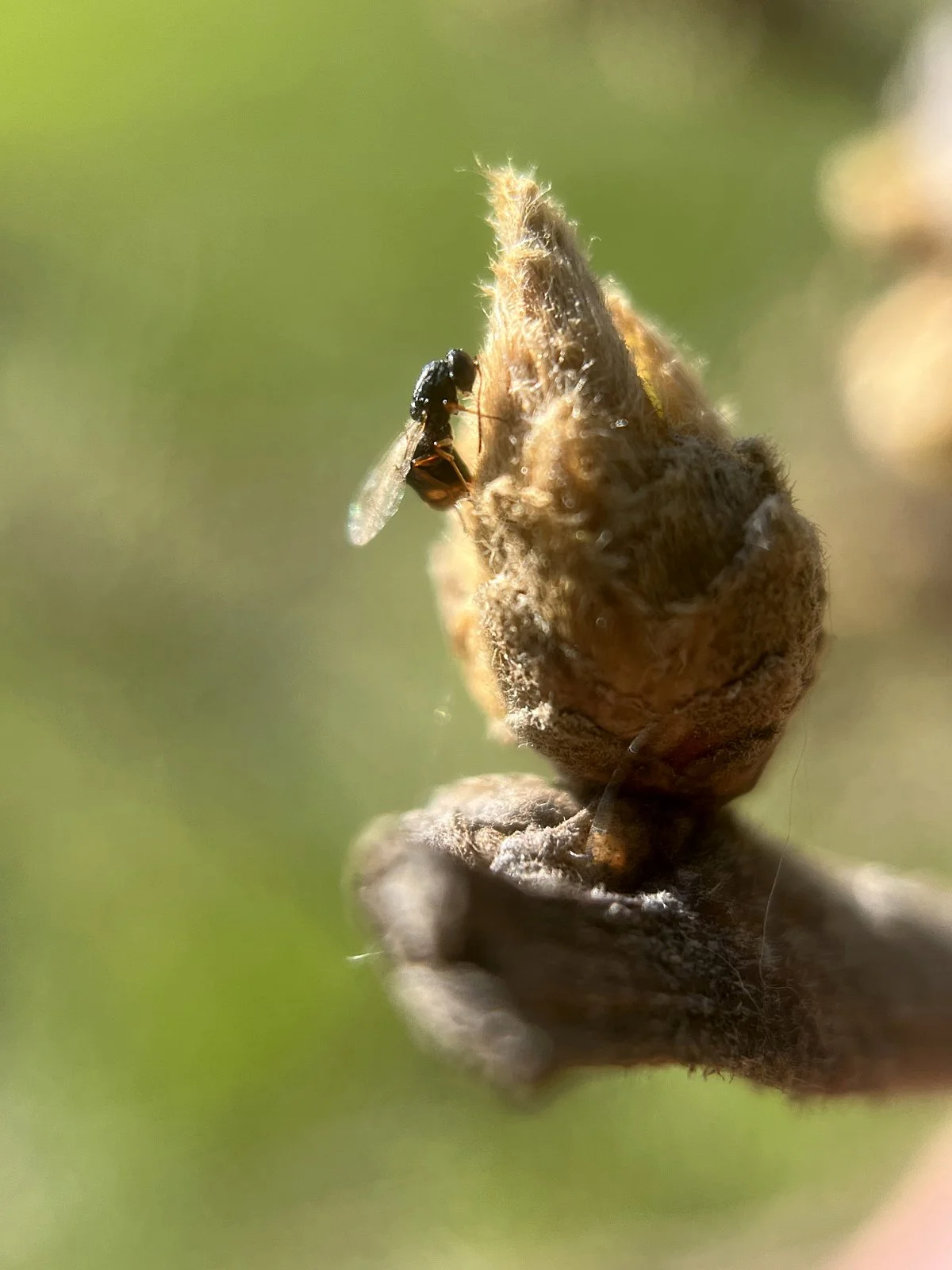
The leaves and the male catkins have been bursting out of their buds over the past week. I have been out exploring the oak limbs and admiring the beauty of the rose-colored tips of the new leaves. I found a tree where the buds were just about to open and discovered a small insect clinging to many of them. It appeared that it was injecting its ovipositor into the bud to lay eggs. I was so excited to find these, and I immediately wondered if it was a gall wasp. My guess is that it is possibly the fimbriate gall wasp (Blog Post: Fimbriate Gall Wasp, May 1, 2024). To find out, I went and fetched a couple of pieces of twine and tied them to 4 or 5 places where the insects were laying their eggs. When the leaves emerge, I will see if a gall is forming. I’ll keep you posted on what I discover.

As the days grow longer, I hope that you are finding time to be out in nature immersing all of your senses in the spring weather, wild flowers, hatching insects, bird song, etc. Nature is an inexhaustible source of wonder. I’ll see you out there.

Humble Bumble House

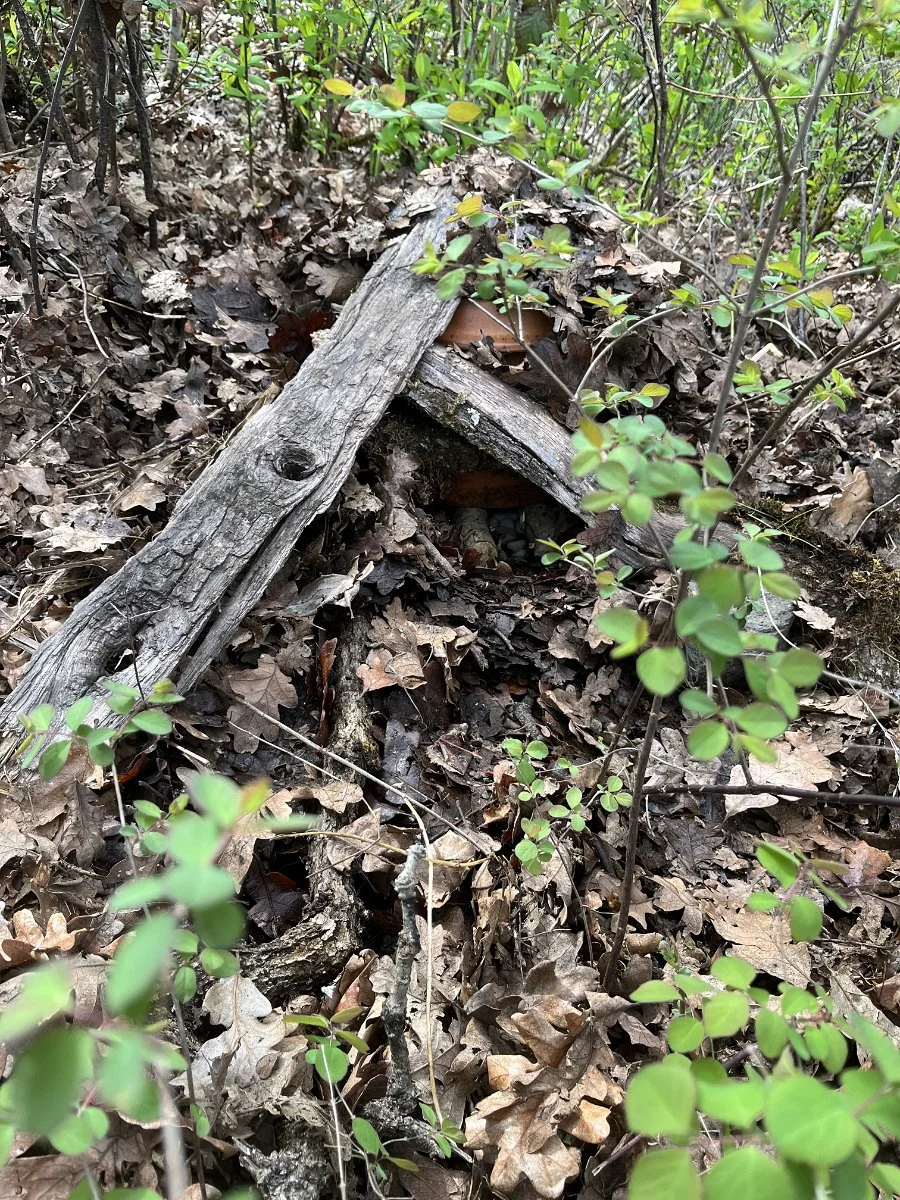
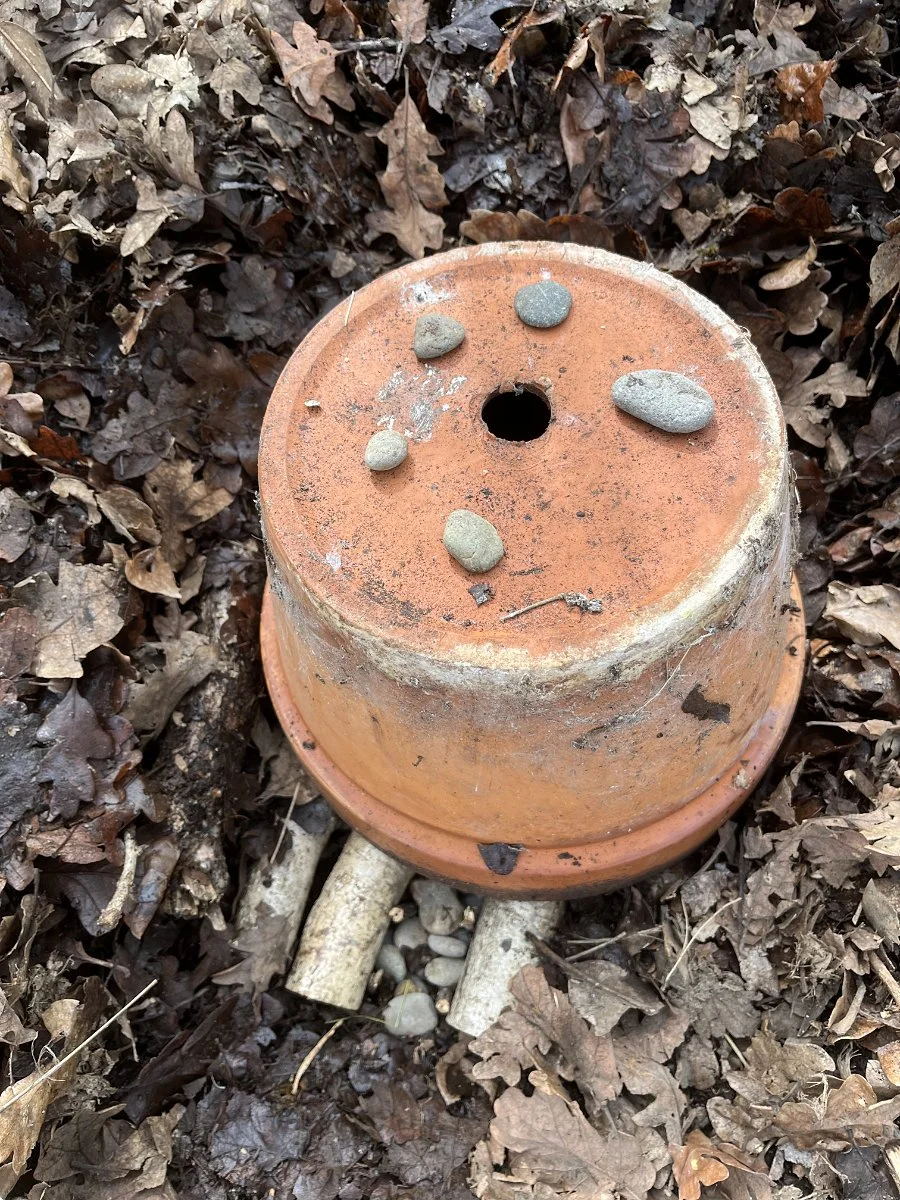
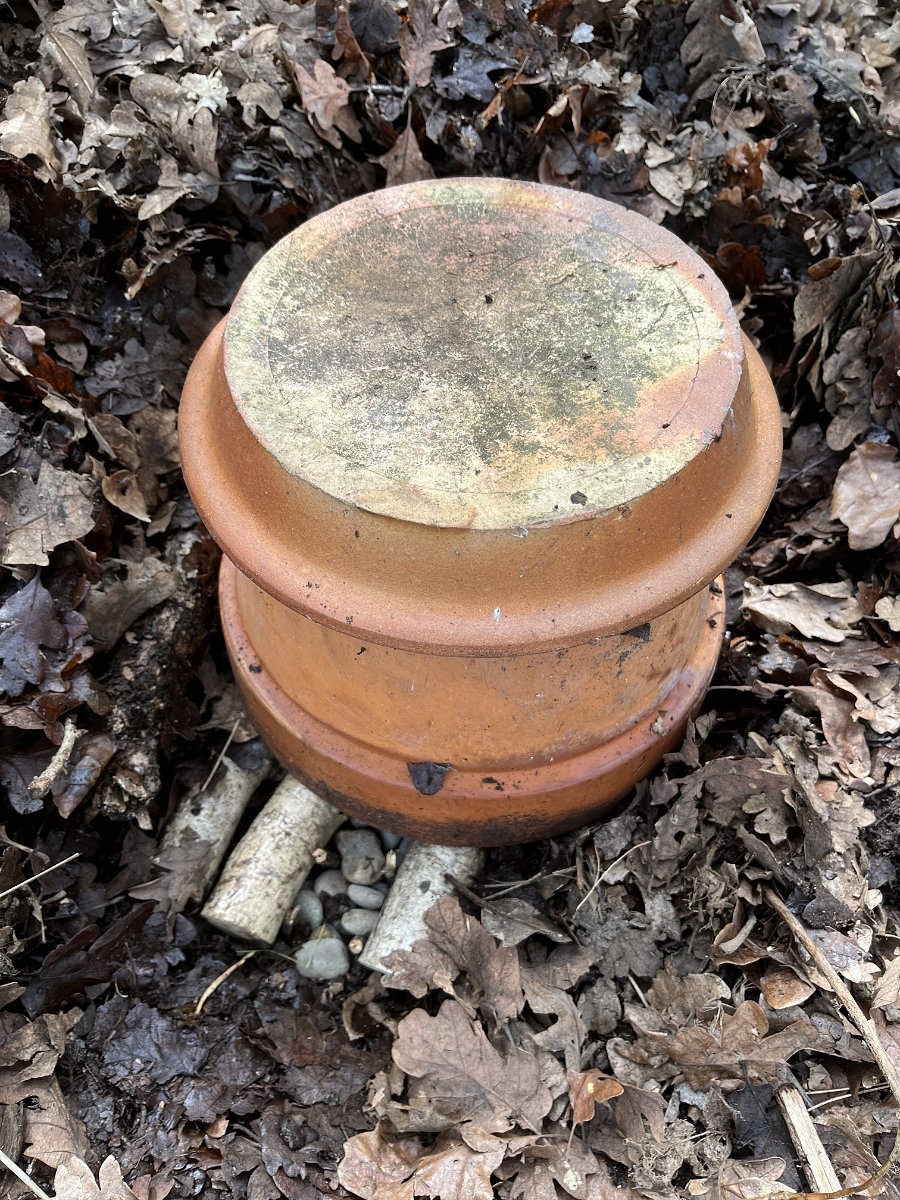
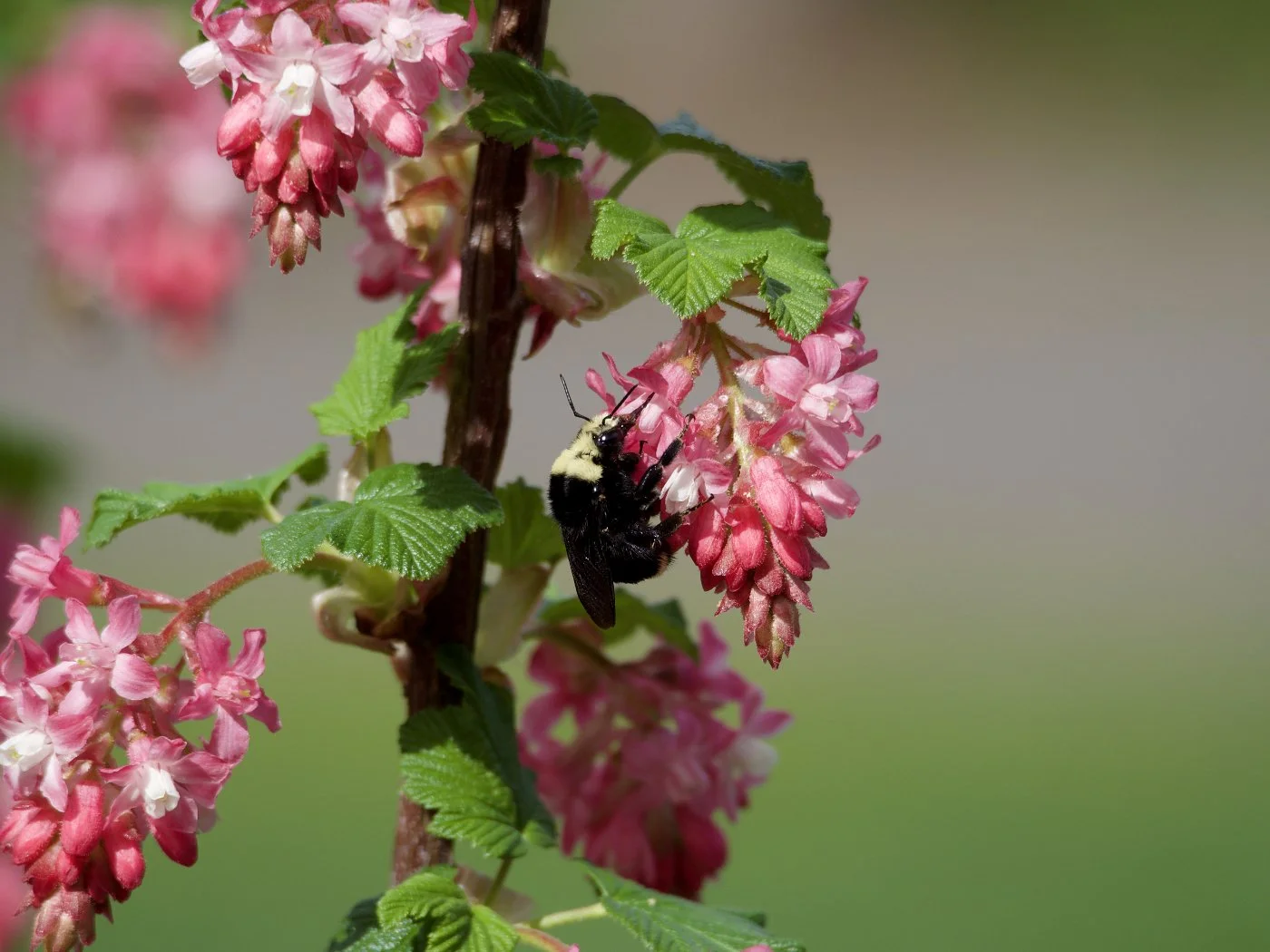
The weather has been very springy out this week with unseasonably warm temperatures and sunny skies. The flowers are starting to bloom and bumble bee queens have awoken from their long winter’s nap. I have seen them nectaring on red-flowering currant, hound’s tongue, and Oregon grape. To seize the day, I made a small bumble bee house to hopefully attract a queen to build a hive.

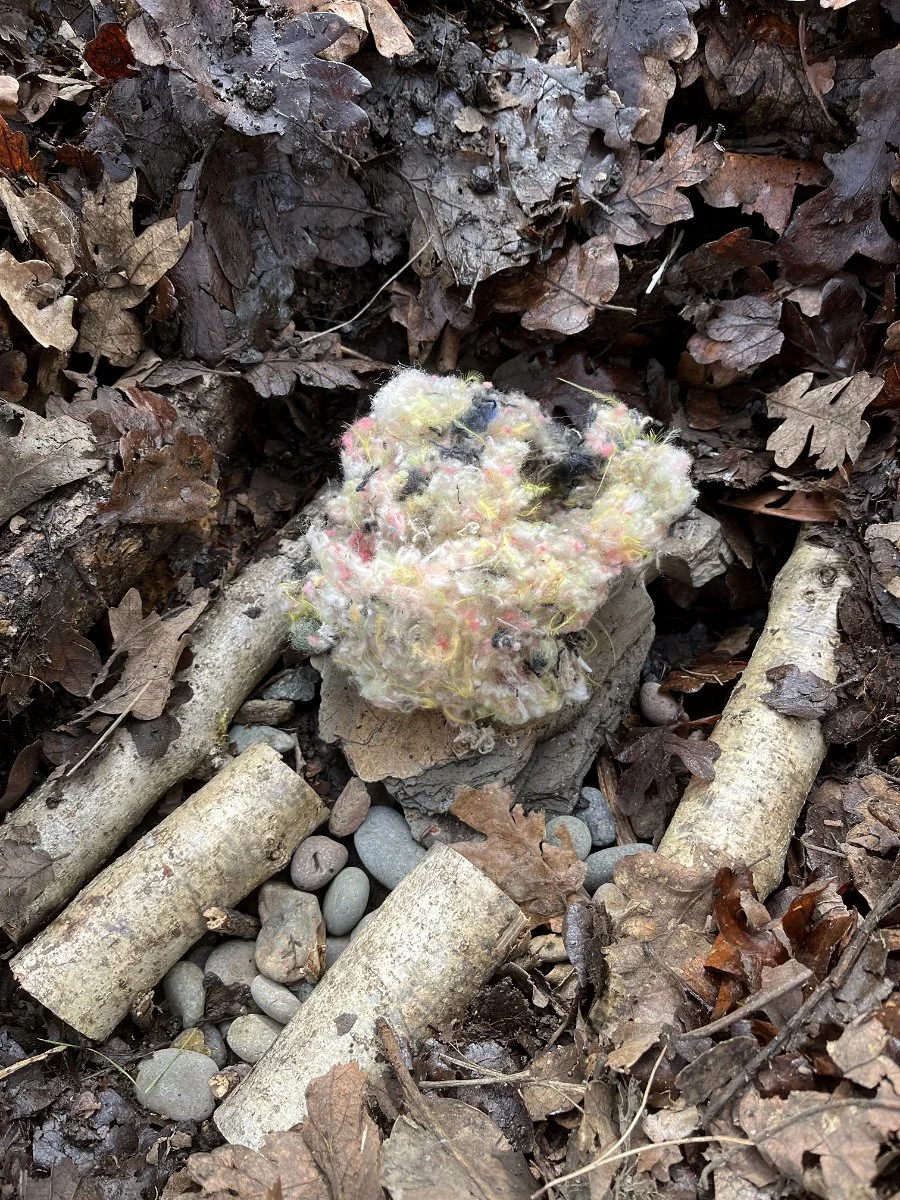
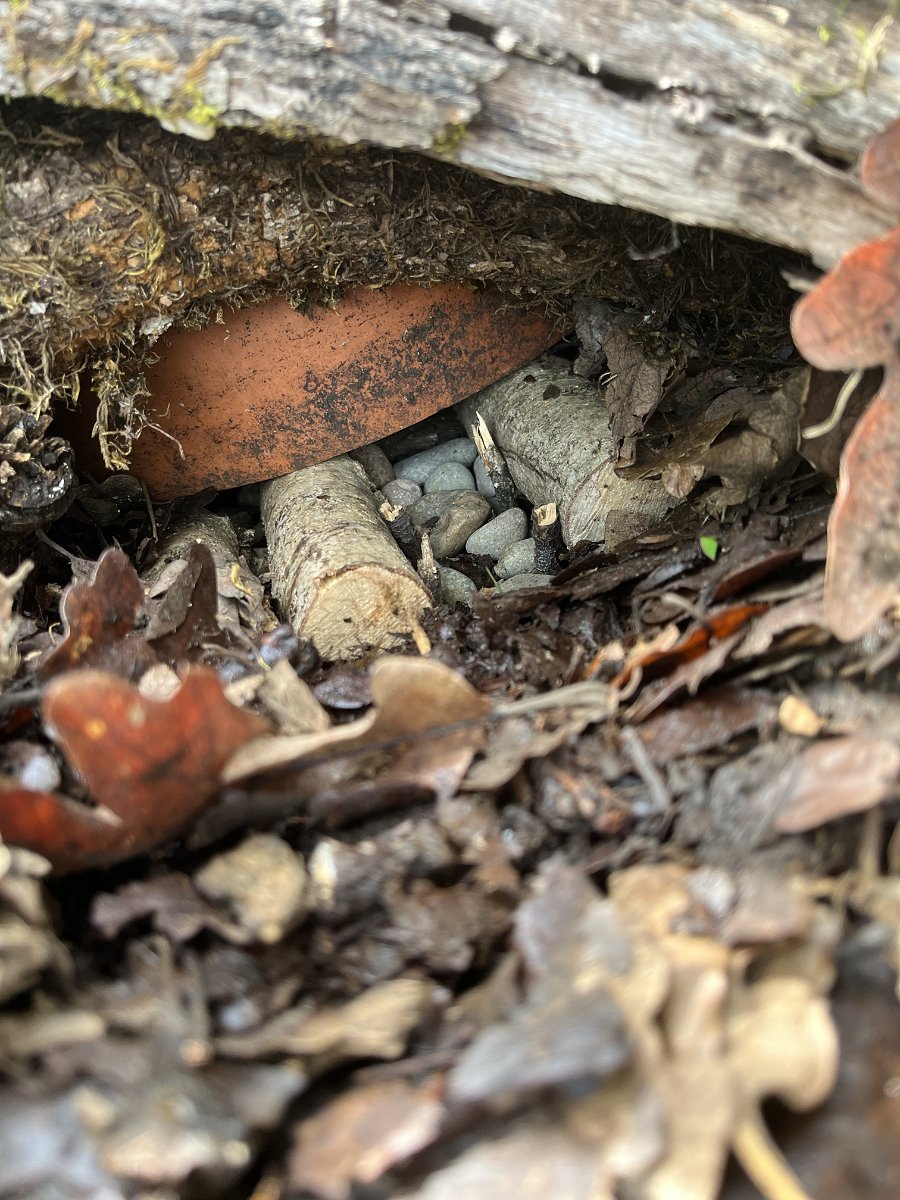
I cleared a small bit of ground and put some sticks down to form a base. Then I put a flat rock on top of that to act as a platform for a mouse nest. This will hopefully keep it off the ground to help it stay dry. Bumble bees are attracted to the scent of old rodent nests to start new colonies in the spring. The rodent burrow provides a dry cavity and the old nest provides insulation to help the queen keep the new hive warm. I put a flower pot on top to act as the cavity. I added some some rocks on top to slightly elevate the lid so the drain hole in the bottom of the flower pot can allow for some ventilation. I created a small entrance with a few branches and put some rocks in between as a porch for bees to land on. I covered the pot with leaves and put some old pieces of wood in the front as a small roof for the entrance.

The life of a bumble bee colony is an annual cycle. It starts off in the spring when the overwintering queen emerges. She will start the nest by building small wax cells to lay her eggs which will be female worker bees. When these bees hatch, they will start helping to build the nest and forage for nectar and pollen for the developing larvae. At this point the queen will stay in the hive and focus on laying eggs. Depending on the species and the availability of forage in the environment, the nest will grow over the summer to be about the size of a small football and contain 50 to 400 or 500 bees. In the late summer, the queen will lay eggs that develop into males and new queens. The males and new queens will leave the colony in search of mates from other colonies. The males don’t return to the nest at this point and you might see them spending the night on plants. The new queens will continue to return to the colony until it is time to search for places to hibernate at the end of the summer. The old queen, the female workers, and the male bees will all die at the end of the season. Next spring the cycle starts over again.

The bumble bee nest is not as orderly as that of the honey bee with its honeycomb of hexagonal cells. Bumble bees make clusters of spherical cells for raising brood and storing small amounts of honey. Over the summer as the colony grows, the nest develops into this fascinating conglomeration of cells. Hopefully a queen bumble bee will find my flower pot and find it an enticing place to start a new colony.

Source
“Bumble Bees: Nesting and Overwintering | Xerces Society.” Xerces.org, xerces.org/bumble-bees/nesting-overwintering.

“Bumblebee Nests.” Bumblebee Conservation Trust, https://www.bumblebeeconservation.org/learn-about-bumblebees/beginners/bumblebee-nests/. Accessed 18 Mar. 2026.

Xanthorhoe

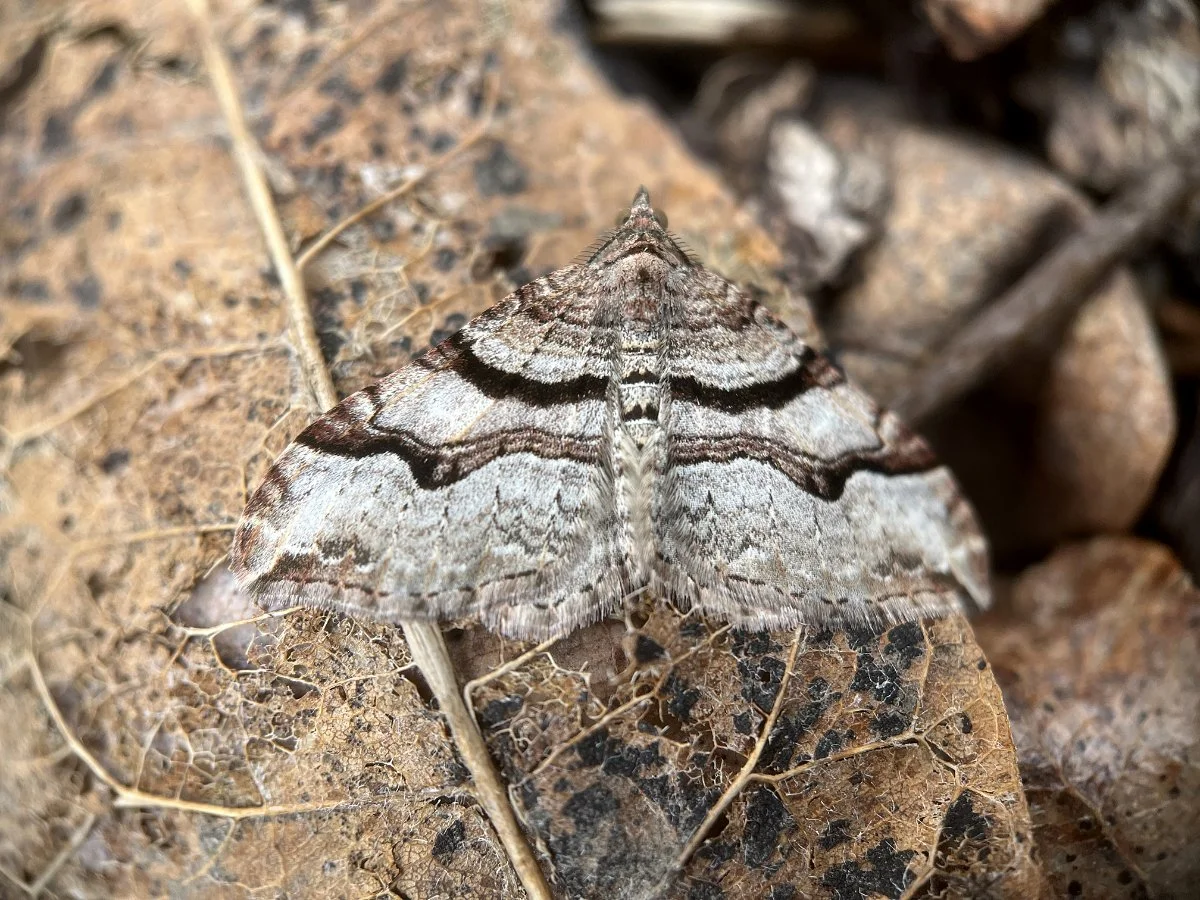
This day I had noticed small debris drifting through the air. Chickadees and jays were poking around the upper canopy of the trees dislodging bits of leaves, lichen and moss as they looked for food. This fragment was different. It danced across the sky above me. It fluttered up and down. There was the slightest movement of air that I only noticed as I stood still, which I often do. This papery snippet seemed lighter than air. It floated. I watched it gracefully tumble down in front of me. It landed. I briefly lost it, like it had been absorbed into earth. I walked over and slowly kneeled on the ground where it landed. A creature was resting. Small waves washed over its body—brown bands of sediments settled on a sandy shore as the water slowly receded after a rain. These undulations reminded me of the elements of the earth that are pulsing through its body the same as mine. We are alive together in this moment. We sat quietly observing the world.

Fungus Gnats

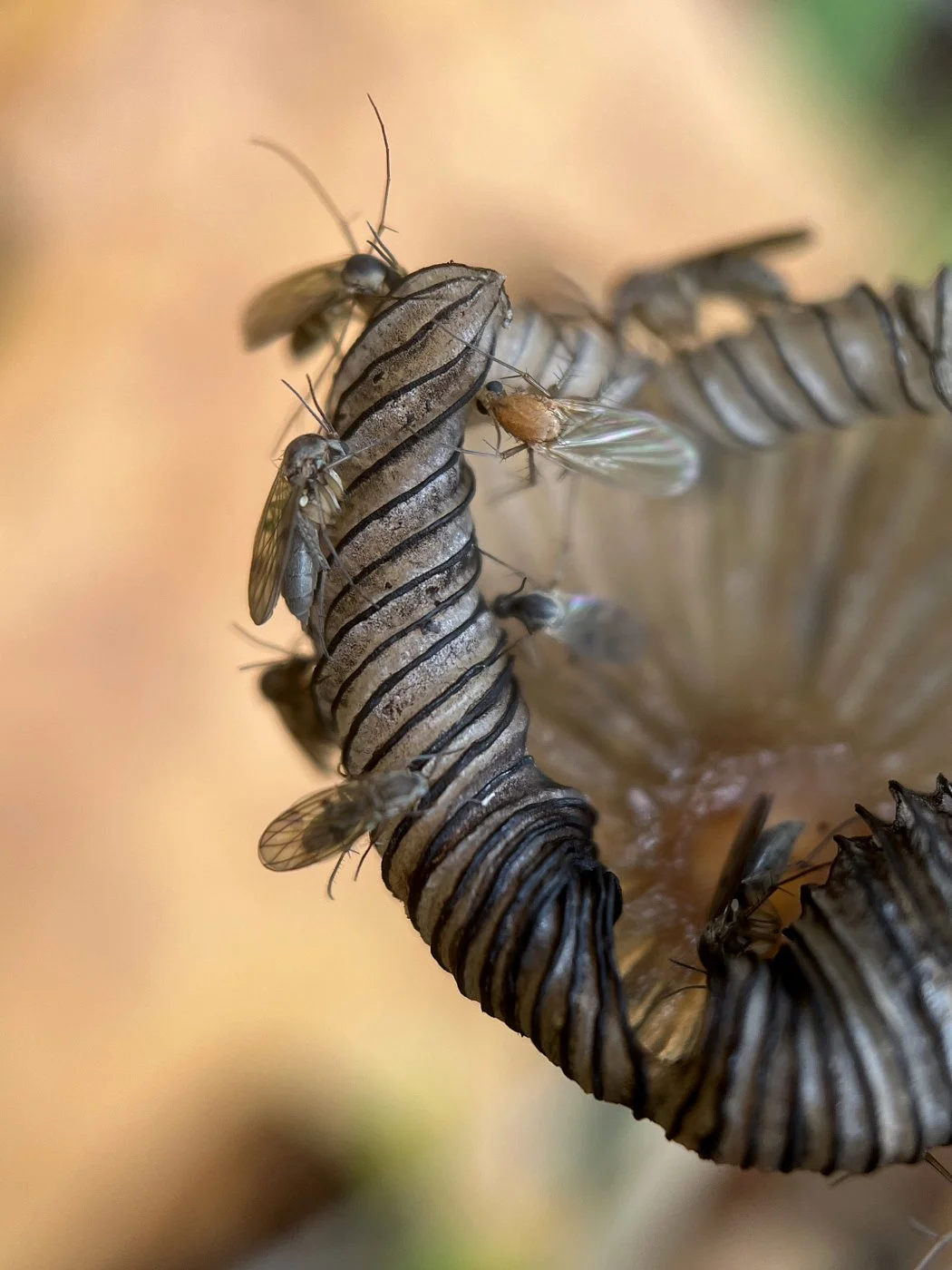
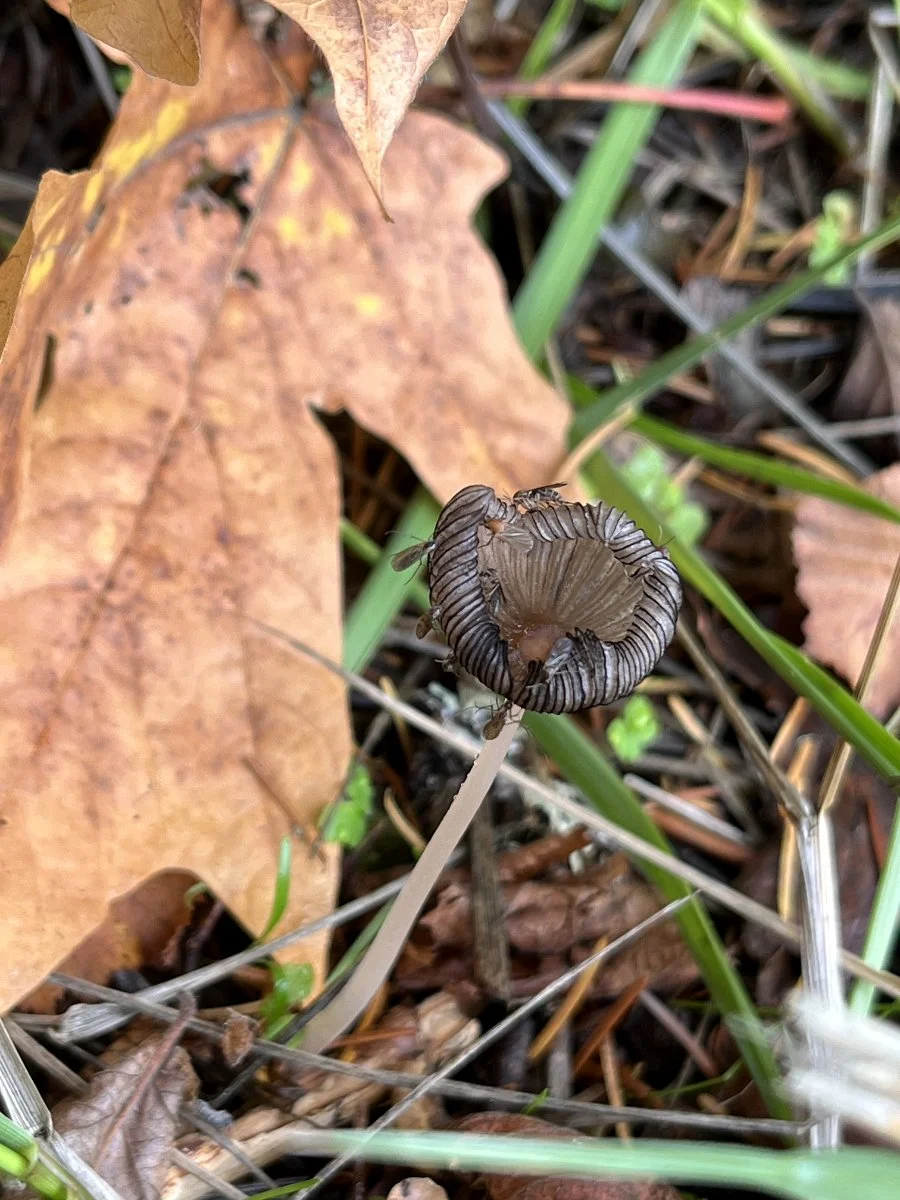
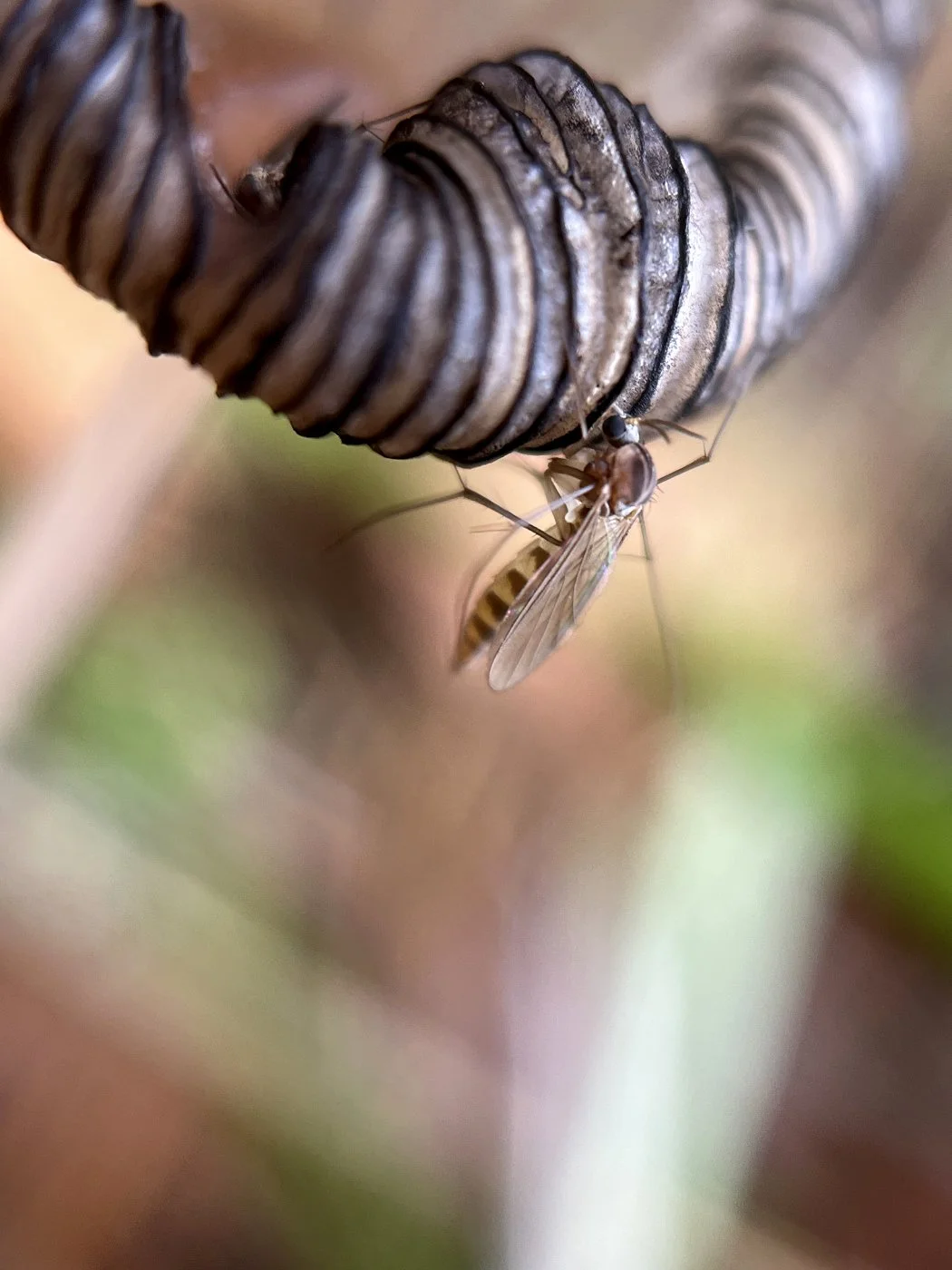
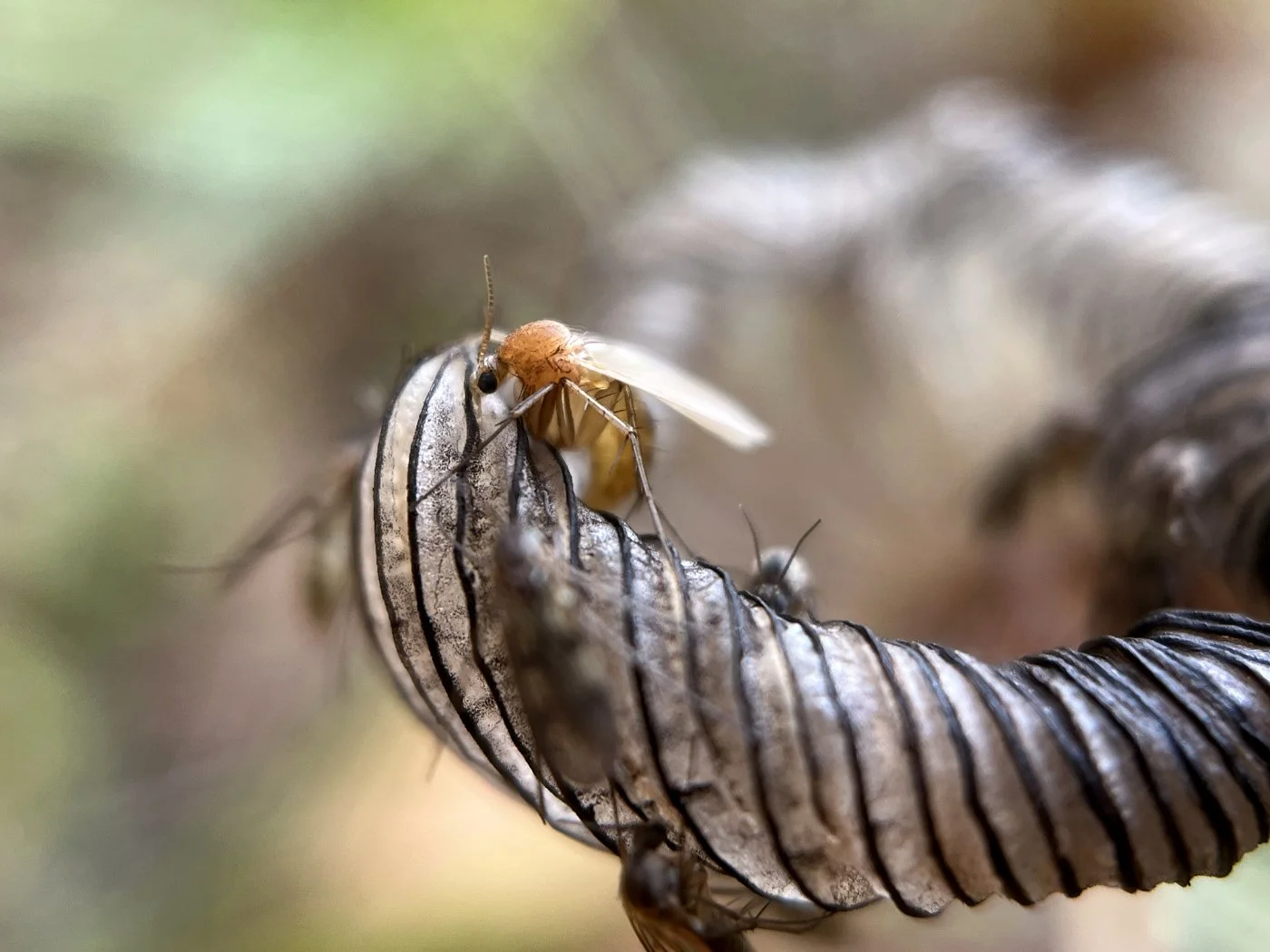
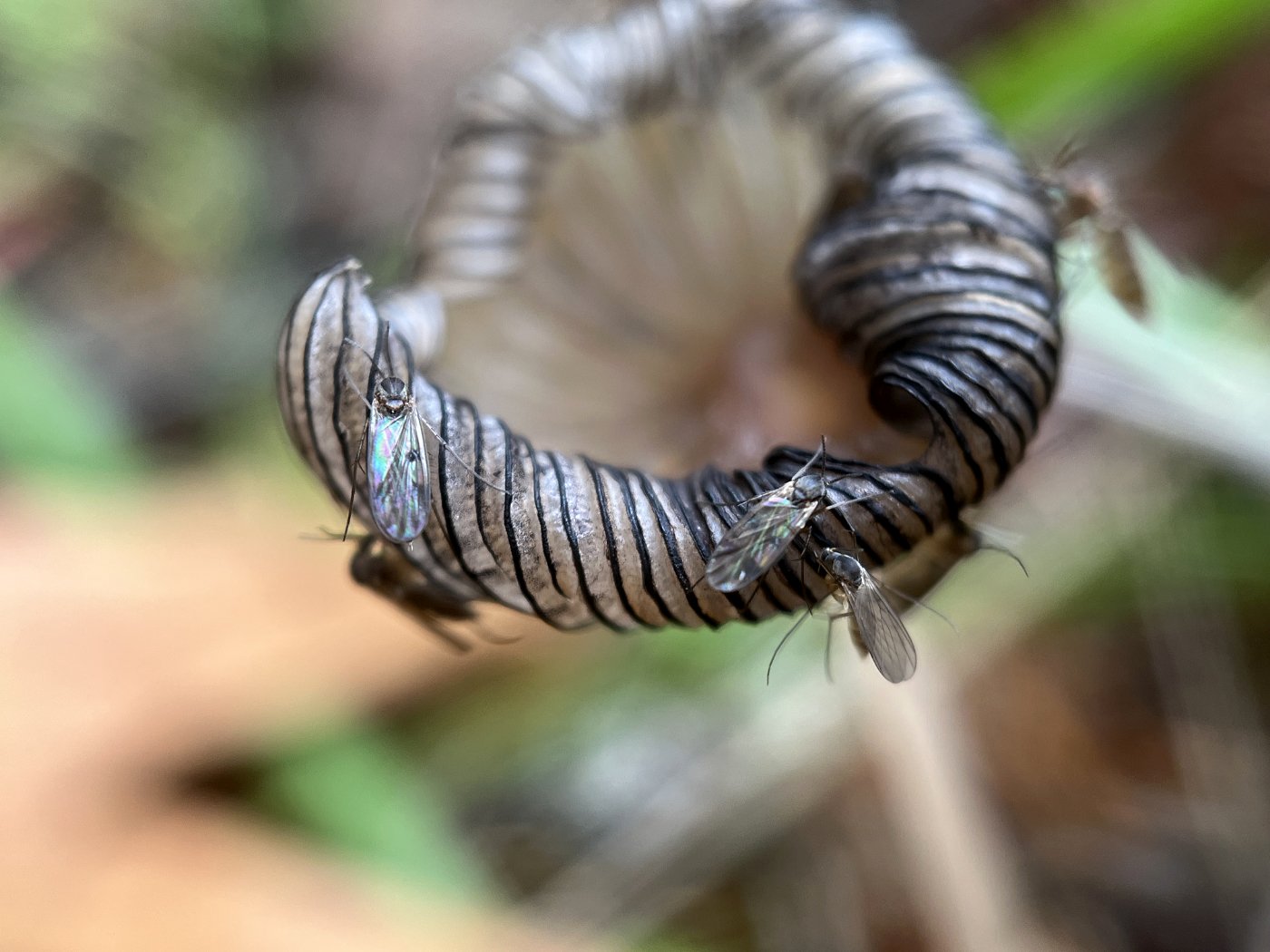
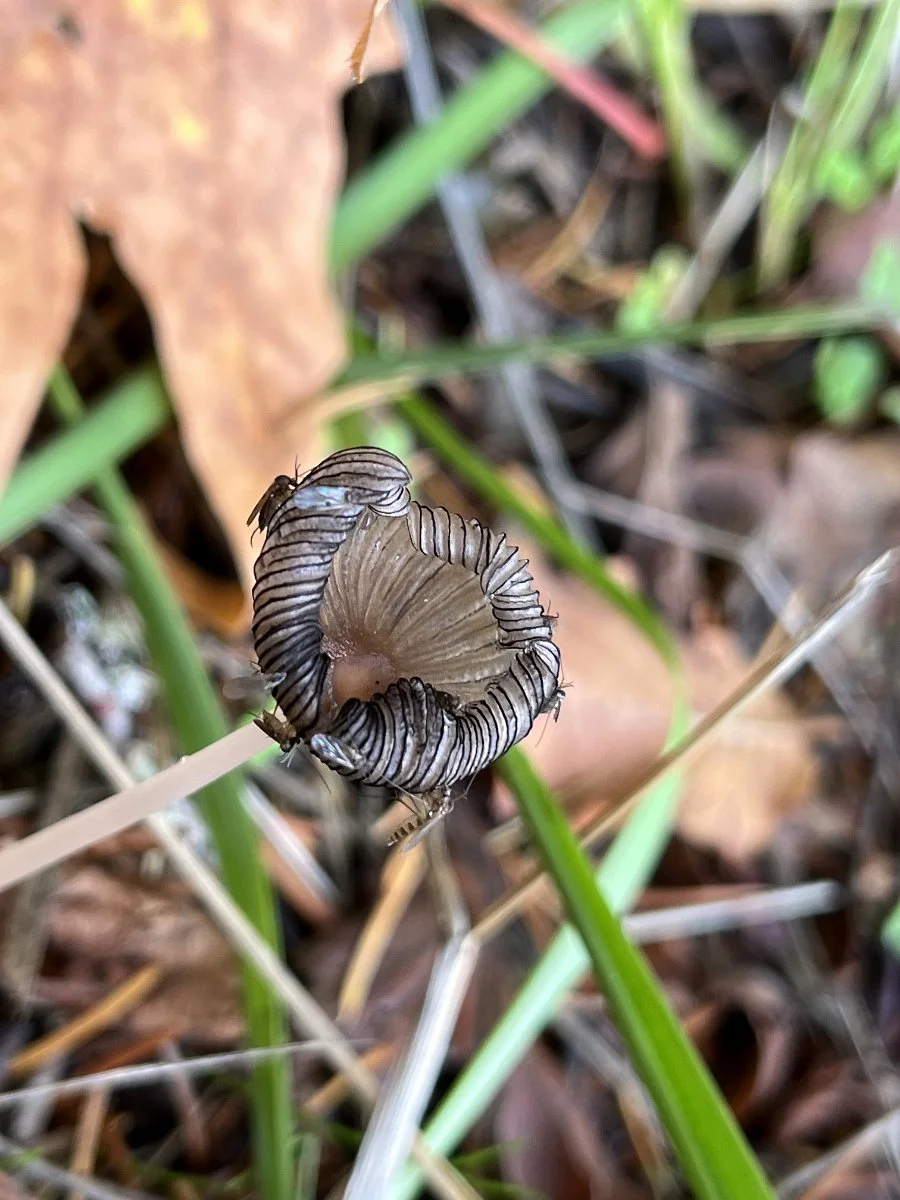
A little flurry of insects whirled upwards when I approached this mushroom to have a closer look. I sat down for a few moments and they settled back down. I had heard about fungus gnats before and I wondered if these tiny insects on this mushroom could be them. As I attempted to take a few photos, I realized that they weren’t all the same. Maybe I found a tiny mixed flock of gnats just like small songbirds form in the winter. As I sit here at my desk trying to discover what these tiny creatures are, I realized that identifying small insects is challenging. So for now, I have decided to let them flit around in my curiosity and let them settle in the not sure category.

That said, I will give you a little information on what I learned about fungus gnats. They are decomposers and help to recycle nutrients back into the ecosystem. In their larval stage, they consume things such as fungi, algae, root hairs, and decaying plant matter in the soil. The adult fungus gnats eat very little, only consuming water or plant nectar. The adults are drawn to mushrooms because of the ideal, damp habitat for reproduction. It provides for a suitable place to lay their eggs and have the larvae hatch in a moist environment rich in organic material in the soil to feed upon. Fungus gnats also provide a food source for animals such as birds like all of the kinglets here at the arboretum for the winter.

Interestingly, when investing many insects, much of the information out there on the internet begins with defining them based on if they are “harmful” or “beneficial.” In other words, do they “damage” plants that people are trying to grow for food, clothes, housing, such as, apples, cotton, or trees, or are they “helpful” in eating these “harmful” insects. I read that fungus gnats can infest greenhouses or mushroom operations but I didn’t see it mentioned happening out in nature.

We need to start shifting back to the paradigm of living in harmony with the earth where all life is respected. Where we are filled with thanksgiving, wonder, curiosity, and awe at all of the beauty and diversity of life. Where we see ourselves as a part of nature and its caretakers for future generations. Thank you to all the people out with there trying to make it happen. Thank you for reading my blog.

Nature is an inexhaustible source of wonder. I hope to see you out there!

Thimbleberry Gall Wasp

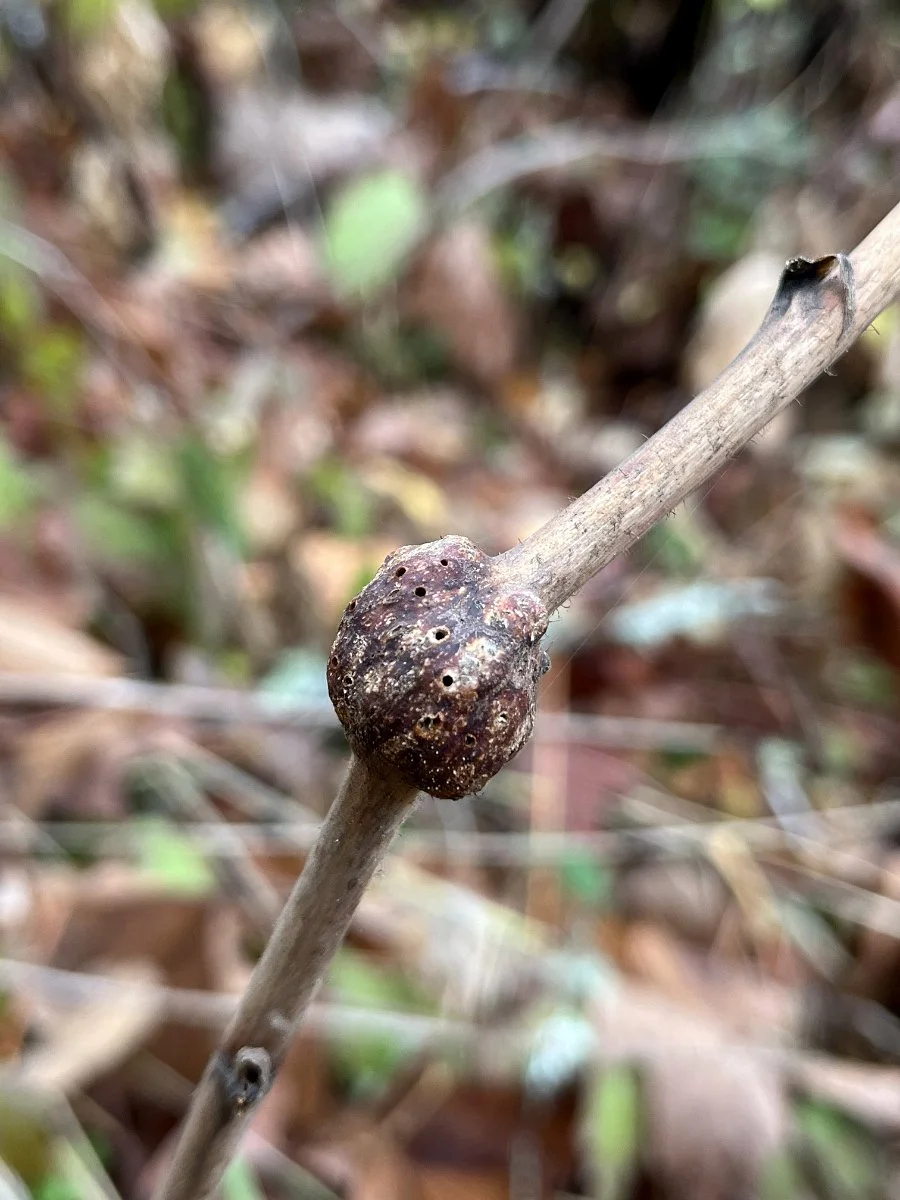
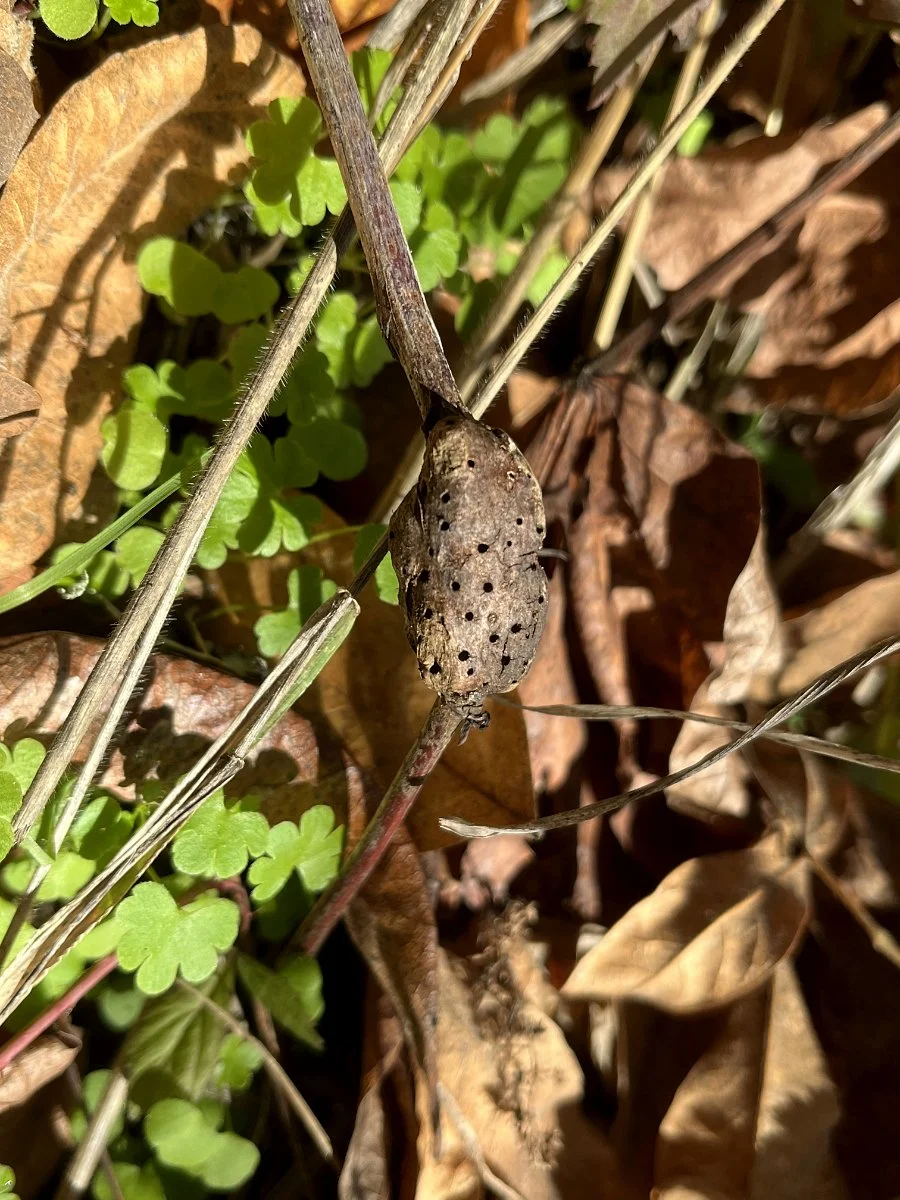
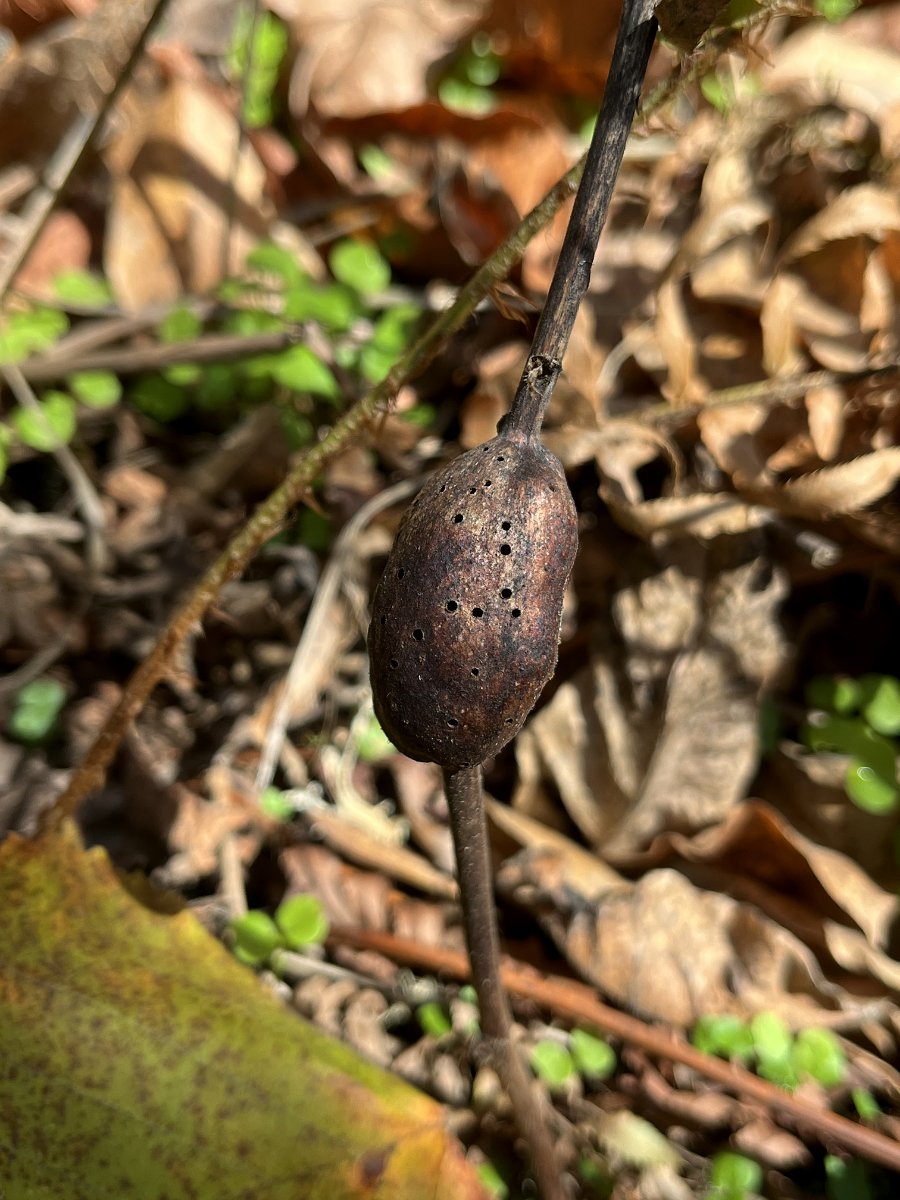
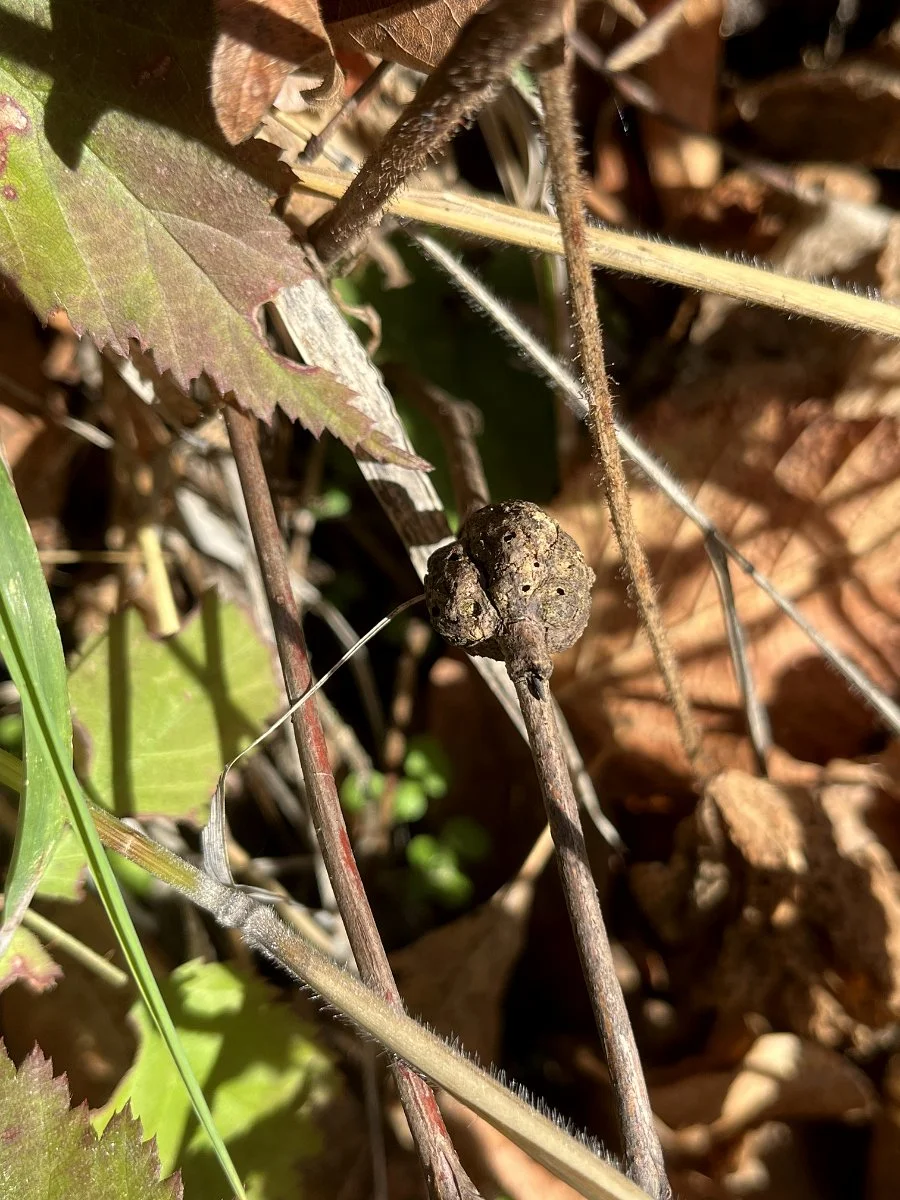
While out walking in the arboretum the other day, I got caught in a little eddy of flitting and chirping. I was on the pond lily trail and a mixed flock of birds was excitedly gobbling down woolly aphids. There were chickadees, ruby-crowned and golden-crowned kinglets, brown creepers and Bewick’s wrens. As I turned to watch a ruby-crowned kinglet bouncing between the branches near the ground, I noticed a little knobby knuckle on a small stem. It was firm and woody and had small holes on its surface as if an insect had chewed its way out. As I looked closer at the surrounding vegetation, I saw a few more and realized that they were on thimbleberry stems. I looked them up to find that they were thimbleberry galls created by the wasp Diastrophus kincaidii.

I found an informative paper online written by James K. Wangberg called “Biology of the Tliimbleberry Gallmaker Diastrophus kincaidii.” It was published in 1975 in the journal The Pan-Pacific Entomologist. When writing about the life cycle of D. kincaidi, he writes that the adults emerge from the gall in the spring by chewing their way out. I cut one open to see what it looked like inside and found that it still had tiny larvae inside. When I saw this gall riddled with holes, I thought that the wasps had already left. I thought that perhaps that some of the larvae were still developing and hadn’t emerged from the gall yet. I hadn’t read Wangberg’s study yet, so I didn’t know that the adults chew their way out in the spring. So why did these galls have holes in them?

At the end of Wangberg’s article he had a section called “Insect Associates,” which states: “Ten species of parasitic hymenopterans were found associated with D. kincaidii on thimbleberry. Most are parasites of D. kincaidii but some are hyperparasites. Parasitism of D. kincaidii larvae is extensive during the summer and oftentimes only those individuals deepest within the gall tissue escape attack. The parasitic species emerge in succession throughout the summer and D. kincaidii is subject to parasitism for its entire larval life. In addition, an inquilinous weevil and an undetermined cecidomyiid midge were occasionally present within galls.”

Its a wonder that any of the original gall wasp D. kincaidii survive to adulthood with that many parasites. So were the holes created by the parasites piercing the gall and laying eggs or was it from them chewing their way out? My guess is that it was from chewing their way out. The gall is created on new, green stems and becomes woody as the season progresses into fall. I imagine the parasitic wasps pierced the gall when it was softer and green and the nice round hole was neatly made during exiting. So, are the larvae that are still inside the gall I cut open surviving D. kincaidii or one of the parasites?

I’ll leave you with a quote by Ken Kesey that is on a memorial stone at the arboretum: “The answer is never the answer. What's really interesting is the mystery. If you seek the mystery instead of the answer, you'll always be seeking. I've never seen anybody really find the answer. They think they have, so they stop thinking. But the job is to seek mystery, evoke mystery, plant a garden in which strange plants grow and mysteries bloom. The need for mystery is greater than the need for an answer.”

Vocabulary
inquiline: an animal exploiting the living space of another, e.g. an insect that lays its eggs in a gall produced by another.

Resource
Wangberg, James K. “Biology of the Tliimbleberry Gallmaker Diastrophus Kincaidii.” The Pan-Pacific Entomologist, vol. 51, no. 1, Jan. 1975, pp. 39–48.
Link to article

Flies: Syrphidae Family

Over the past couple of weeks I have been seeing tons of woolly aphids floating through the air. So I decided to follow them around to see where they were going and take a photo of one when it landed. I found some of them landing on ash branches and snapped a couple of photos.

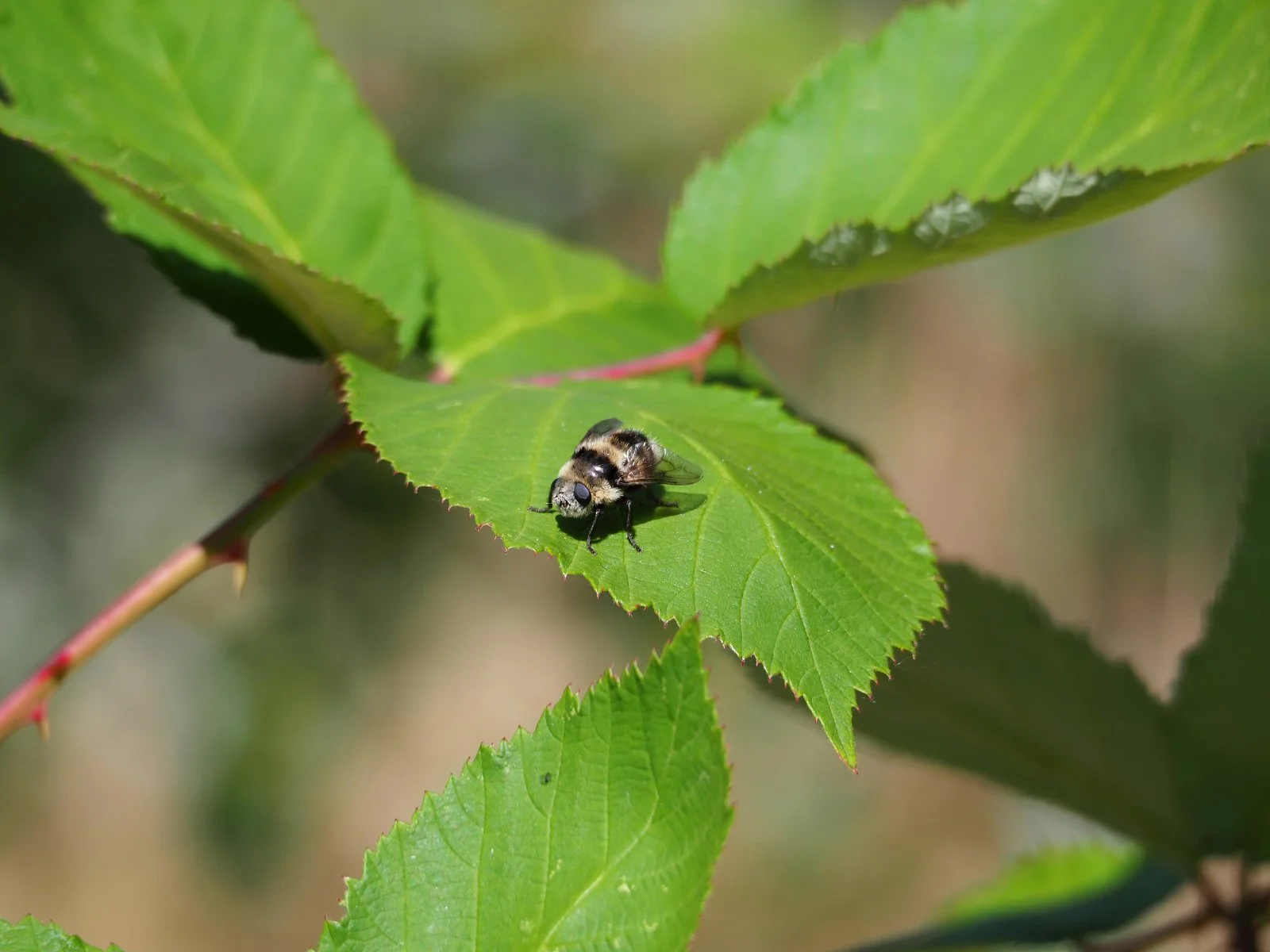
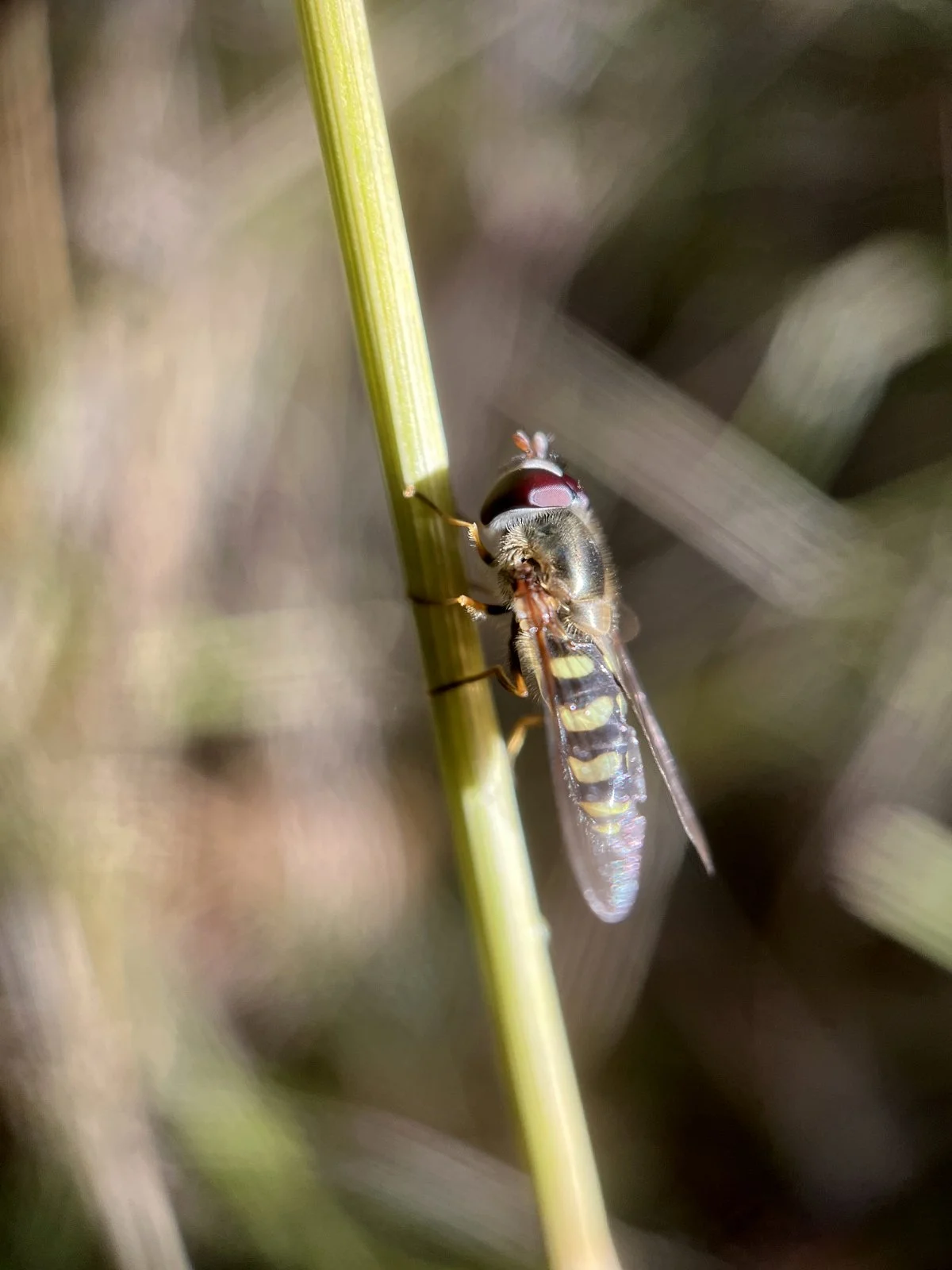
Wait, let me back up a little. The reason I was chasing down aphids was because I came across this black and yellow fly with dark red eyes hovering around. I thought they were beautiful as they perched on vegetation in the sunlight. I was lucky enough to get a photo of one and I put the photo in iNaturalist. A list of a bunch of flies came up in the Syrphidae family. These are commonly called syrphids or hover flies. Some of the identification suggestions listed for my photo included Common Loopwing Aphideater, Western Aphideater, Black-tailed Aphideater and Bare-winged Aphideater. iNaturalist listed 10 suggestions and they all were black and yellow syrphid flies that looked very similar to me. So, I thought I would do a little reading on syrphid flies in general. I discovered that the primary diet of the larval stage of many syrphids is aphids!

The adults are not predators. Their diet mainly consists of flower nectar and pollen, consequently they are important pollinators. Finding them on flowers combined with their size and coloration, they can be mistaken for bees and wasps. Syrphid flies don’t sting or bite so this mimicry is a form of protection from predators. Also, the diet of adult syrphids can include the sugary honeydew secreted by aphids.

So, back to the beginning of this post. I followed the aphids around to see where they were going and thought I might find some syrphid flies hovering around. I did! Being that aphids are the syrphid larvae’s primary food source, they want to lay their eggs near aphids.

Syrphid flies are quick fliers and I was unable to follow them for very long as they zoomed through the landscape. So I wasn’t able to see them laying eggs. I also realized that this endeavor is probably best pursued during the warmer days of late spring and summer when I see more aphid colonies congregating on leaves and probably more syrphids nectaring nearby on flowers. Some species of syrphids overwinter as adults, but most overwinter in the larval or pupal stage in protected areas such as leaf litter. In moderate climates, they can be seen year round.

So next year I will be looking more closely and hopefully I will see the syrphids laying eggs and larvae eating aphids!

Nature is an inexhaustible source of wonder. I hope to see you out there!

Resources
Syrphid Flies. https://extension.umn.edu/beneficial-insects/syrphid-flies. Accessed 5 Nov. 2025.

Syrphid Flies | NC State Extension Publications. https://content.ces.ncsu.edu/syrphid-flies. Accessed 5 Nov. 2025.

Syrphids (Flower Flies, or Hover Flies) / Home and Landscape / UC Statewide IPM Program (UC IPM). https://ipm.ucanr.edu/natural-enemies/syrphids/#gsc.tab=0. Accessed 5 Nov. 2025.

Acorn Weevils Exiting Acorns

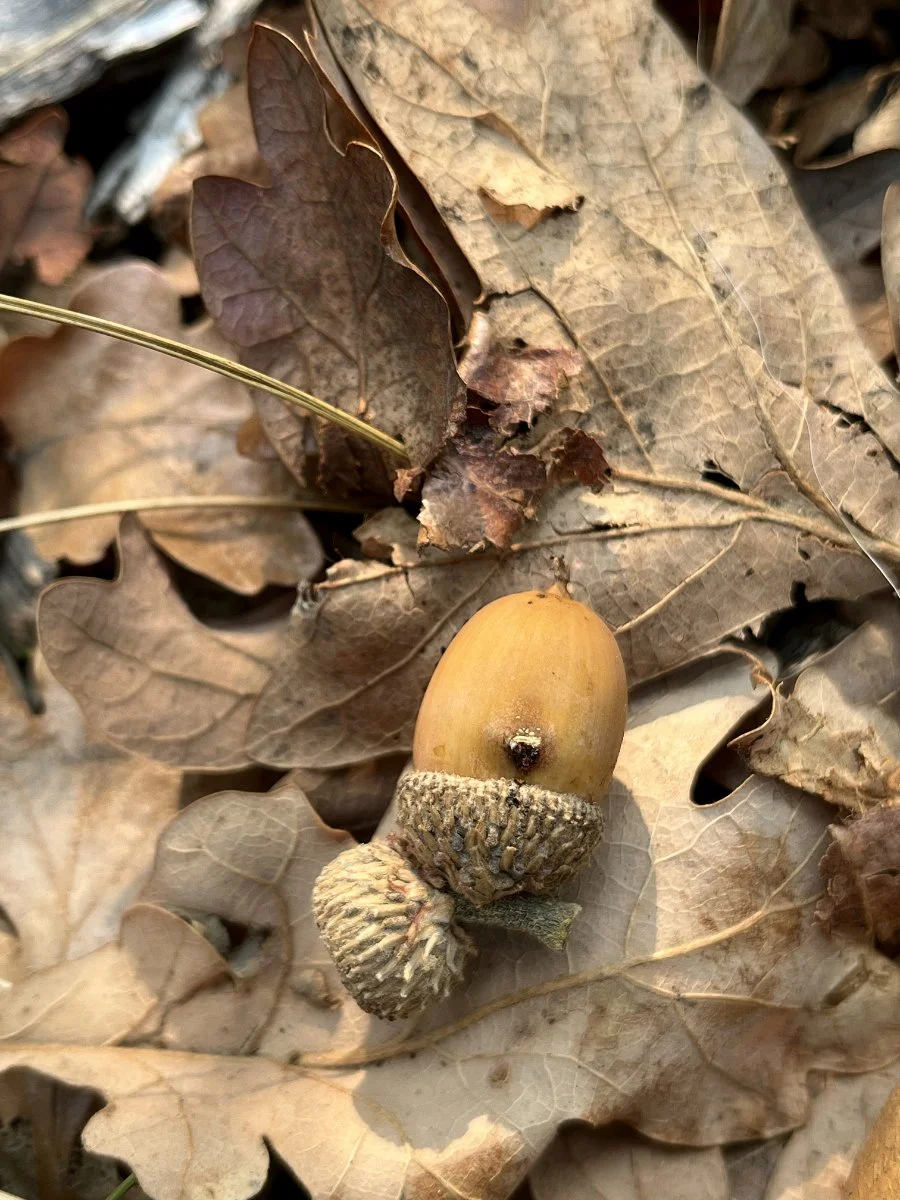
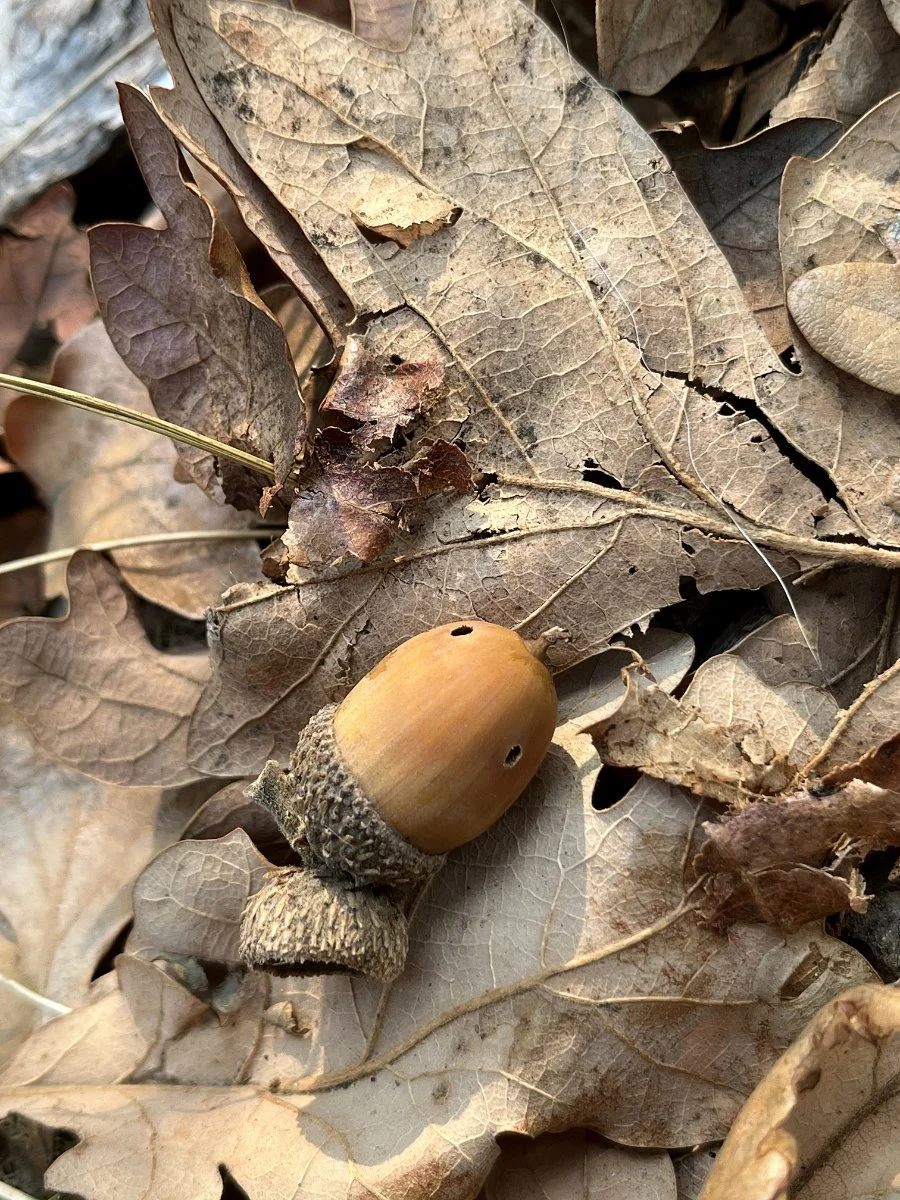
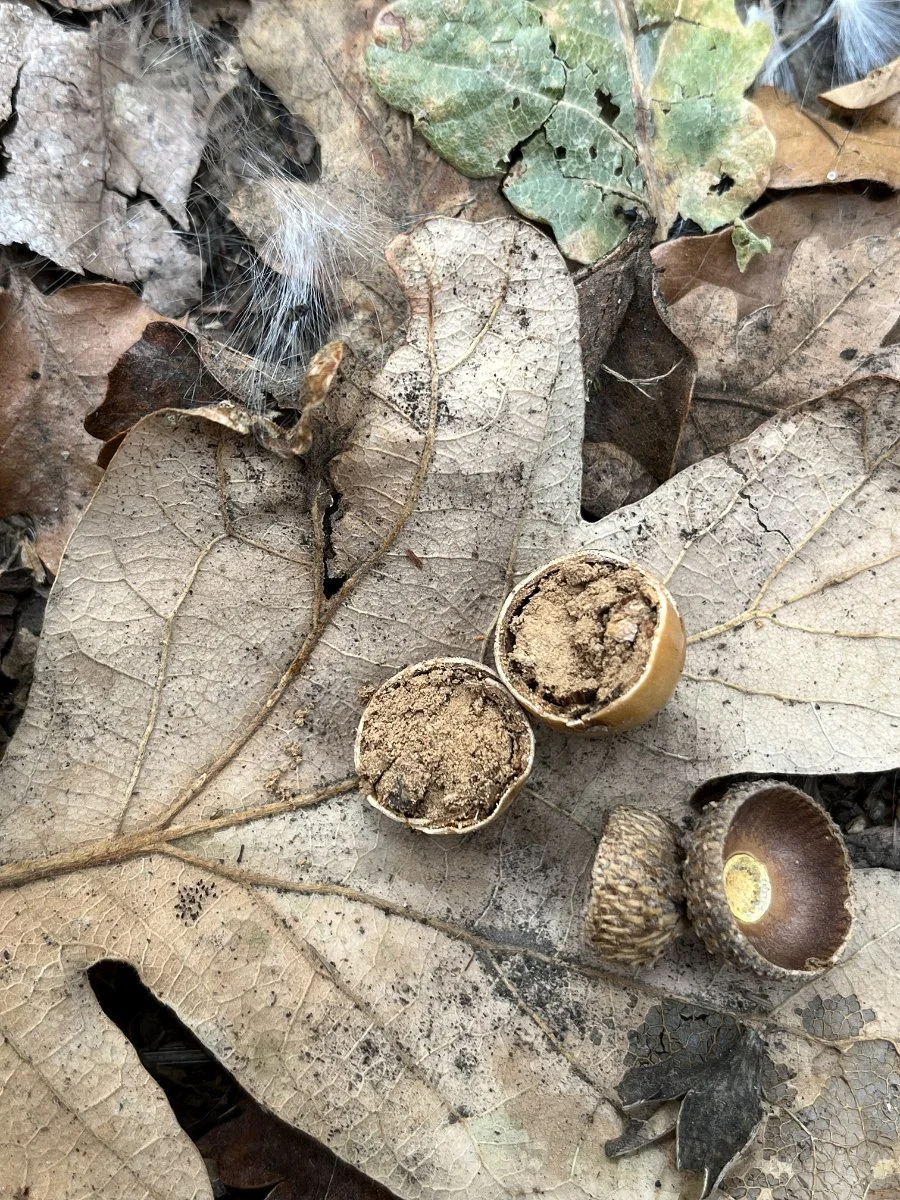
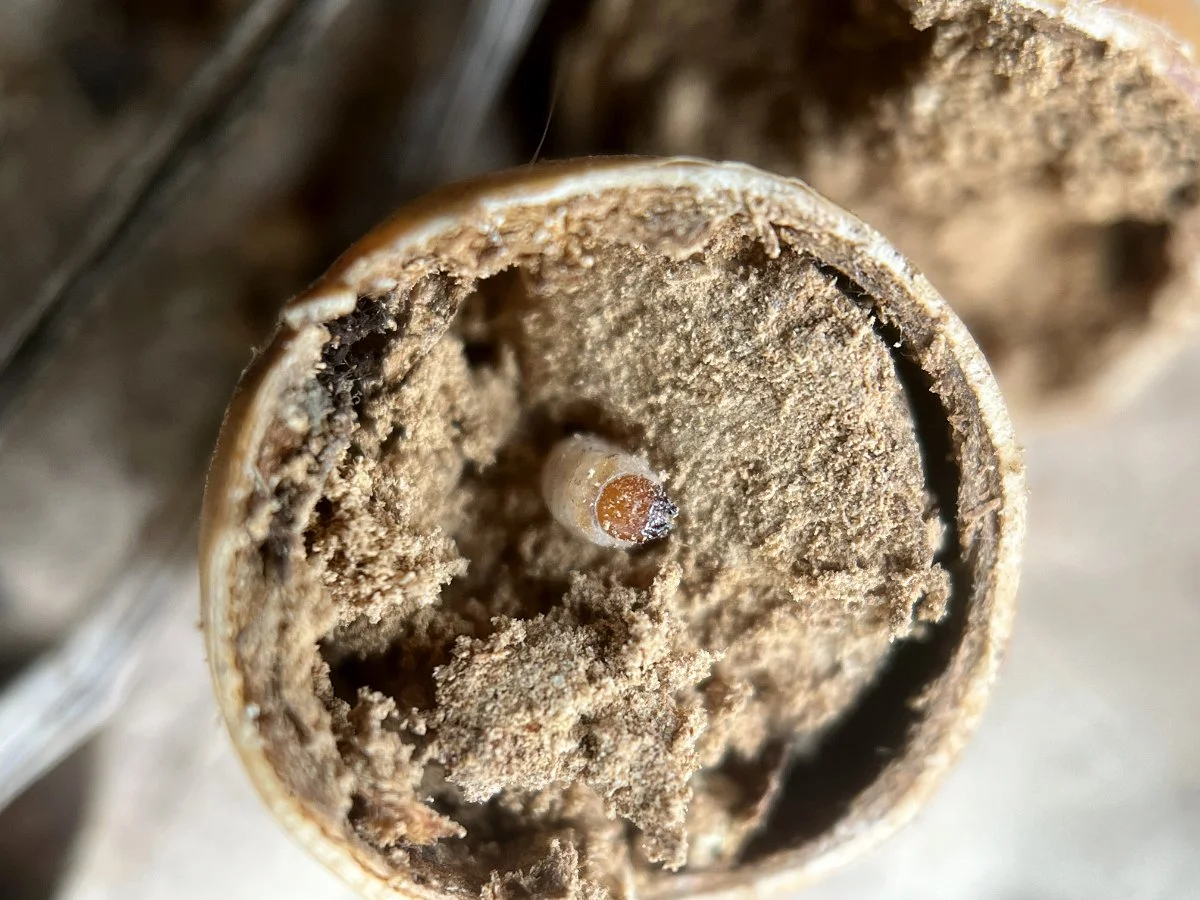
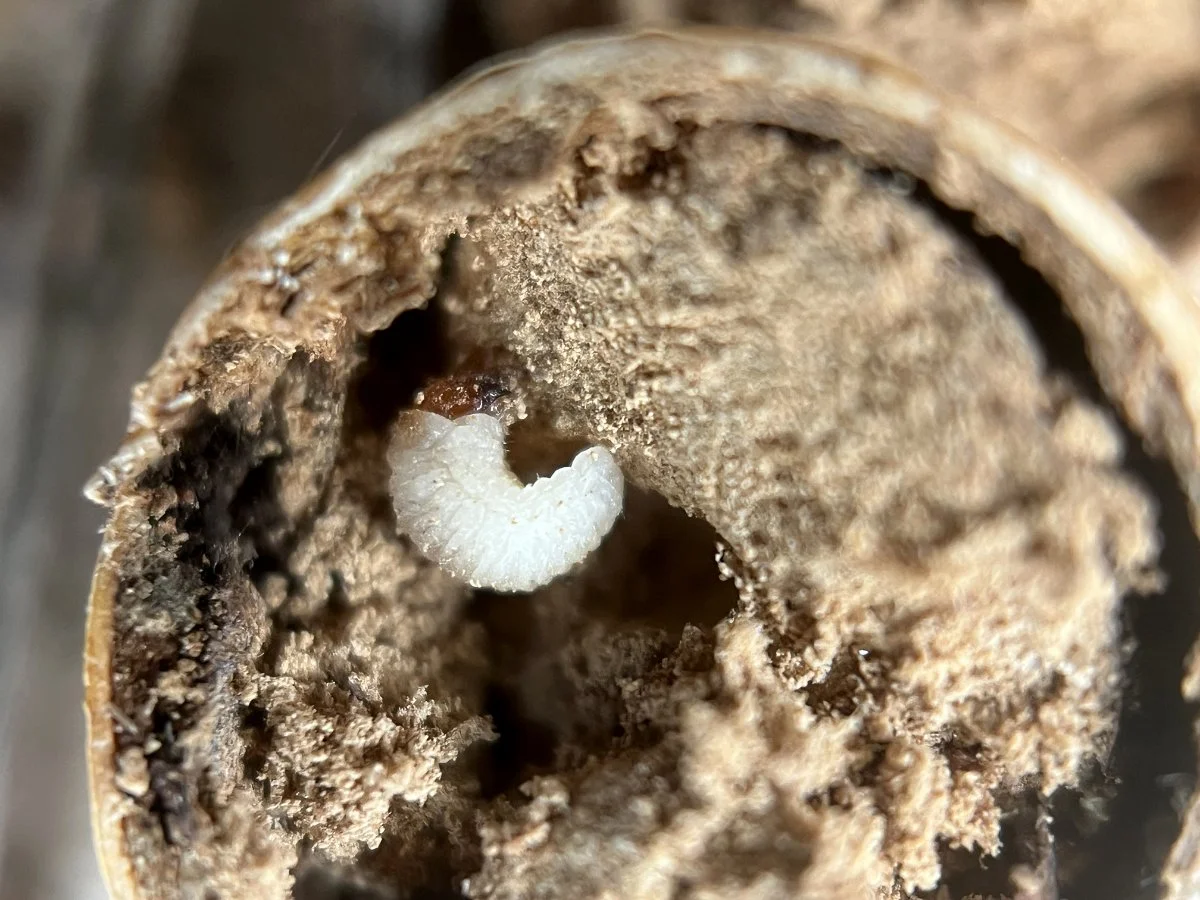
Over the past couple of weeks I have had to be mindful of all of the acorns dropping off of the oak trees, not there was anything I could have done to avoid being bonked by one besides not walking under the oak trees at all. That would take all of the fun and excitement out of it and it has only happened a couple of times. I was also curious to check out the acorns impregnated by weevils. I saw one lying on the ground that had the scar from an acorn weevil laying its eggs. I flipped over to see that there were two neat, round exit holes on the other side. I decided to open the acorn to see what it looked like on the inside. It was powdery and crumbly. I started to gently stir the contents when I saw something moving in the middle. A small white grub was wriggling around. I didn’t think that there still might be one still inside. It squirmed and twisted at being disturbed and exposed to the world. It soon carried on eating the flesh of the acorn as I sat and watched it. It is fascinating that this small, white, delicate, wrinkled grub would crawl down into the soil, spin a cocoon, metamorphose, and emerge in a year or two into a furry acorn weevil. There is so much unseen wonder constantly unfolding in nature. The force of life is an incredible energy that is constantly exploding forth.

Lace Bugs on Oregon White Oak

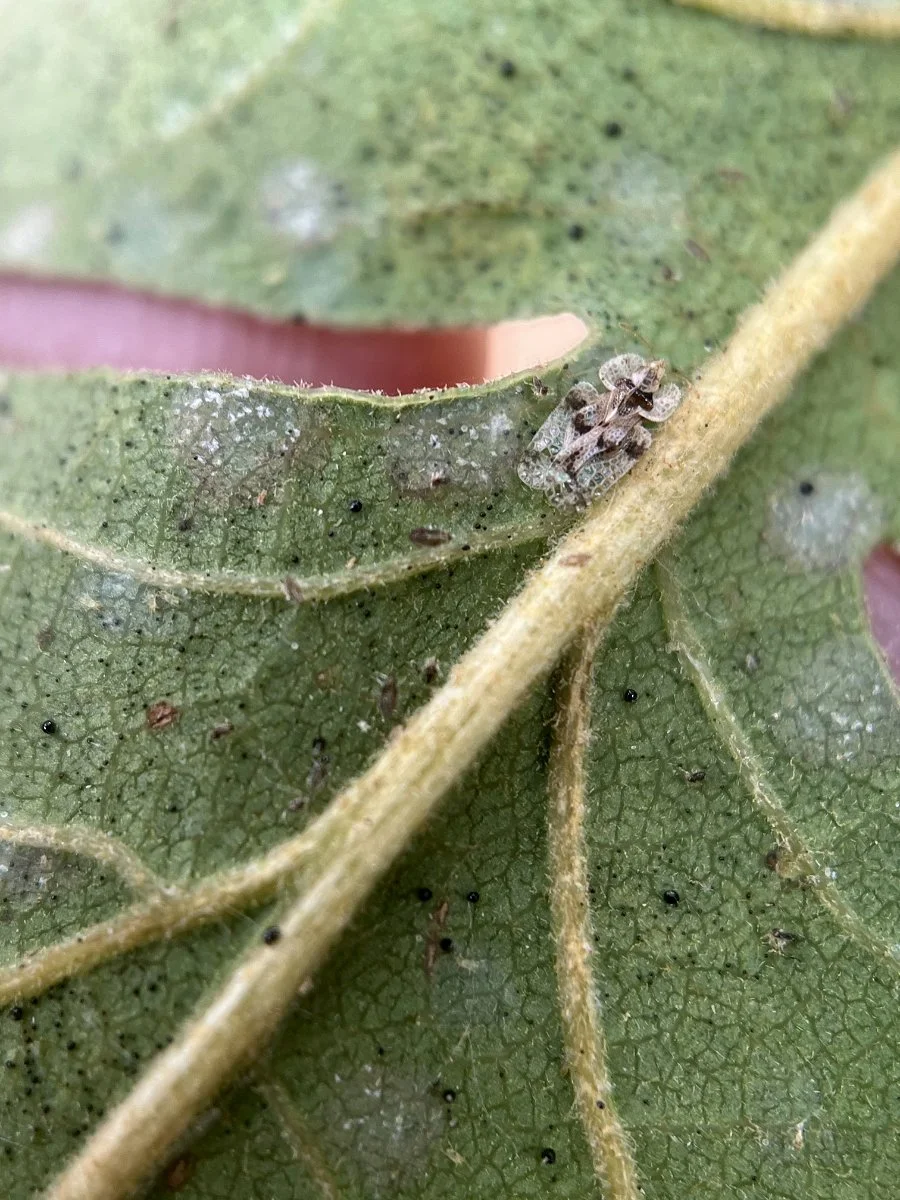
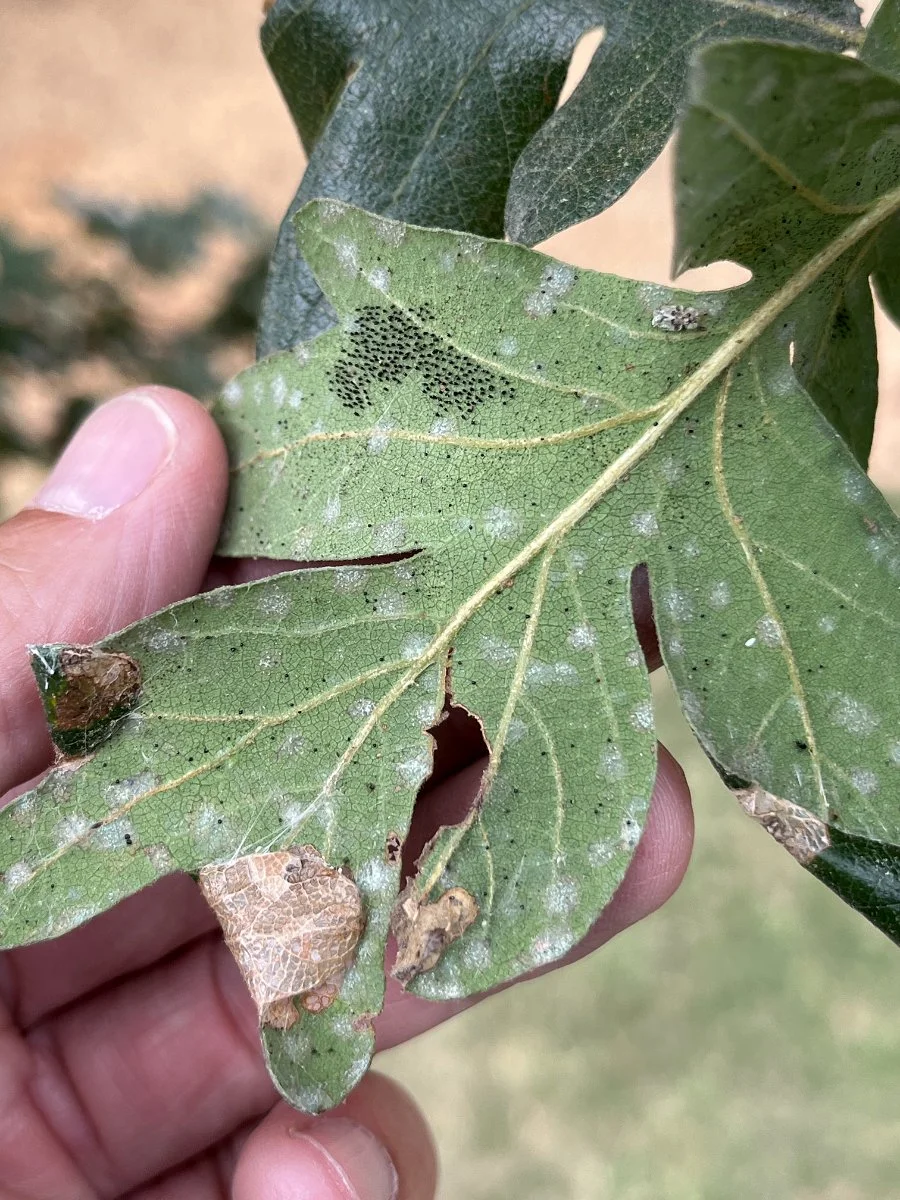
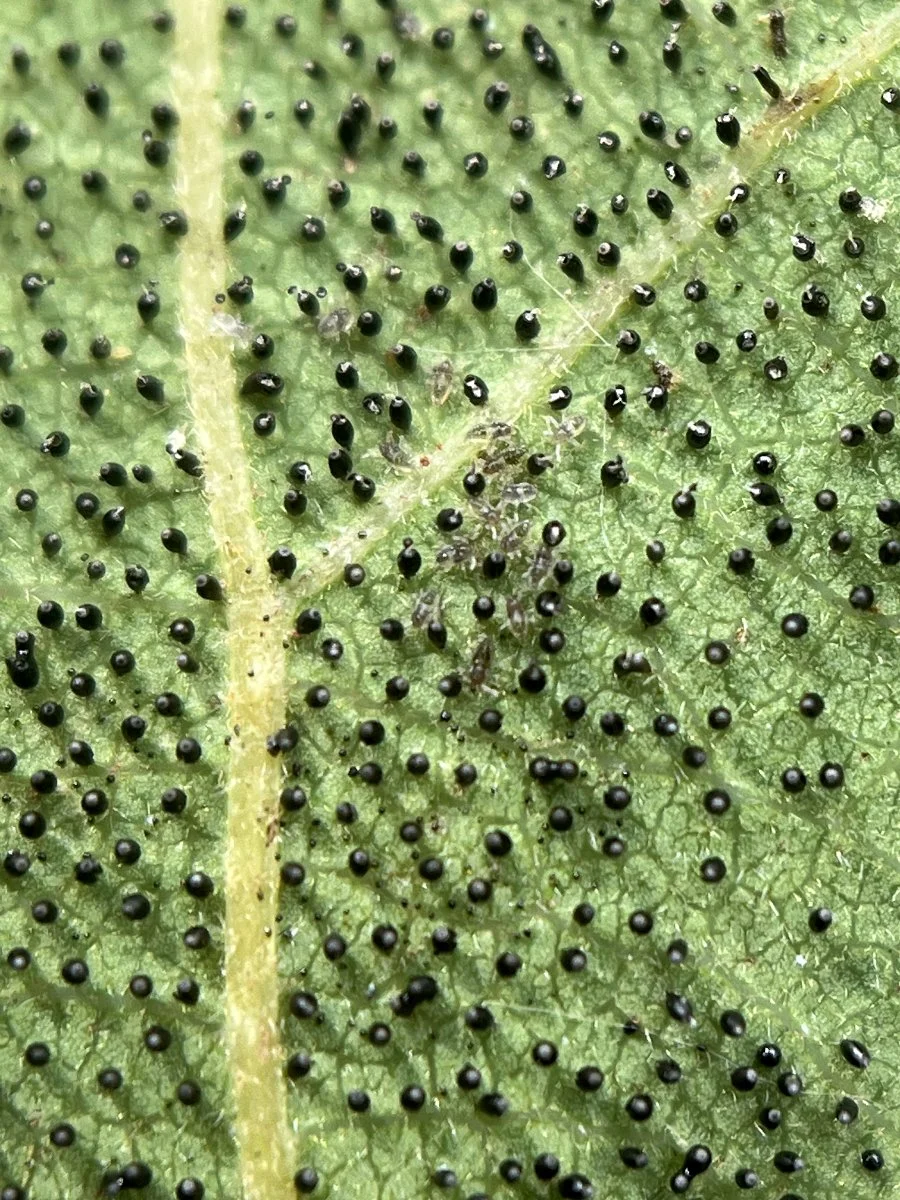
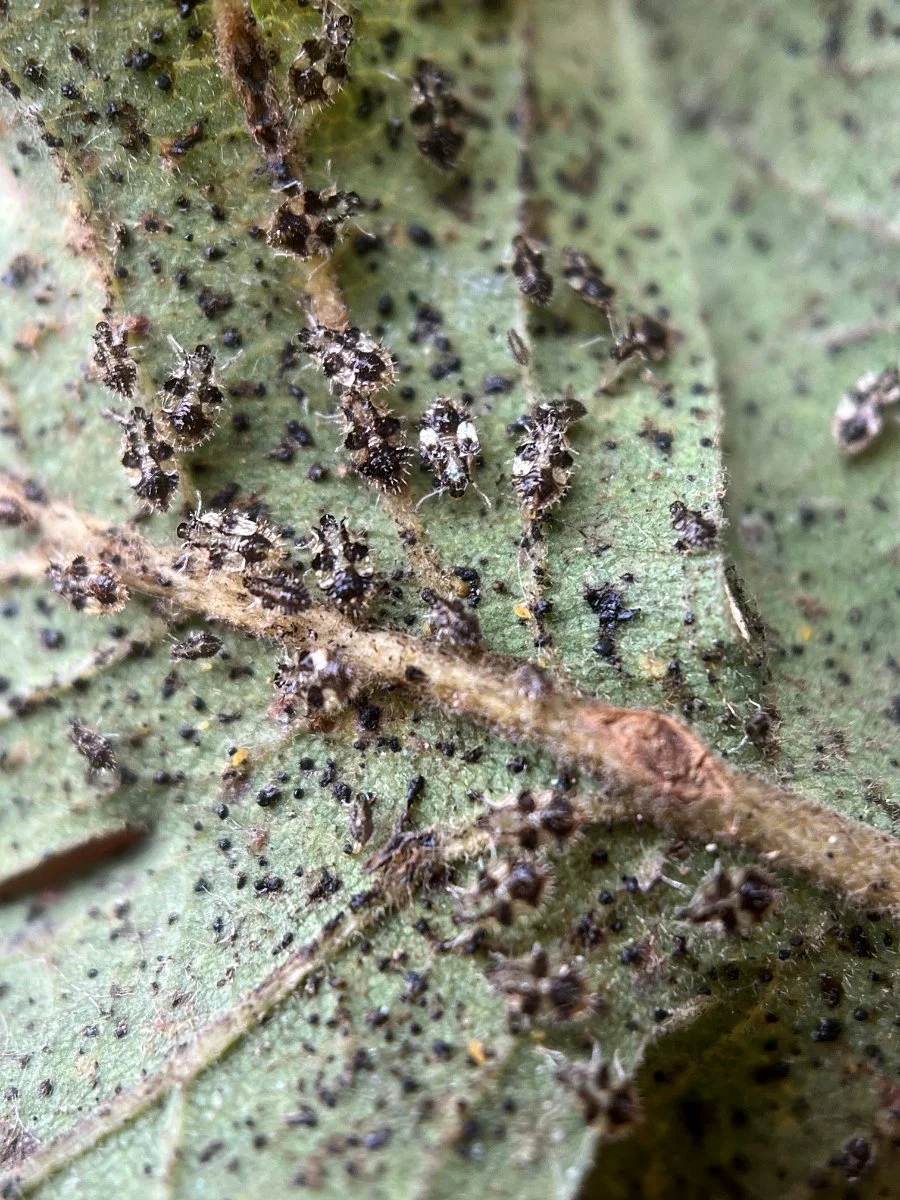
Some of the Oregon White Oaks out at the arboretum are infested with lace bugs. Lace bugs live on the underside where they can be protected from the weather and predators. They have a piercing-sucking mouthpart that sucks out plant juices. This causes a splotchy or stippling yellow appearance on top of the leaves. Lace bugs usually feed on their preferred host plant.

From my observations, the eggs are black and are fairly neatly laid in a small group. The excrement of the lace bugs is also black and it can be confusing to tell the difference when the leaf becomes infested and messy underneath. When the eggs hatch, the nymphs are black and spiny. Lace bugs will go through several instars before becoming adults. The adults have lace-like wings and it is where they get their common name.

I didn’t find any information that suggests that lace bugs can be harmful to the health of the trees. That said, I am sure that it does cause a little stress to the trees. I imagine there is some decline in the amount of sugars made from photosynthesis because of the yellowing of the leaves and the reduction of chlorophyll in the leaves.

When you get to this time of the year, most deciduous leaves show damage from insects or from the dryness of summer weather. The rains will be a welcome sigh of relief this week.

Millions of Years

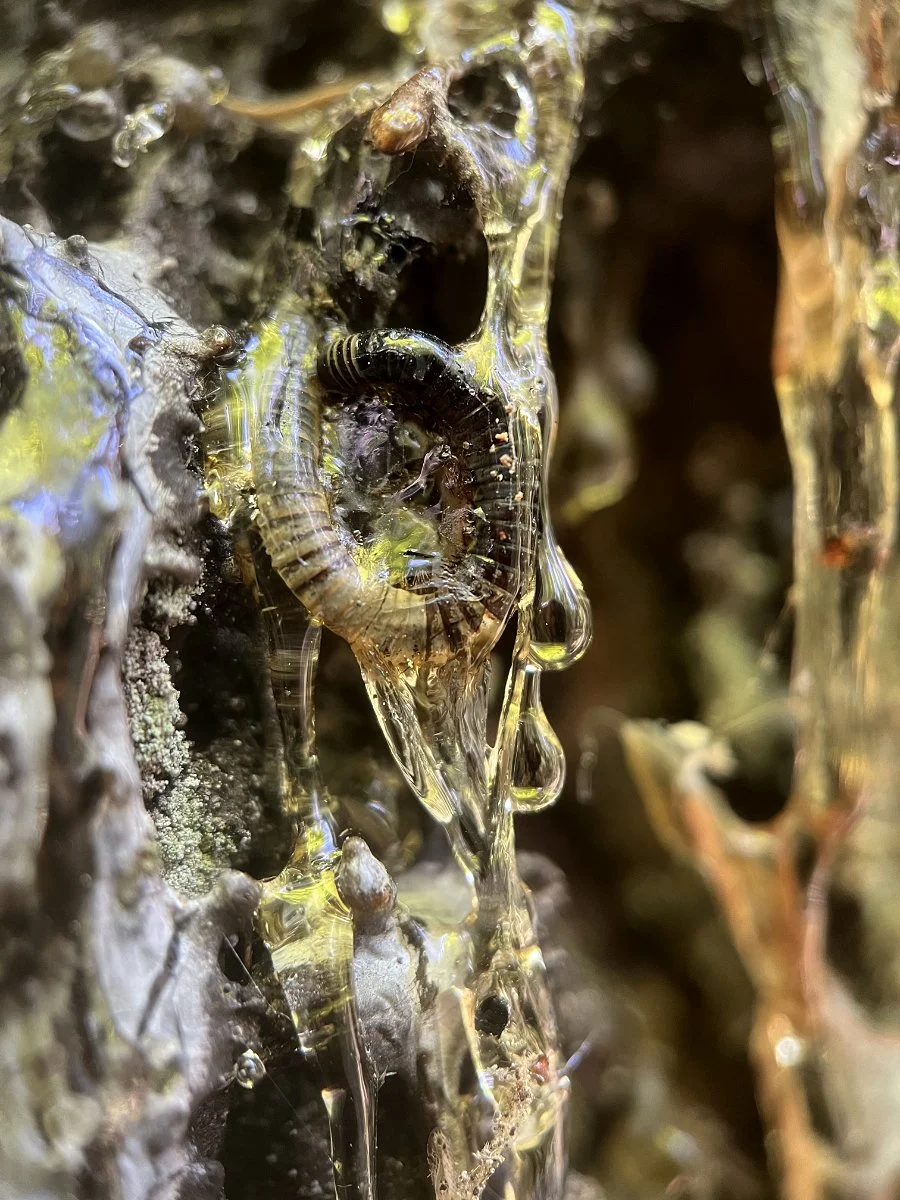
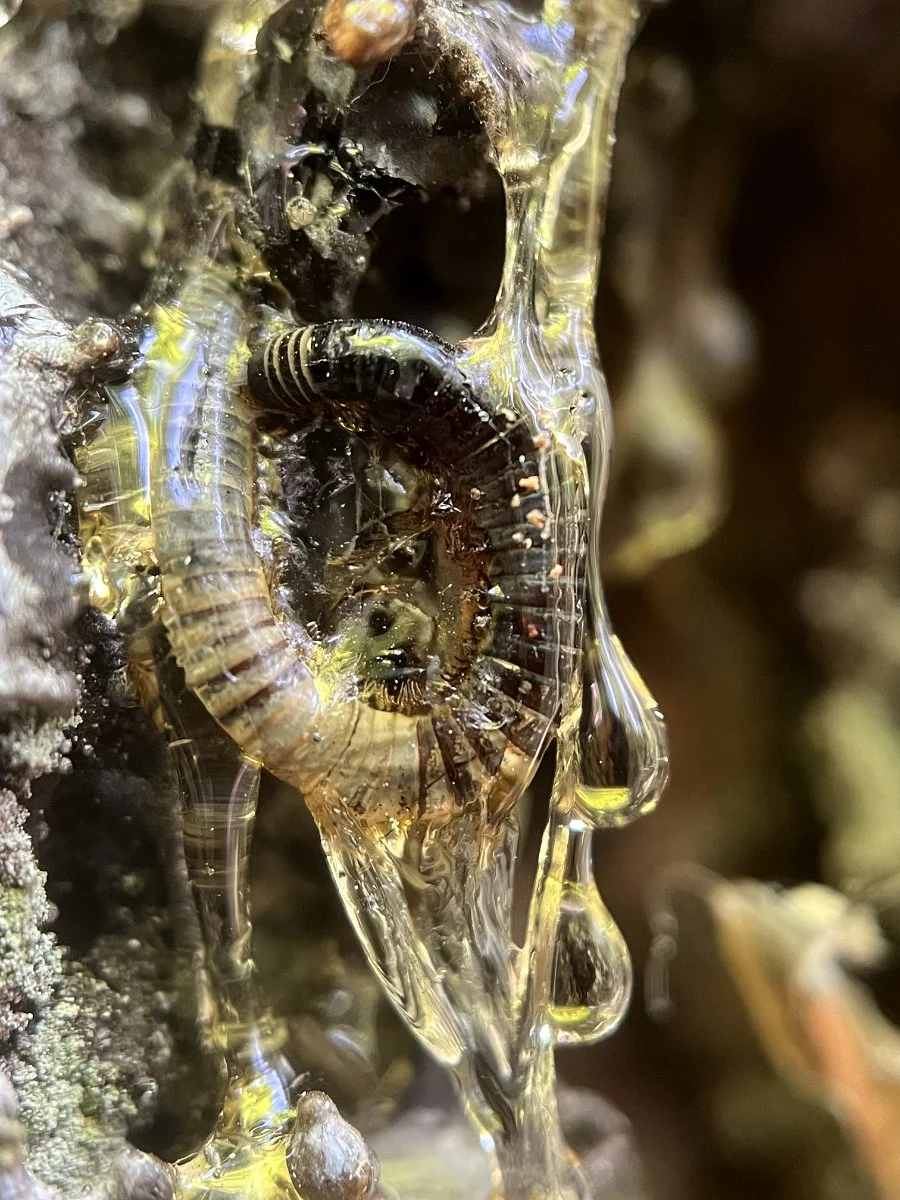
Trees will secrete a sticky substance called resin as a defense mechanism to protect itself from things like insect predators, fungi, or storm damage. Resin has antiseptic properties to protect the tree from disease. It hardens when exposed to the air and helps seal wounds. Its stickiness prevents an insect from burrowing inside the tree and in some instances encases the insect’s body.

Amber is an organic mineral that is formed from tree resin. The amber forms when the resin ends up being buried by sediments in a river or by silt at the bottom of a lake. Over time, the pressure of the sedimentary layers transforms the resin into amber. It has preserved many fascinating plant and animal specimens that give us a glimpse of life on earth eons ago.

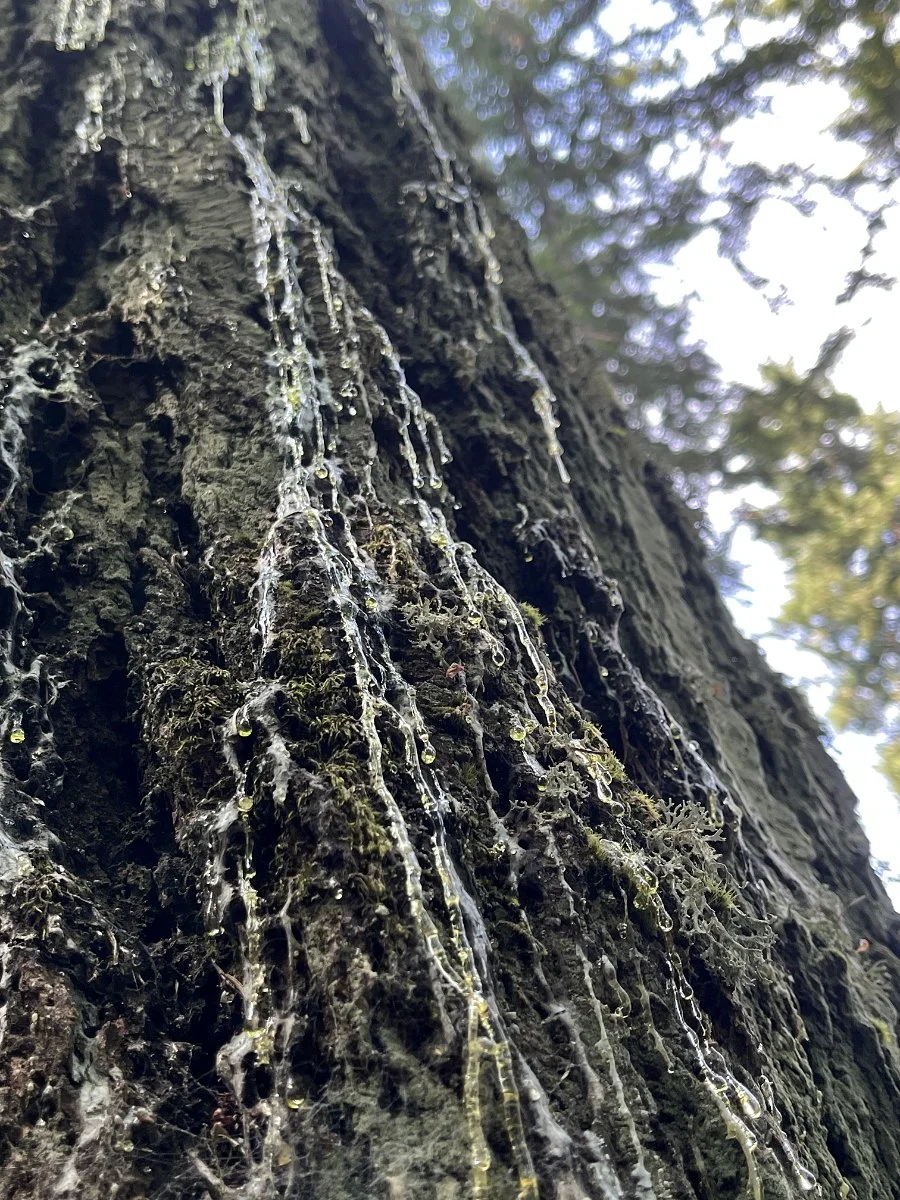
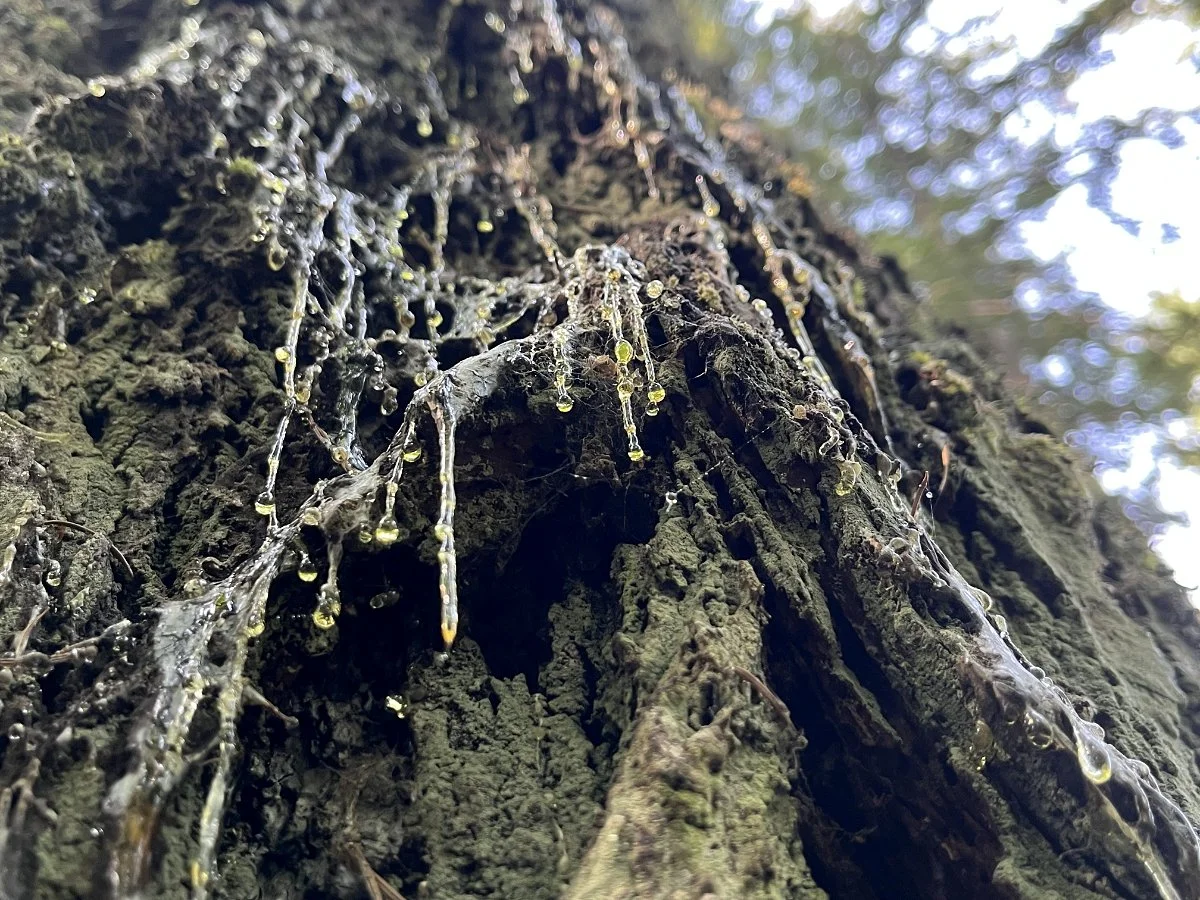
I found tree resin oozing down the thick, craggy bark of this Douglas-fir tree and it appears to have captured a millipede wandering around on the trunk. I discovered it while marveling over the cascading formations and the variety of golden hues. If all the conditions are right, maybe sometime in the next couple-three million years this millipede will be preserved in amber and be found by a curious naturalist wandering around exploring nature.

Acorn Weevils

I finally found an acorn weevil!
Whoop! Whoop!

This creature is amazing and for me, quite elusive. I have been looking for one for a couple-three years. I probably have spent 20 hours poking around acorns, leaves, and branches this year, if you can believe that. Plus, you have to wait for a good acorn year. And I read that some weevils can be nocturnal, so I checked in the evening light into the dark to see if acorn weevils were active at night. One last thing, its fuzzy, brown body is well-camouflaged against the acorn caps and it closely resembles the oak tree buds. So as you can see, this little critter can be challenging to locate. Finding this one was well worth the effort.

Right now the acorns are well-formed and a lovely shade of light green. Based on all the holes I see appearing in the acorns recently, this is the time when weevils seem the most active. It has a long snout extending from the front of its body called a rostrum. On the tip is its mouth that has tiny mandibles which it uses to chew into the acorn and eat the nut.

The female has a longer rostrum than the male so she can reach farther into the acorn to safely deposit her eggs. Once she chews her way into the acorn, eating as she goes, she will turn around and extend her ovipositor into the hole and lay a couple of eggs. You will see these holes located on the acorn next to the top of the cap.

The eggs hatch out surrounded by a nutritious nut and the larvae immediately began eating and growing. As the summer wanes and fall approaches, the acorns will turn brown and fall from the tree. The chubby little larvae will then chew their way out and tunnel into the ground. There they will form a small chamber and molt into a pupa where it will remain for two years. It will then molt into its adult form, climb out of the soil and start the reproductive cycle over again.

That’s not all, it gets better. On the photo below where the weevil is on the underside of the leaf, you can see its antennae which are located around the middle of the rostrum. Seemingly, this would be a problem as the weevil extends its rostrum down in the acorn as it eats. To get around this, the rostrum has side channels called scrobes. The bottom half of the antennae fold into these grooves which moves them out of the way and protects them as the rostrum extends into the acorn. See, I told you this creature was amazing.

I’m not sure how long the adult stage lasts, so if you want to try to see an acorn weevil, my advice is to head out there now. Have fun!

Oh, one last thing, I serendipitously ran into Karen Richards when I discovered this weevil. She writes the blog on Mt. Pisgah’s website and has her own awesome site where she writes about insects called Ticklehead. Check it out. It was great sharing this moment with her.

Caterpillars Descending From Oaks - Update

I’m finally getting around to updating you on the caterpillars that repel down from the oak trees during the middle of May.

I put some soil, old oak leaves, and other debris from the ground in a screened terrarium and captured a bunch of the caterpillars as they descended down from the trees. At the end of the day, I checked in on the caterpillars and some of them had already started spinning small webbed cocoons in the leaf litter and even under the lid of the terrarium. A month later there were small moths fluttering around inside. They were beautifully camouflaged on the old oak leaves. They held their bodies in a diagonal position with their front legs propping up the front of their bodies. They have long stripped antennae that are the length of their bodies. They reminded me of the delicate tip of a watercolor brush.

iNaturalist identifies them as a moth in the genus Caloptilia. The larvae begin as leaf-mining sap-feeders. The latter instars usually exit the leaf and feed within a folded roll at the tip of a leaf lobe. You can see the tissue being eaten away leaving a brown spot on the leaf with the leaf veins exposed. When I unrolled some of the leaf tips, I found caterpillars inside some of them. They were either still crawling around or starting to spin a cocoon. With the leaf tips that were empty, I guessed they were the ones where the caterpillars decided to descend from the trees and spin their cocoons in the leaf litter on the ground. That certainly seems like a good strategy for avoiding chickadees.

Now I am wondering where things go from here. The caterpillars spun their cocoons and hatched out into moths. Do the moths overwinter and lay their eggs in the spring? Or do they mate and lay eggs that overwinter and hatch out in the spring? Also, I don’t remember seeing the caterpillars again later in the summer the same way I see them in the spring. So my guess at this point is that there isn’t a second generation this year. I’ll just keep trying to stay aware, be curious, observe, and research them.

Nature is an inexhaustible source of wonder. I hope to see you out there!

Woolly Aphids

These little tufts of wool (actually a thick flocculent wax) are aphids and are called, you guessed it, woolly aphids. They are on the underside of the leaves sucking out the juice flowing through the leaf and the leaf will start to curl under as a result. The juice that they can’t digest is excreted as a little sugary droplet known as honeydew. Their sugary droplets create a sticky coating on the ground and leaves below them. Chickadees, bushtits, Bullock’s orioles, black-headed grosbeaks love to eat them. Ants are attracted to the honeydew. Squirrels are also in on the scene, either eating the aphids, licking the honey off the leaves or both probably. I looked at a few of the snipped off leaves that they discarded while foraging and they don’t have any aphids left on them.

They seem especially abundant this year and I doubt there is a single ash tree in the arboretum that doesn’t have them. The interesting thing about woolly aphids is that the first ones to hatch out in the spring are wingless females which reproduce without mating (parthenogenesis). This allows them to produce offspring quickly, which is why you can see them throughout the arboretum at the moment.

I read that woolly aphids typically have two host plants. After a couple of generations in the spring, they will produce winged females that will fly off to another host to feed during the summer. I captured a photo of one below that appears bluish. I am not sure what their second host for the summer is here at the arboretum. As fall approaches the winged females will return to the first host, which appears to be the Oregon Ash. (I remember seeing tons of these flying around in the fall. I posted about it in Woolly Aphids - October 2021.) From here they will produce another generation of both males and females that will mate. The female will then lay her eggs in the bark to over winter.

Caterpillars Descending From Oaks

If you walked along any path under the Oregon White Oaks out at the arboretum over the past couple of weeks, you likely found yourself eye to eye with a caterpillar descending down a thread of silk. I also find them lowering them selves down off the brim of my hat quite frequently. Your friends will probably be pointing them out on you somewhere. I let them land on me in hopes that a chickadee or bushtit will come over to forage on me. You can see birds like red-breasted sapsuckers swooping through the air between trees plucking them out of the air. Or you can see robins busily scurrying around gleaning them off the ground. Honestly, it seems like most of the birds out at the arboretum can be seen eating them. They are an important food source during this time of year when birds are expending huge amounts of energy parenting, feeding themselves and their offspring. I’m sure they help attract lots of birds to nest here.

I am still researching which caterpillar this is. Of course, I see lots of these caterpillars dropping down to continue their lifecycle somewhere on the ground, but I also see the ends of oak leaves being folded or rolled over with caterpillars in them. I’ll just keep watching, doing a little research, and I’ll let you know when I figure something out.

Bee Fly on Rosy Plectritis

There are small patches of rosy plectritis around the arboretum. The easiest place to find them is in the wildflower garden right in front of the White Oak Pavilion. I checked out a patch up the creek trail and it was buzzing with pollinators, especially bee flies.

I love watching this fly as it moves from flower to flower. It has long legs and a long proboscis and it dances around a flower cluster quickly sipping nectar. It doesn’t really land on them. Its long legs will briefly touch the petals which seems to stabilize its position long enough to take a drink. I read that one reason that they have such long legs and proboscis is to keep their distance from a cluster of flowers that might have a predator like a crab spider waiting to grab them. It swiftly works its way around a cluster of plectritis flowers and then darts off to the next one. Occasionally, I will see them briefly rest on the ground or on vegetation near the ground.

Bee flies get their name from mimicking bees or wasps as a defense strategy, because predators want to avoid potential danger like a venomous stinger.

The larva of bee flies are parasitoid and will often target various soil-dwelling insects in their larval stage such as solitary bees, wasps, beetles, and grasshoppers. Bee flies hover above the ground looking for a burrow that one of these insects is making for its eggs. When the bee fly finds one, it hovers over the burrow and flicks its abdomen to launch an egg in the entrance. I would love to see this, but I am sure it happens at the blink of an eye. When the bee fly larva hatches in the burrow, it will feed on the host larva. The bee fly larva then pupates and stays inside to emerge the next spring as an adult.

Most of the time I will see the shadow of a bee fly on the ground as it hovers before I see it. Their wings have a high-pitched buzzy sound as they hover and dart around flapping their wings what sounds like a bajillion times a second. Sometimes they will hover right next to my head as I stand around watching them. I hoped that they weren’t looking to see if my ear canal was a place to flick an egg! I took a heap of blurry photos as I tried to capture a picture of one. In the end, I feel like I still never got a very crisp image. Maybe it’s because they are so fuzzy. Even with my own eyes these bee flies seemed out of focus. In the process of it all, I named this bee fly the Whirry Blurry bee fly.

Butterfly & Coyote Scat

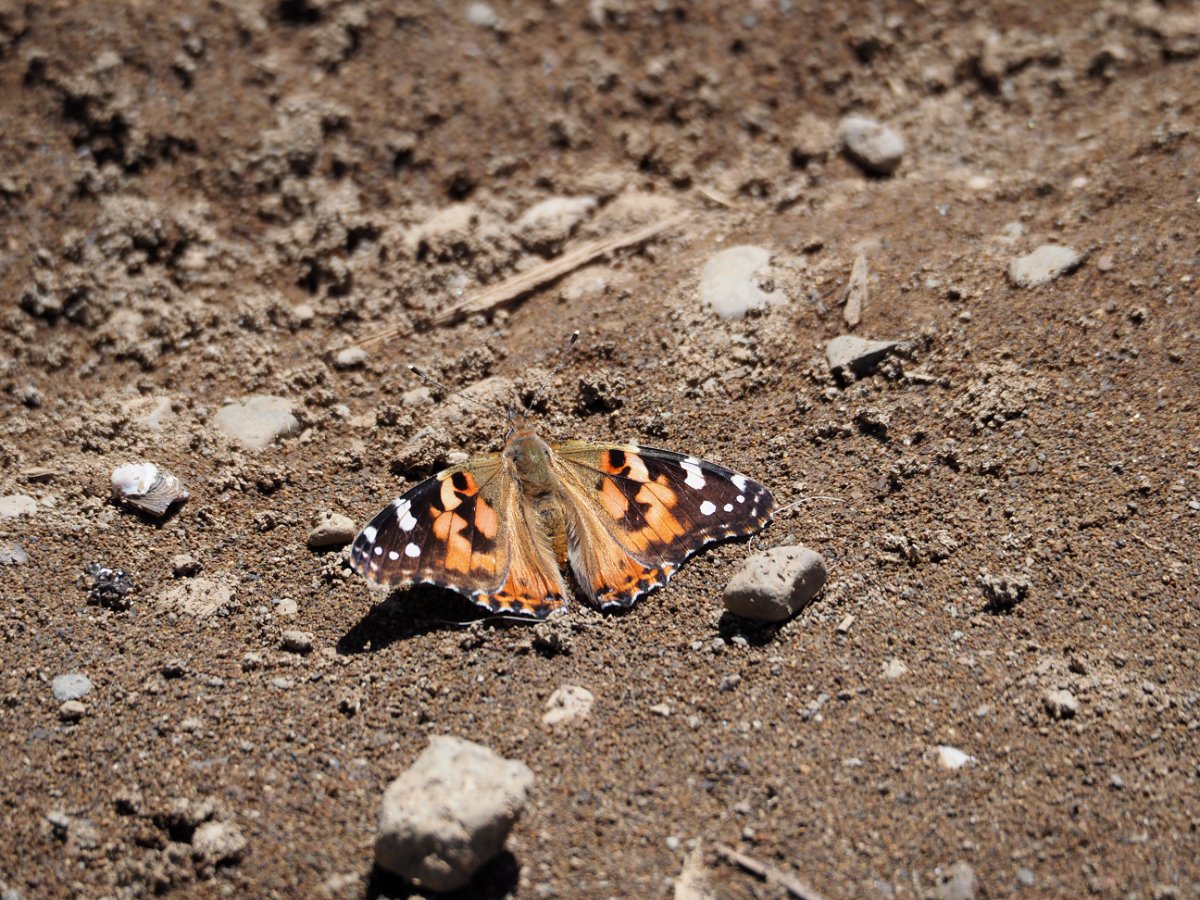
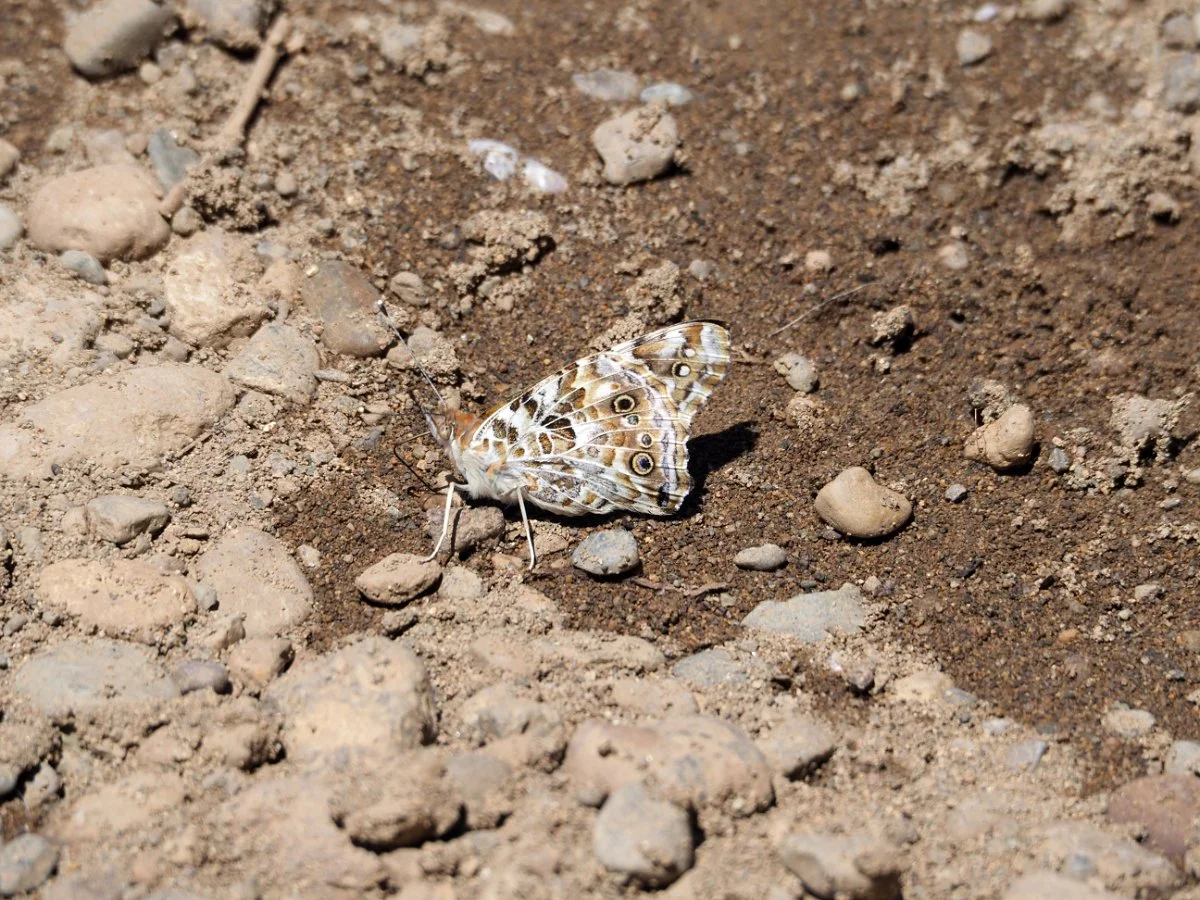
There was a California tortoiseshell butterfly circling around me, the meadow, the oak trees, back around me, back around the oak trees, back around me, back around the meadow, and so on as butterflies fly. It was making me a little dizzy as I spun about following it. Eventually it came to rest right next to me on some fresh coyote scat on the trail. Butterflies like things sweet (flower nectar) and savory (coyote scat). From the nectar they get sugars for energy and from the coyote scat they get nutritious minerals. In addition to animal feces, butterflies are also attracted to urine, dead animals, and rotting fruit.

An action that is commonly observed among butterflies is a behavior known as “puddling.” They will land on moist sand and mud along streams or puddles and absorb vital minerals.

Butterflies have a mouthpiece know as a proboscis in which to gather nectar in flowers or probe around on coyote scat that is like a drinking straw. When they are not using it, it neatly curls up into a spiral next to the head. To help draw the liquids up through the proboscis, they have a sucking pump inside their head.

It is interesting to imagine that the life of a vole, field mouse, or rabbit that the coyote ate can be absorbed into the life of a butterfly and flutter through the blue sky and sunshine the next day.

Antennae

I was photographing the leaves of this moss when this tiny insect landed in the frame to have its picture taken. I was immediately struck by the size and shape of its antennae. Insect antennae come in many shapes and sizes. The antennae on this insect have fine branches giving it a featherlike appearance and its form is aptly named plumose.

The primary function of insect antennae is a sense of smell. They are usually covered with receptors that can detect odor molecules in the air. Besides receiving molecules drifting through the air, insects pick up information by touching or feeling their environment. Antennae are also sensitive to detecting the vibrations of sound waves.

Given the size of this insect’s antennae in relation to its body size, I would guess that this is how it receives most of its information to navigate through its surroundings. It’s amazing!

Caddis Fly Larvae & Pacific Chorus Frog Eggs

I sat by the small pool in the parking lot that has all of the Pacific Chorus Frog (also known as the Pacific Treefrog) egg masses to see if more had hatched. While sitting there I noticed that some of the caddisfly larvae were climbing on the egg masses. I looked up to see if they eat the frog eggs. Both the Oregon and Washington Department of Fish and Wildlife said that Pacific Treefrog eggs are preyed upon by caddisfly larvae. I only saw them crawling around on the outside and they did not appear to pierce through the egg mass. It did look like they were pulling on the surface and maybe eating bits off the outside. This one climbed around on the egg mass for about 10 minutes or so and then moved on. There are quite a few caddisfly larvae roaming around the pool but I found only one more caddisfly larva that was investigating an egg mass. It also did not chew into the inside of the egg mass.

There are 1,000 species of caddisflies in North America! They can be herbivores, carnivores, and omnivores. I am not sure of this particular species, but maybe this one doesn’t eat frog eggs. The herbivores eat various types of detritus, including bits of leaves, algae, and miscellaneous organic matter. I’ll continue watching them and see what I observe and in the meantime, maybe I can figure out which species of caddisfly this is.