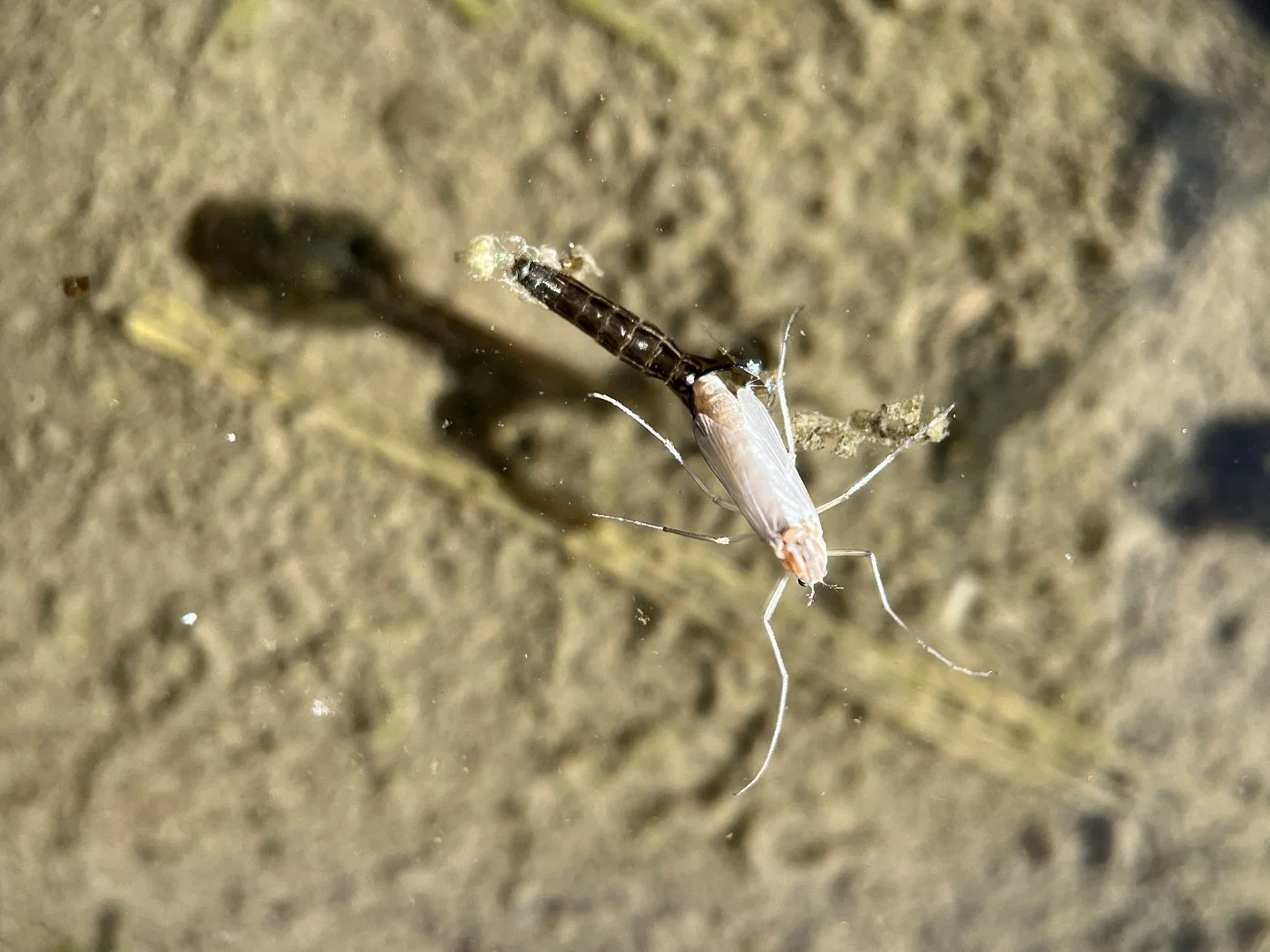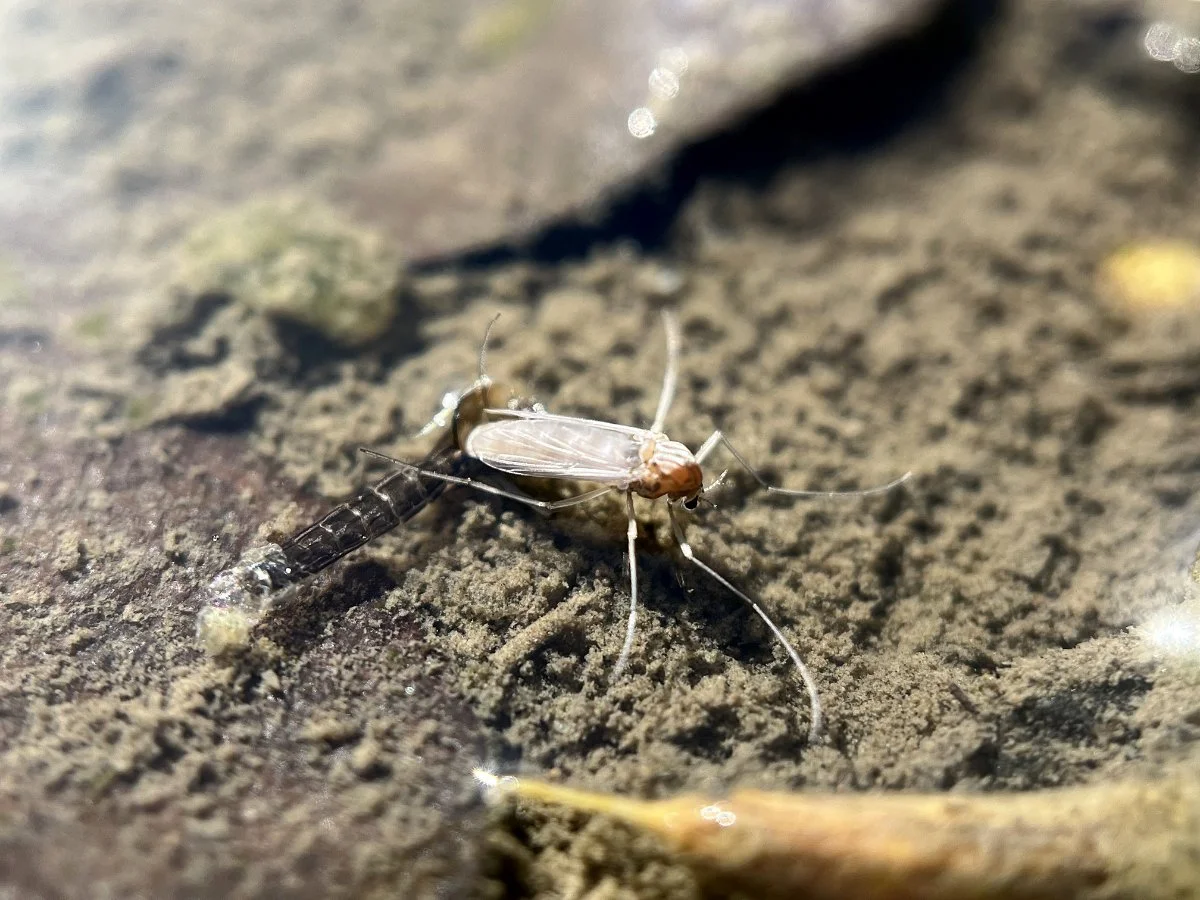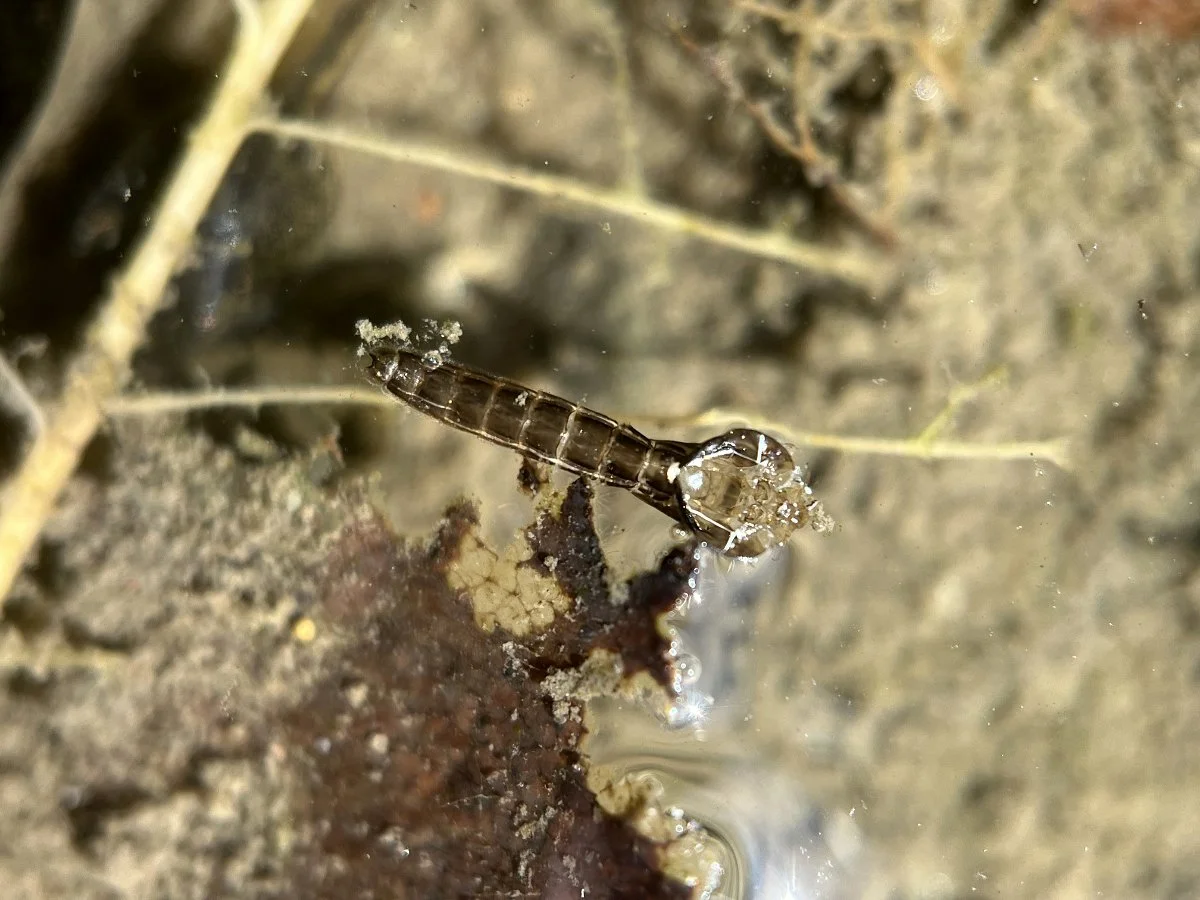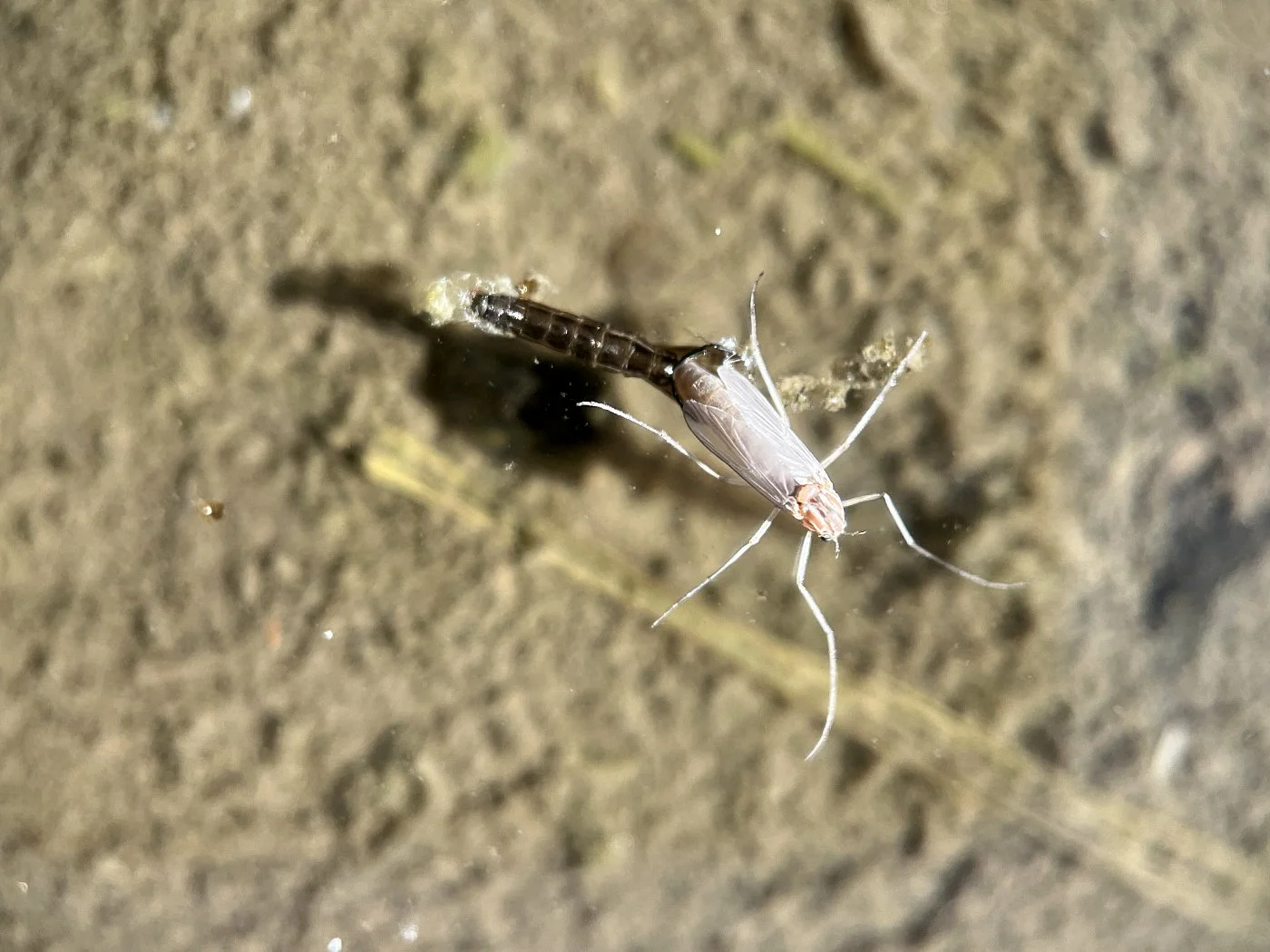
I caught this mosquito larva as it was just emerging into the world. It was interesting to watch it shed its pupal skin and be born into its adult form. It stood still on the surface of the water as it adjusted to its new world. I imagine its pale white body was soft and moist and it needed to bask in the warmth of the sun to strengthen and harden its exoskeleton.
Both male and female mosquitoes feed mainly on nectar and other carbohydrates like fruit juices. With all of the aphids I see on the leaves of oak trees at the moment, I imagine mosquitoes are drawn to the sugary secretions of aphids as a food source as well.
I wondered if mosquitoes pollinated flowers. According to a page on the US Forest Service website, they do! Here’s an excerpt from that page: “In 1913, it was first determined that mosquitoes are pollinators too! In the early 1970s, scientists determined that the Aedes communis was an important pollinator of Platanthera obtusata, the blunt-leaf orchid. In fact, many mosquitoes around the world pollinate small flowers that live in wetter environments.
This snowpool mosquito eats the nectar from the floral spur of the Platanthera obtusata, during which time its eye naturally comes into contact with the pollinium, a cluster of pollen. The pollinium sticks to the mosquito's eye even when it flies away. Thus, when it eats from another flower, the pollinium touches the stigma of that flower, and the flower is pollinated!”
The male adult mosquito doesn’t bite. It lacks the mouthparts needed to pierce the skin. The female bites mammals, birds, reptiles and amphibians in order to obtain the blood she needs to produce her eggs. She lays her eggs on the water or along the perimeter of wetlands or moist, swampy areas. The egg, larva, and pupal stages are aquatic and so water is essential to a mosquito’s life cycle. Depending on the species, females deposit their eggs singly or in clusters called rafts.
As all of us have experienced, mosquitoes can drive you crazy while you are trying to sleep or enjoy a hike and their bites are itchy. I want to write that mosquitoes are a valuable food source in a diverse, healthy, thriving ecosystem. During their aquatic life cycle they provide food for animals such as fish and macro invertebrates like dragonfly nymphs. As adults, mosquitoes are food for animals such as bats, birds, reptiles, amphibians, insects and spiders.
While recognizing their role in the environment, I also want to acknowledge that in many parts of the world mosquitoes are a serious issue. They transmit many viruses and parasites that cause terrible diseases that lead to much suffering and death. To say the least, our relationship and history with mosquitoes is complex and I hope that someday will find its way to a being in balance.
I hope this post inspired you to learn more about mosquitoes. Nature is an exhaustible source of wonder and mystery. I hope to see you out there!
Resources
Falkner, Mirna. “Mosquito Facts - 29 Things You Didn’t Know about Mosquitoes.” Www.cumberlandcountynj.gov, www.cumberlandcountynj.gov/mosquito-29.
Kachur, Torah. “New Study Finds Mosquitoes Don’t Just Lay Eggs in Standing Water.” CBC, 13 Apr. 2017, www.cbc.ca/news/science/mosquito-eggs-water-1.4069272.
“Mosquito Biology | Cape May County, NJ - Official Website.” Capemaycountynj.gov, capemaycountynj.gov/489/Mosquito-Biology.
Rafferty, John P. “What Purposes Do Mosquitoes Serve in Ecosystems? | Britannica.” Www.britannica.com, 3 Mar. 2022, www.britannica.com/story/what-purposes-do-mosquitoes-serve-in-ecosystems.
Statman-Weil, Zoe. “Aedes Communis: The Pollinating Mosquito.” Www.fs.usda.gov, www.fs.usda.gov/wildflowers/pollinators/pollinator-of-the-month/aedes_communis.shtml.