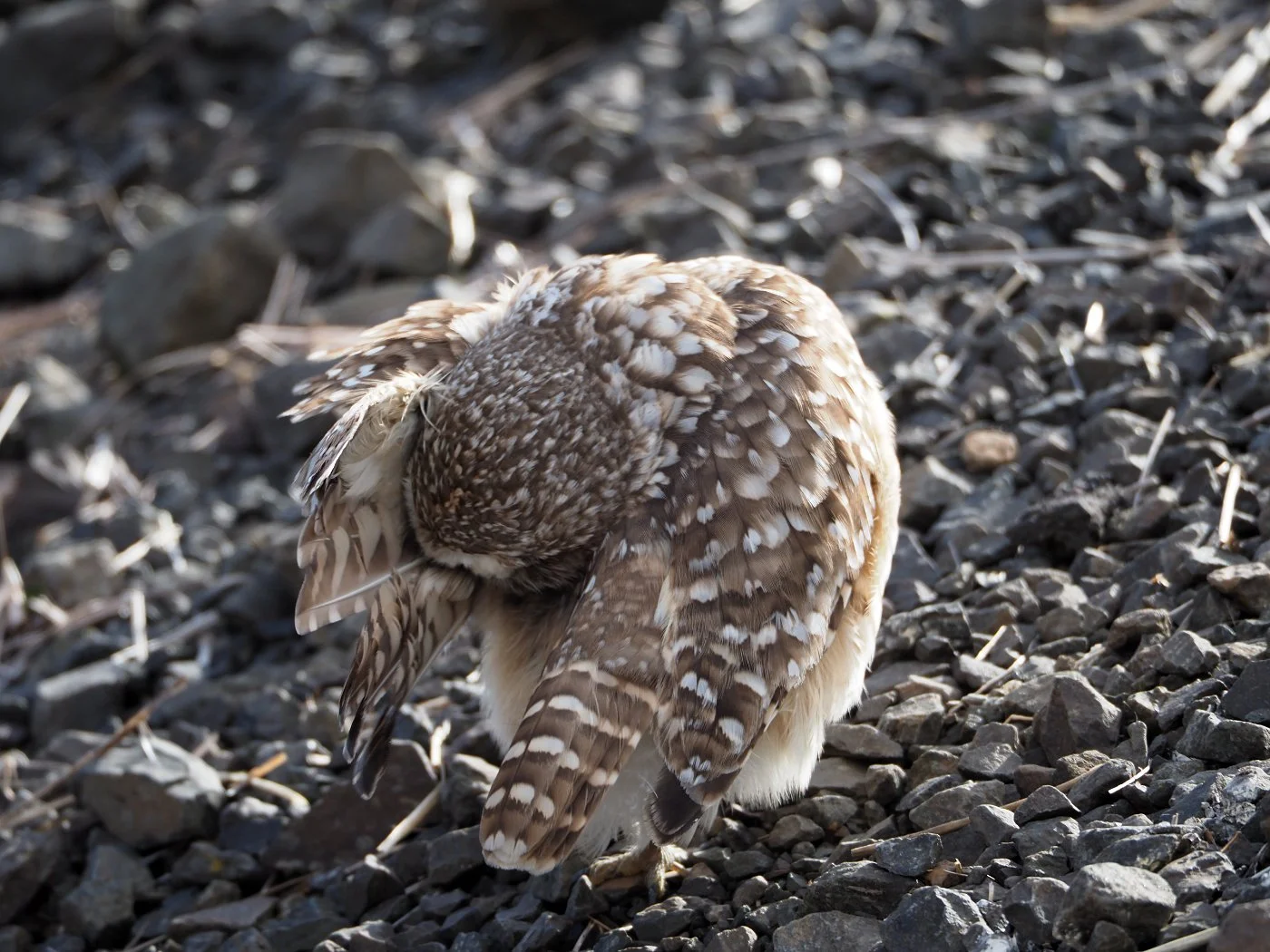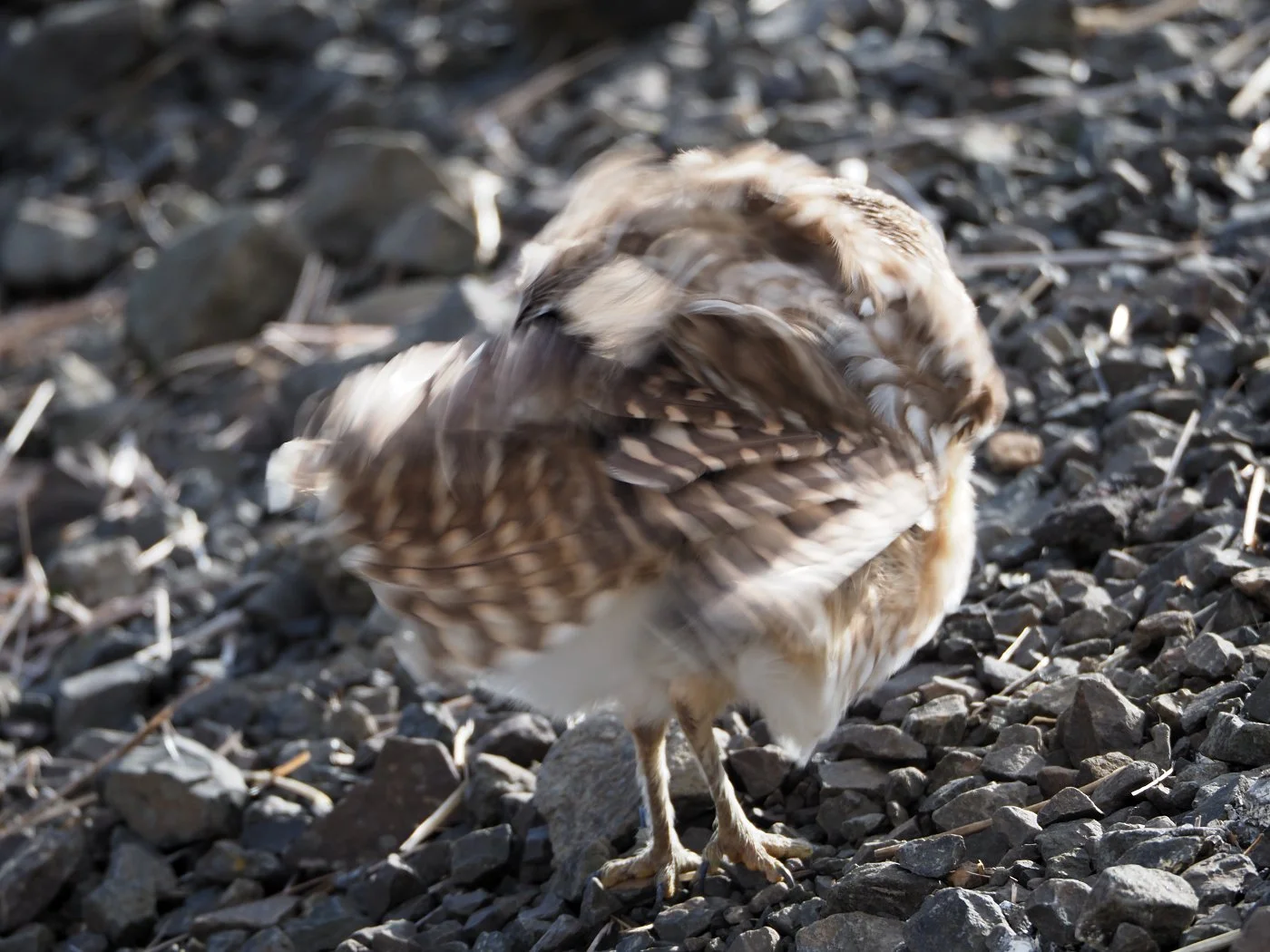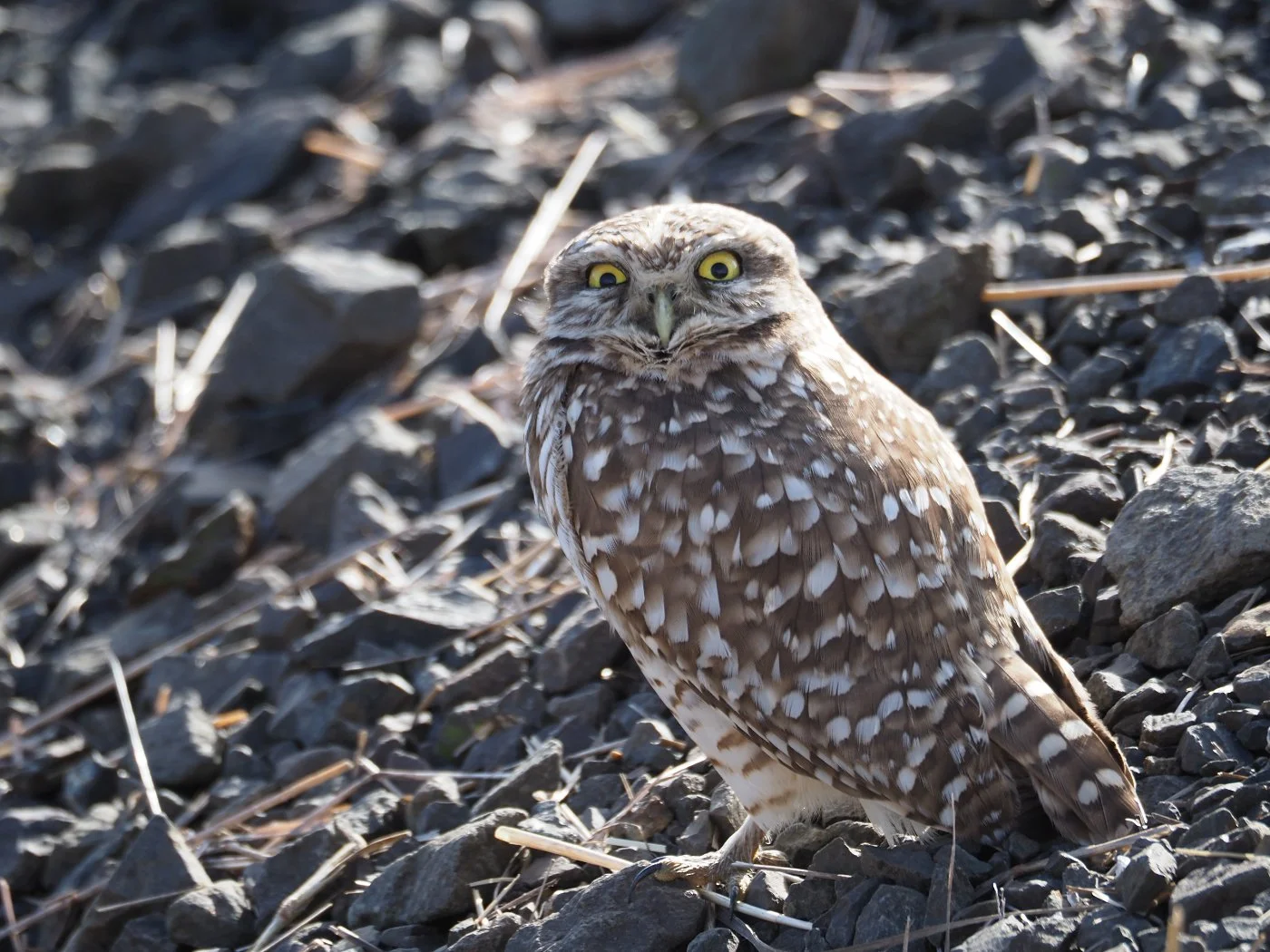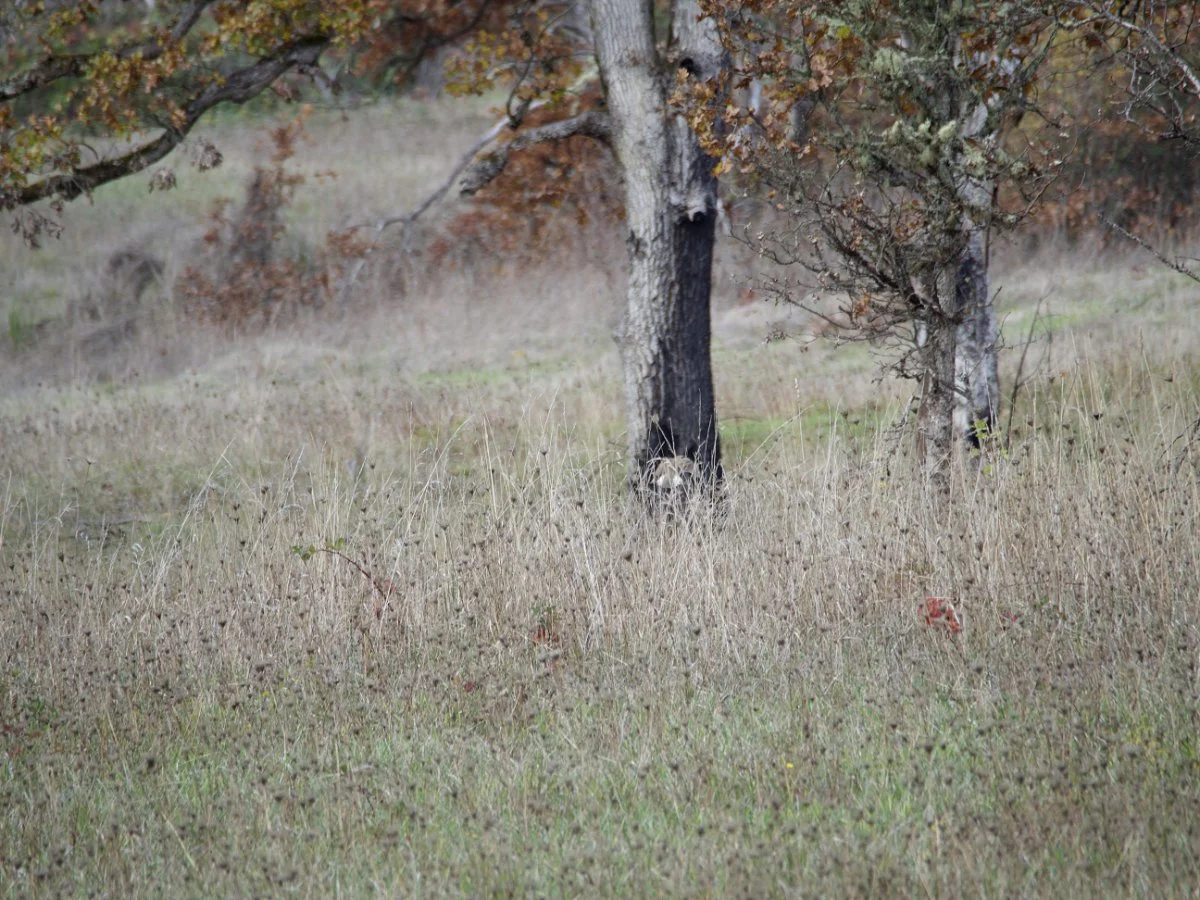
I decided to break protocol and write a post about an encounter in nature outside of, but not far from, the arboretum. Well, if I climb up to the top of Mt. Pisgah on a clear day and look to the north, I bet can see out to where this burrowing owl was hanging out. Maybe I will start to extend my blog to all the area that I can see from Mt. Pisgah. That said, I honestly have enough things to write about at Mt. Pisgah for the rest of my life and never come close to exhausting it all.
While attending the Willamette Valley Bird Symposium, burrowing owls came up in conversation and we saw on eBird that burrowing owls had been sighted in the area recently this winter. I had seen this before, but I hadn’t gone to try and find one. The range map from All About Birds by Cornell Lab has Eastern Oregon in the northern part of their breeding range. They had this to say about their migration: “Migratory in northern part of range; partial migrant in SW states, where individuals make yearly decisions whether or not to migrate.” It appears that some burrowing owls make the decision not to migrate out of Oregon too and spend the winter around the Willamette Valley.
So, a friend and I decided to go try and find one the next day after the symposium. When looking for this owl, we thought that it would be found near a culvert pipe along the road that would simulate a natural burrow that it might use. Their natural burrows in Eastern Oregon are old burrows dug by mammals like badgers or ground squirrels. All About Birds had this to say about their habitat: “Breeding pairs stay near a dedicated nesting burrow, while wintering owls may move around and may roost in tufts of vegetation rather than in burrows.”
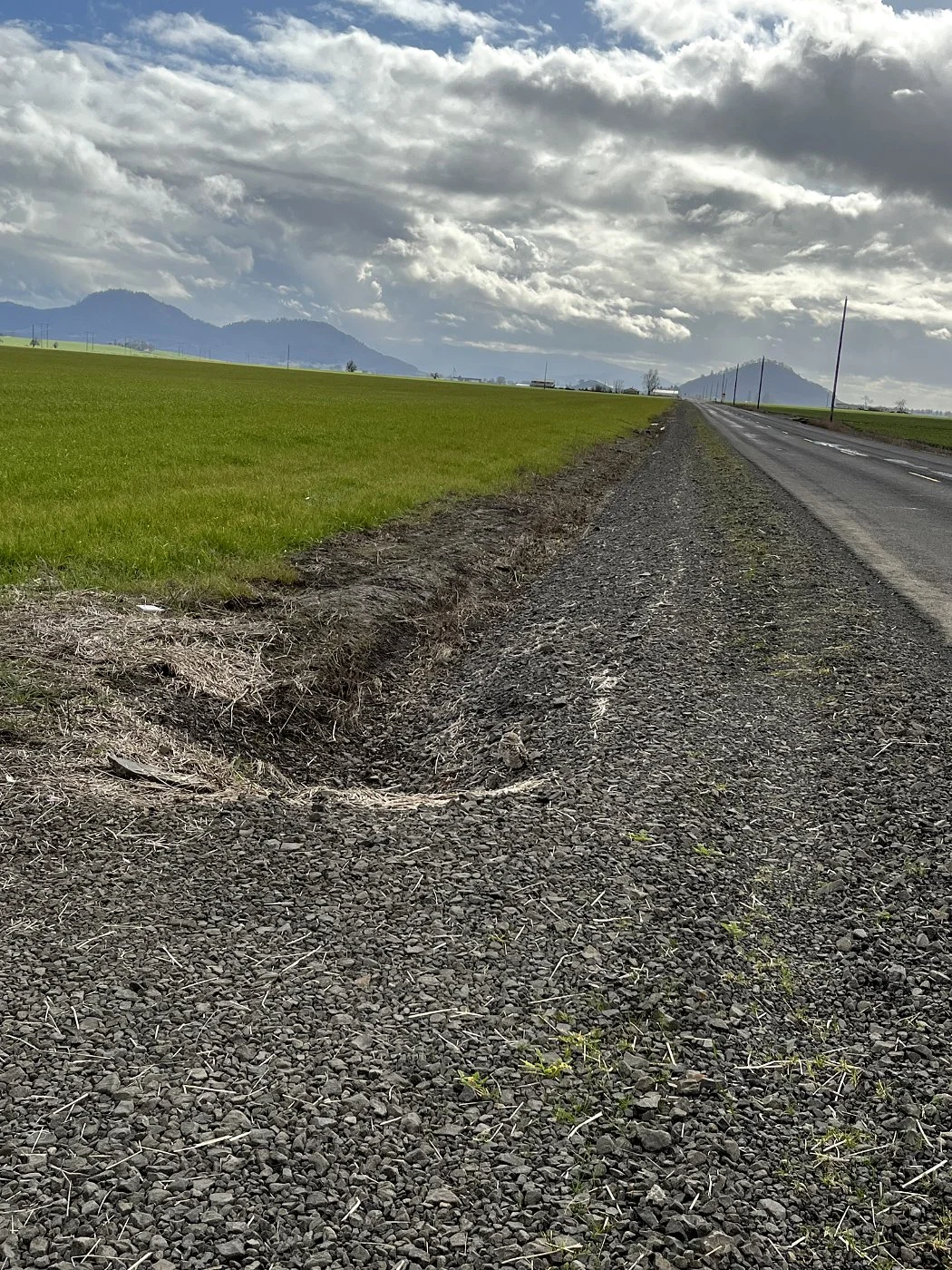
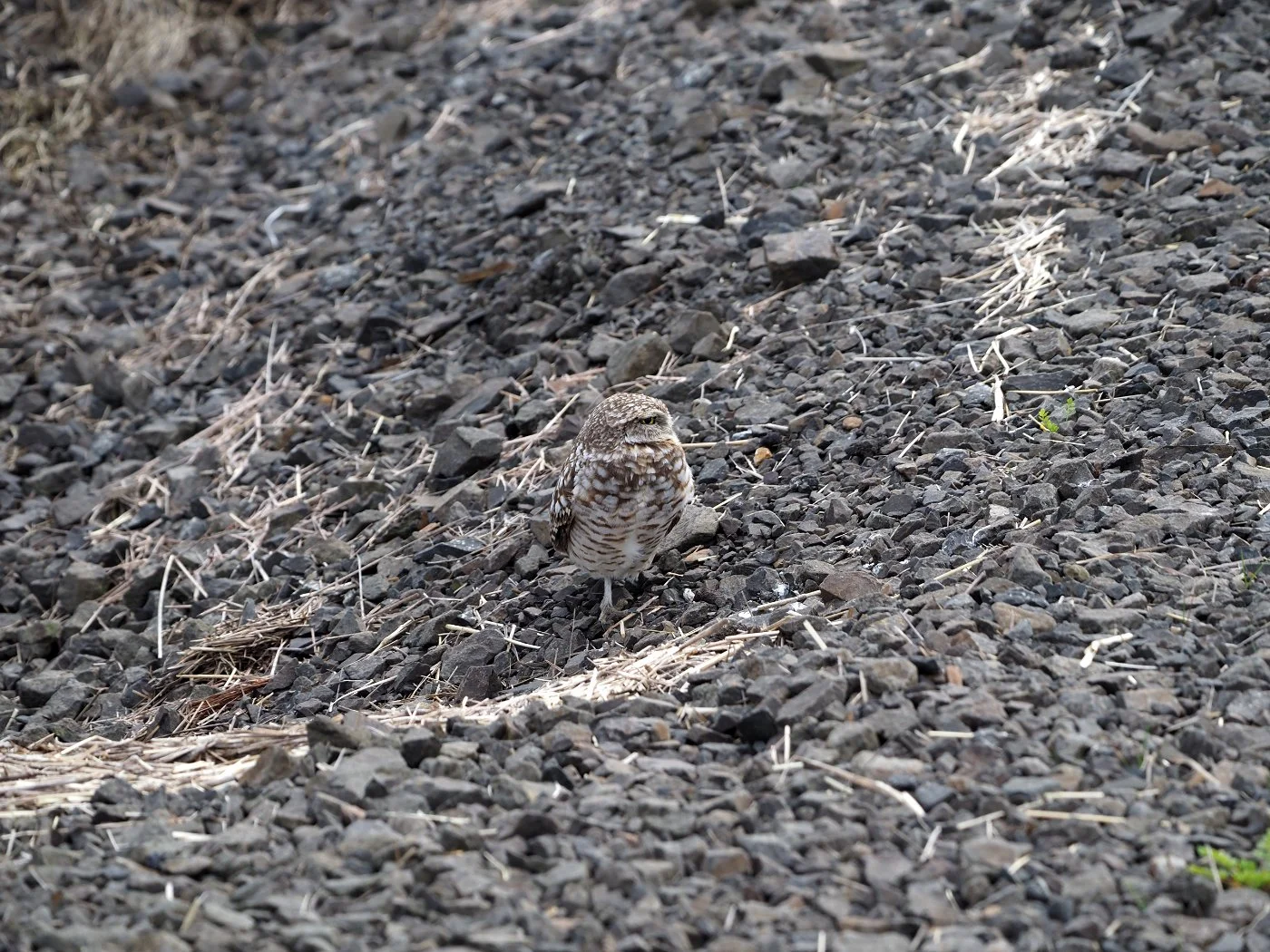
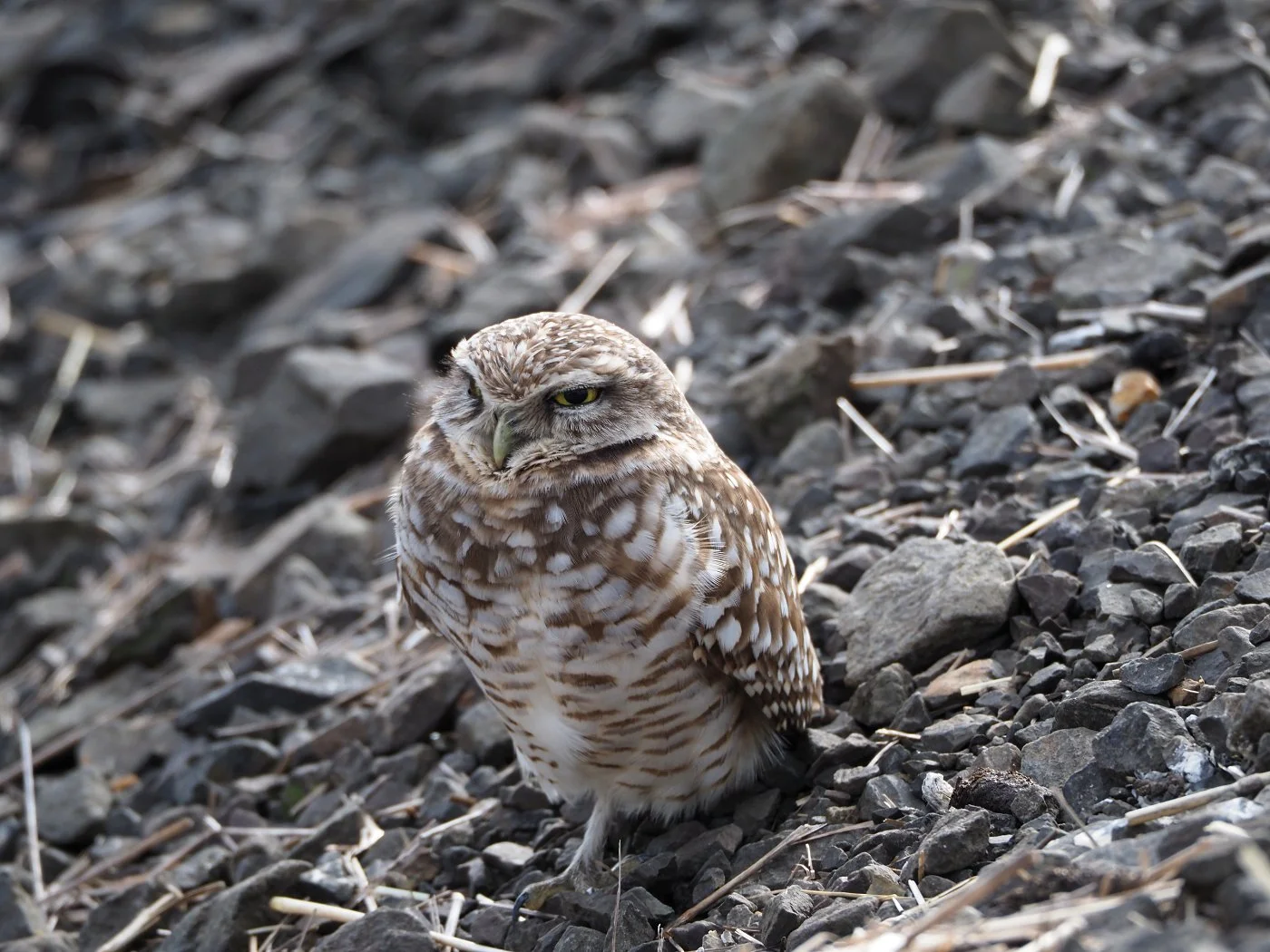
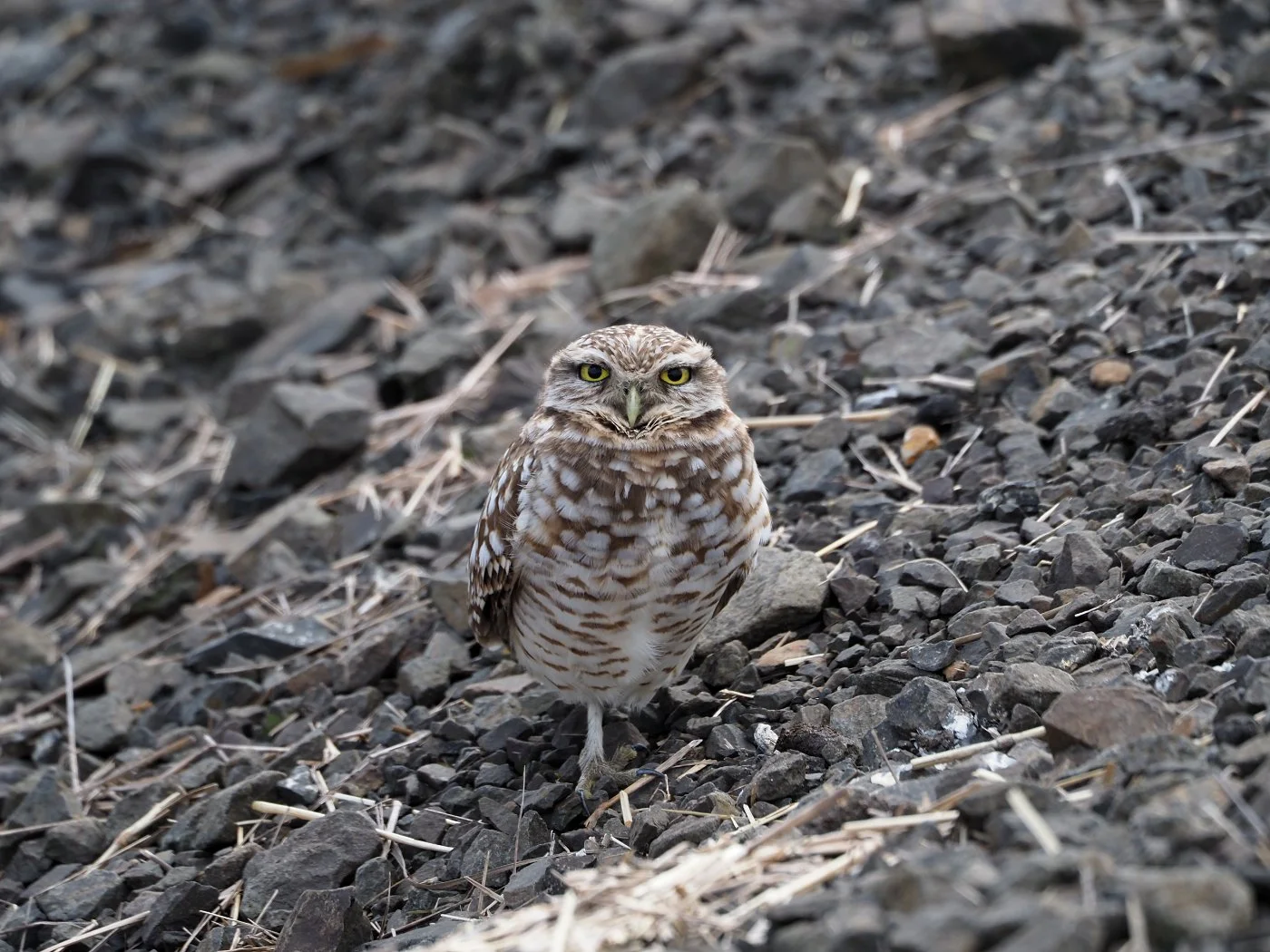
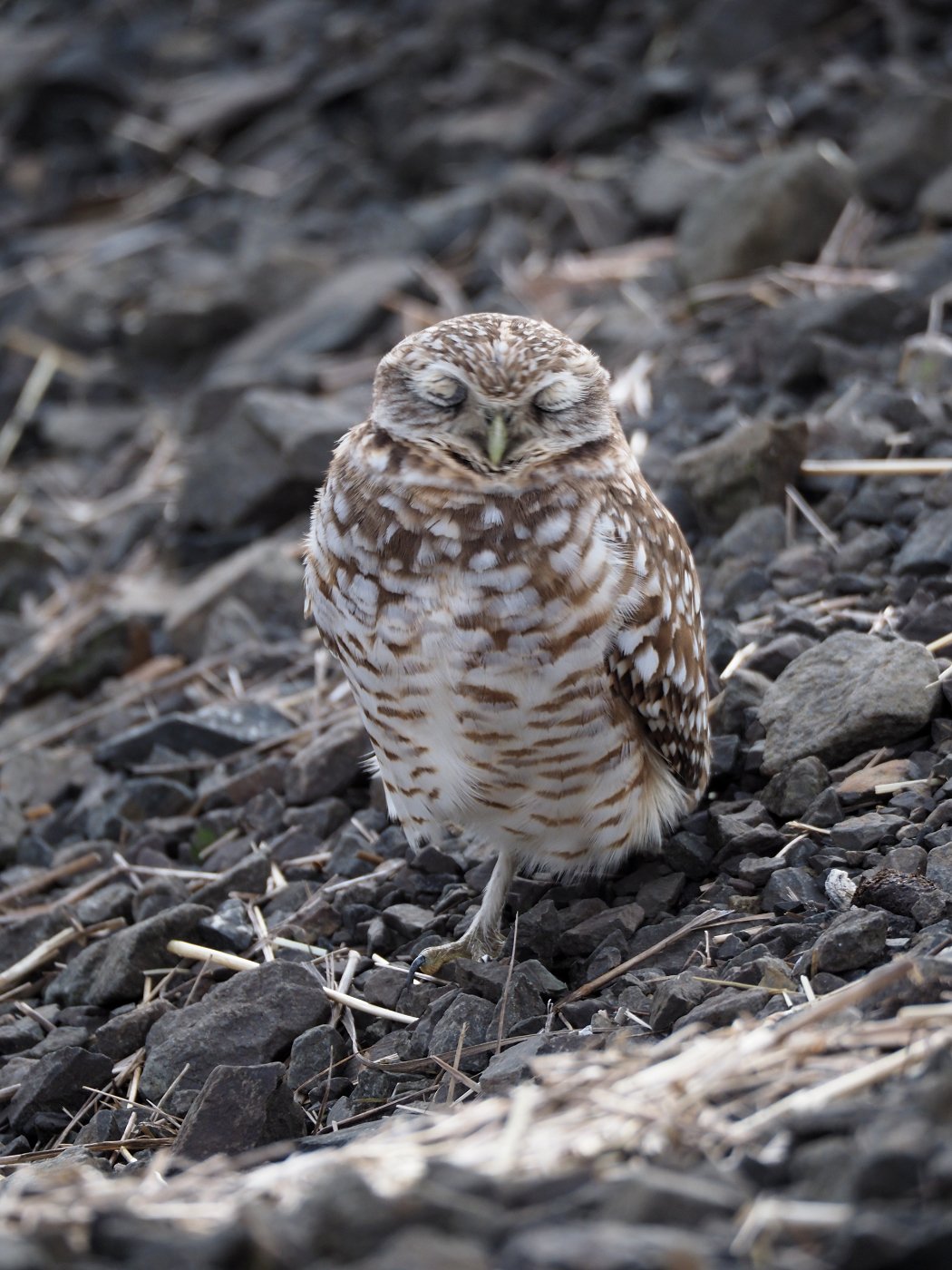
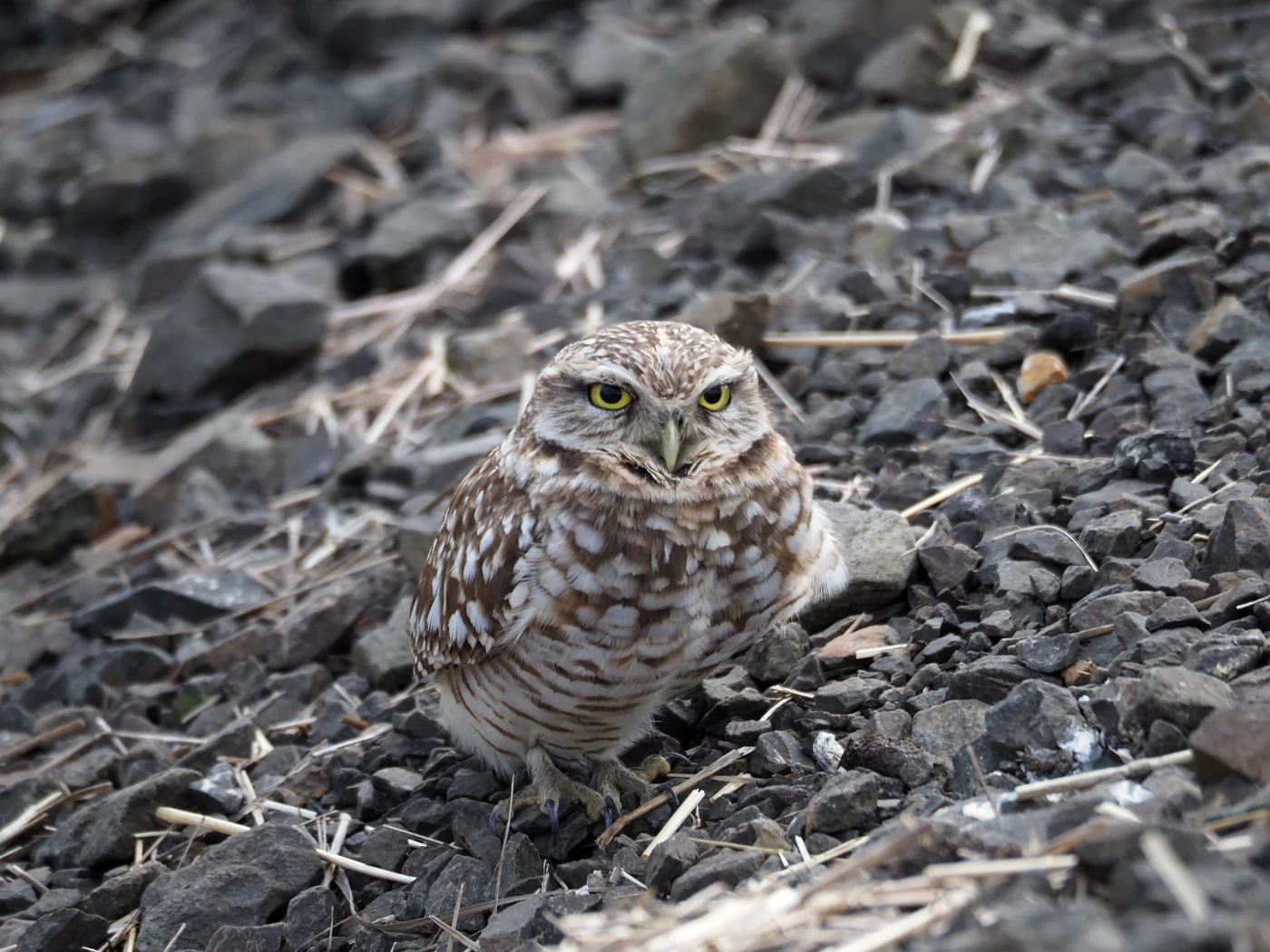
Before coming across this owl, we found many owl pellets next to culvert pipes beside the road. There hadn’t been much rain in the forecast so most of the ditches and the culverts were dry. When we pulled off to park on the side of the road to scan the area with our binoculars and have a look around, I saw this owl before getting out of the car. So we just sat in the car and watched it for a while. I was surprised that it was right next to the road and didn’t fly away. After observing a few cars and trucks zooming down the road, I wished it would fly farther away from the road. I am sure that burrowing owls get struck and killed by passing vehicles. Also this side of the road was fairly clean from garbage, but the other side was littered with lots of alcohol bottles, beer cans, and other trash. Seeing this beautiful bird standing there really made the surrounding landscape that was devoid of natural habitat stand out in stark contrast. Loss of habitat is the number one reason for the decline of bird species. I wonder where it would go to seek shelter when rain fills these culverts with water.
I imagine in the winter in this habitat of farm fields, this burrowing owl is mostly eating small mammals like mice and voles. The owl pellets we found were full of fur and small bones. That said, All About Birds lists quite a variable list of prey that almost seems like it will pretty much eat anything it can catch. Here’s what they report: “Burrowing Owls eat invertebrates and small vertebrates, including lizards, birds, and mammals. Invertebrates, especially insects, constitute the majority of food items, while vertebrates make up the bulk of the diet by mass. Burrowing Owls commonly hunt grasshoppers, crickets, moths, beetles, mice, voles, and shrews. They also prey on dragonflies, giant water bugs, earwigs, caterpillars, scorpions, and earthworms, frogs, toads, snakes, lizards, turtles,and salamanders, bats, ground squirrels, small weasels, young rabbits, songbirds, waterbirds, baby ducks, and even young burrowing owls. Females catch more insects, mostly during the day; males take most of the vertebrates, mostly at night.”
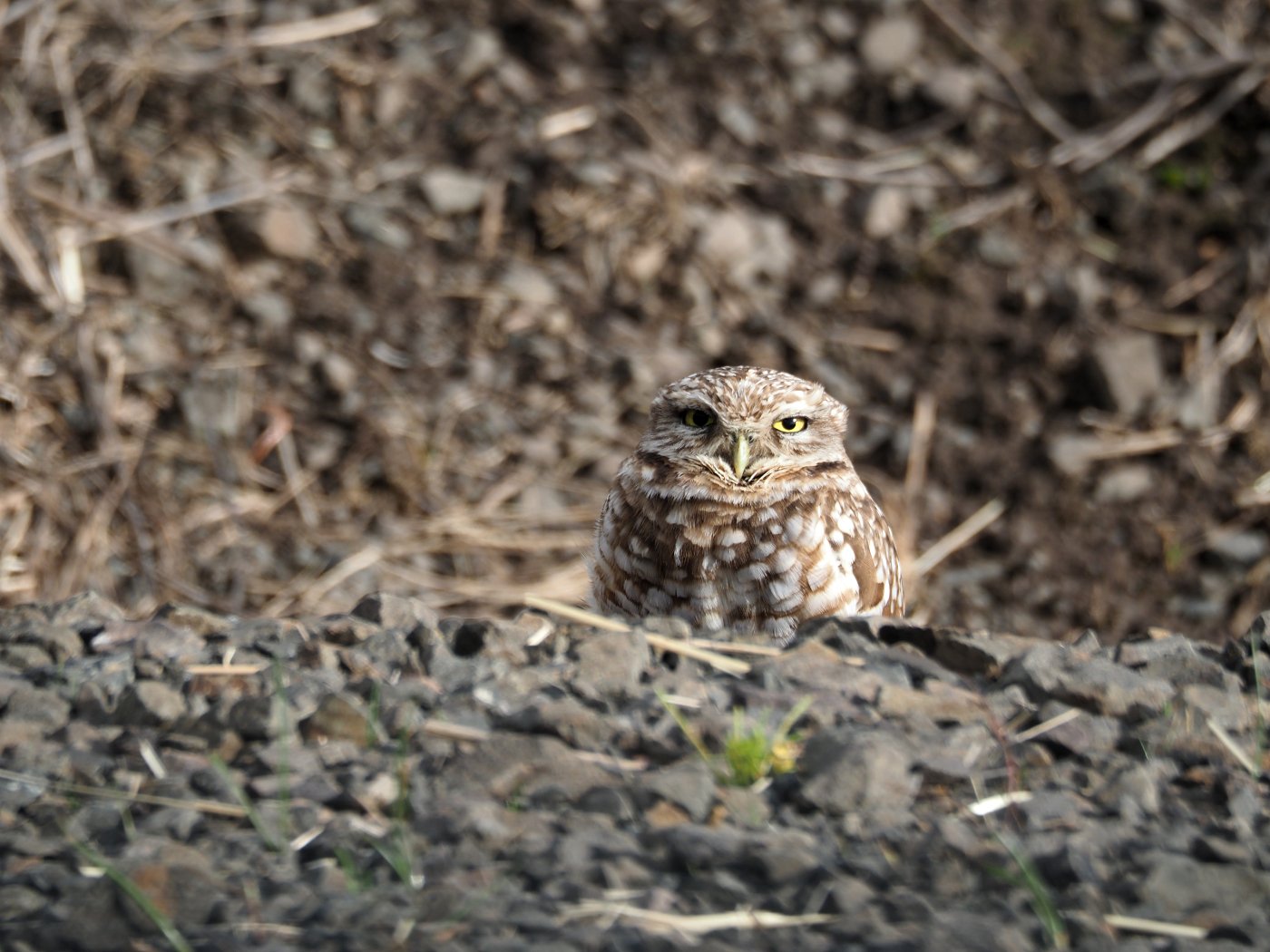
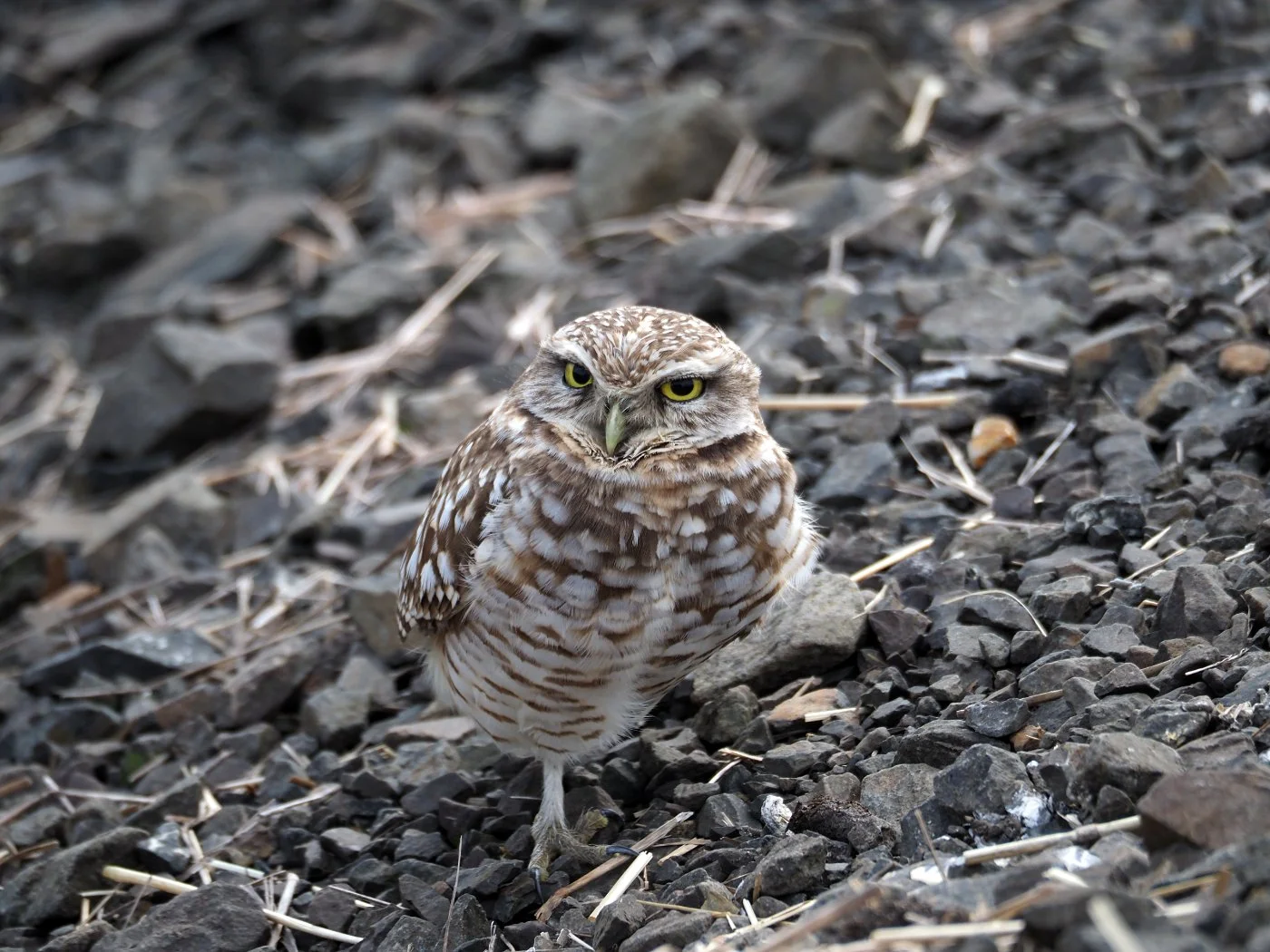
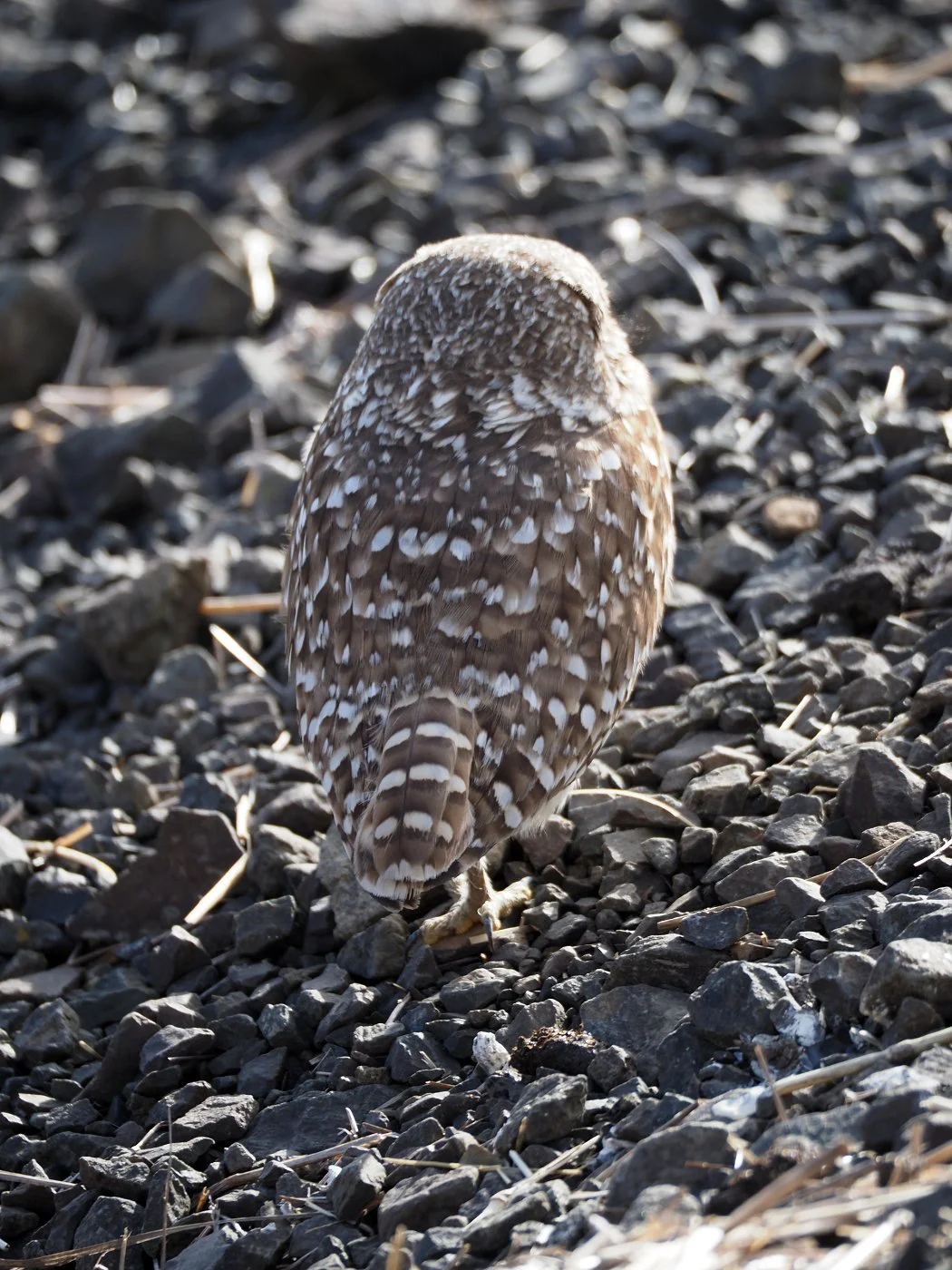
I don’t know if you can quite tell from the photos, but this bird is fairly small at about 9.5 inches. Its body is brown with a mottling of brown spots with bars occurring on the belly. They have yellow eyes with a fairly bold white eyebrow above. It would occasionally stand up to stretch and it has noticeably long legs.
This is such a beautiful bird and a real treat to sit and observe one for a while. We have ground squirrels that build burrows on the open hillsides of the arboretum. Maybe a burrowing owl will come spend a winter there sometime and maybe it already does and I just haven’t noticed. I would like to plan a trip out to Eastern Oregon sometime and possible see them in their breeding habitat.
Nature is an inexhaustible source of wonder. I hope to see you out there!
Resource
Burrowing Owl Overview, All About Birds, Cornell Lab of Ornithology. https://www.allaboutbirds.org/guide/Burrowing_Owl/overview. Accessed 15 Feb. 2026.